This Blackstar HT-1R MkIII review covers the only all-tube amplifier in the home guitar amp group that works at bedroom volumes — a genuine engineering achievement that the wider guitar amp market has struggled to produce at any reasonable price. Every other amp at this price level uses solid-state or digital modelling circuits. The HT-1R MkIII uses real ECC83 and ECC82 valves running a genuine tube circuit at 1 watt, paired with Blackstar’s CabRig speaker simulation for headphone practice and direct recording. For players who specifically want the harmonic character and dynamic response of tube amplification at home volumes, it is the only valid choice in this price range.
The MkIII is the third generation of Blackstar’s 1-watt tube concept, and each iteration has addressed the core challenge of the format more effectively. Where the original HT-1 was primarily a speaker amp with an afterthought headphone output, the MkIII builds CabRig — Blackstar’s advanced cabinet and microphone simulation — directly into the headphone and emulated line outputs. This makes it genuinely useful for both silent practice and direct recording in a way that previous generations were not. At its price it is the most expensive amp in this cluster — but it is also the only one offering genuine valve tone.
Blackstar HT-1R MkIII at a Glance
Quick Answer: The Blackstar HT-1R MkIII is the best 1-watt tube amp for home use available. Genuine ECC83 and ECC82 valve amplification, two channels, reverb, CabRig speaker simulation for headphone and direct recording use, and an emulated line output make it the most complete low-watt tube practice amp at its price. Trade-offs: premium price, no USB recording, no app connectivity, and only two channels versus the tonal breadth of modelling alternatives. For players who specifically want real tube tone at bedroom volumes, the trade-offs are appropriate.
This article contains affiliate links. If you purchase through them, we may earn a commission at no extra cost to you. This helps support AmplifierZone and allows us to keep creating in-depth, unbiased audio guides.
Who Is the Blackstar HT-1R MkIII For?
The player who specifically wants tube tone
The HT-1R MkIII is for the player who already knows what tube amplification sounds and feels like — and specifically wants it at home. That means someone who has played through a tube amp in a rehearsal space, recording studio, or live venue and noticed the way clean tones have a three-dimensional warmth, the way overdrive tones bloom and breathe dynamically with playing intensity, and the way the amp responds to picking touch in a way that digital modelling approximates but does not fully replicate. For that player, no modelling amp at any price completely satisfies — and the HT-1R MkIII provides the real thing at a volume level that a bedroom allows.
It also suits players who have been through the modelling amp experience and found it technically impressive but ultimately unsatisfying at low volumes. Many experienced guitarists own a large tube amp for gigging and want a small tube practice amp for home that shares the same fundamental character. The HT-1R MkIII fills that role more convincingly than any other option at this price.
When the modelling alternatives are the better choice
The HT-1R MkIII is the wrong choice for players who want tonal variety — two channels cover clean and overdrive, and that is the extent of the voicing range. Modelling amps at lower prices provide ten, sixteen, or thirty amp voices. It is also the wrong choice for players who want USB recording capability — the MkIII provides an emulated line out for DAW recording but not a USB audio interface. For players who are not specifically seeking tube tone and prioritise features per pound, the Fender Mustang LT25 or Boss Katana-50 Gen 3 provide more capability at lower cost. The HT-1R MkIII is a specialist purchase for a specific player — and for that player it is without peer at this price.
What tube maintenance actually means: The ECC83 and ECC82 valves in the HT-1R MkIII will eventually need replacing — typically after 1,000 to 3,000 hours of use depending on operating conditions. Replacement valves cost approximately $10–$30 each from reputable suppliers. This is the only ongoing maintenance cost beyond cleaning. For a home practice amp used for one to two hours daily, valves typically last three to eight years before replacement is needed.
Blackstar HT-1R MkIII — Key Specifications
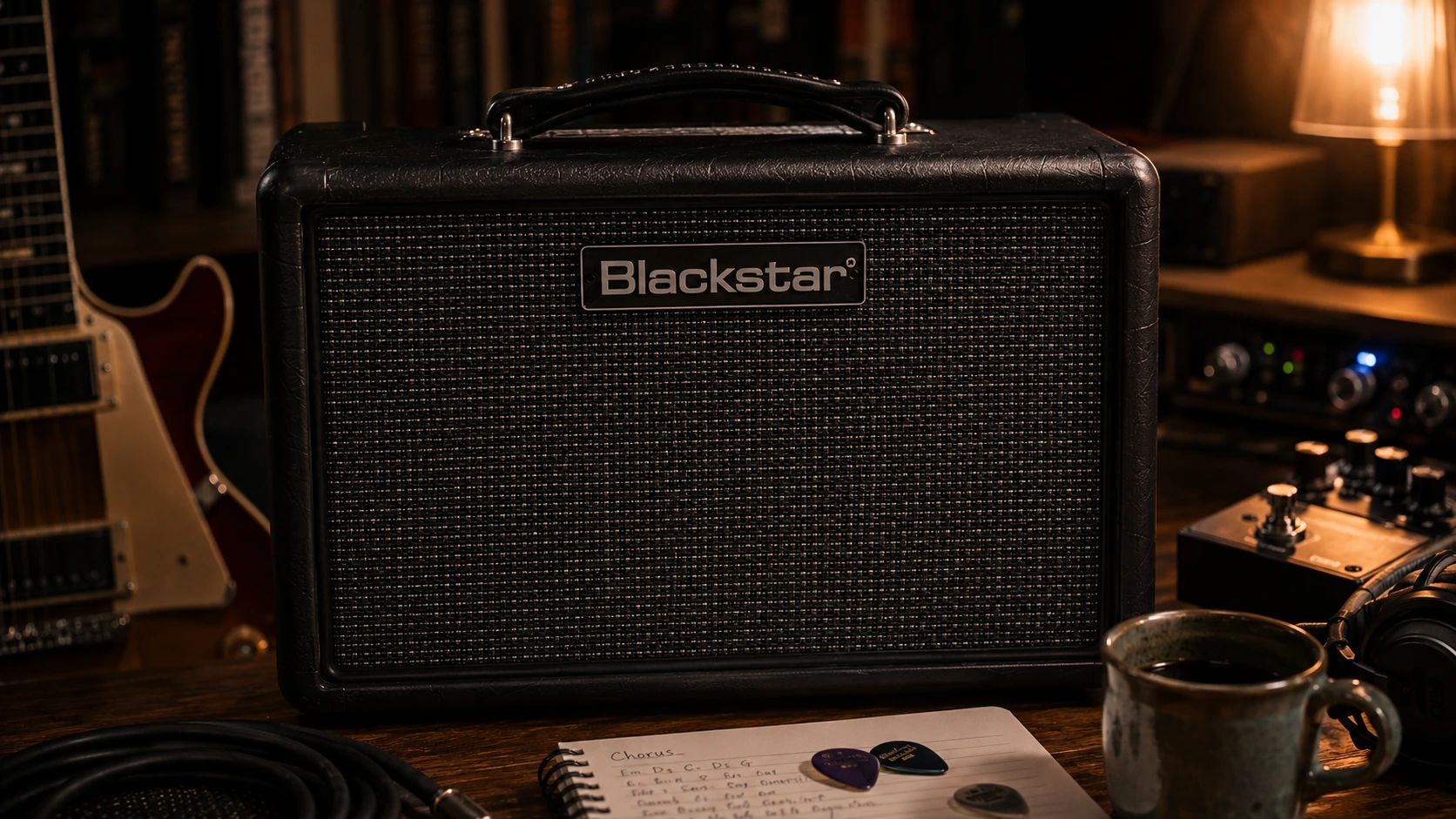
Blackstar HT-1R MkIII 1-Watt All-Tube Combo Amplifier
- Power output: 1W all-tube
- Tubes: ECC83 (preamp) + ECC82 (power amp)
- Speaker: 8-inch Blackstar custom
- Channels: 2 — Clean and Overdrive (both tube-driven)
- Reverb: Yes — digital reverb with Reverb control
- Headphone output: Yes — 3.5mm with CabRig speaker simulation
- Emulated line out: Yes — for direct DAW recording with CabRig
- CabRig: Advanced cabinet and microphone simulation for headphone and line out
- USB recording: No — emulated line out only
- ISF tone control: Yes — variable between British and American voicing
Pros and cons
- All-tube circuit — genuine ECC83 + ECC82 valve amplification
- 1W output — tube tone at genuine bedroom volumes
- CabRig speaker simulation — convincing headphone and direct recording experience
- Emulated line out — direct DAW recording without a microphone
- ISF tone control — sweeps between British and American voicing
- Built-in reverb — studio-quality reverb included
- Compact chassis — desktop-sized, unobtrusive in any room
- Premium price — most expensive amp in this cluster
- Two channels only — less tonal variety than any modelling alternative
- No USB recording — emulated line out requires a separate audio interface for DAW capture
- No app or preset management
- Tube maintenance — valves require eventual replacement
- New ASIN — limited review history for this specific MkIII version
Best tube amp for home use — genuine ECC83 + ECC82 valve circuit at 1 watt with CabRig speaker simulation. The only all-tube amp at bedroom-appropriate volumes in this price range.
Design and Build Quality
Blackstar’s tube amp aesthetic
The HT-1R MkIII uses Blackstar’s standard practice amp form factor — a black vinyl cabinet, black metal speaker grille, and a front panel that is clean and uncluttered. Volume controls for each channel, an ISF tone control, a reverb level control, and the channel selector cover every daily-use function. The glowing valves are visible through a vent on the top panel — a visual indicator of the tube circuit that distinguishes the HT-1R MkIII from every other amp in this cluster immediately. Build quality is solid throughout: the cabinet is well-constructed, the controls have appropriate feel, and the chassis runs slightly warm to the touch from the valve circuit during extended use.
The valve circuit in the chassis
Fitting a functional tube circuit into a compact desktop chassis requires careful thermal management. Blackstar engineers the HT-1R specifically for low-wattage valve operation — the 1-watt power stage runs the ECC82 power tube in a configuration that produces genuine tube saturation at volumes appropriate for a small room. This is meaningfully different from simply placing a tube in a circuit for marketing purposes: the HT-1R MkIII’s tube circuit functions correctly and produces genuine valve characteristics throughout its operating range. At 1 watt through the 8-inch speaker, the amp fills a bedroom at a comfortable practice volume — low enough for evening use without disturbing others, loud enough to hear the full character of the tube circuit.
CabRig — the MkIII’s defining upgrade
The single most significant change from the MkII to the MkIII is CabRig. Earlier HT-1 versions provided a basic speaker emulation on the headphone output — functional but clearly a processed signal rather than a convincing amp-in-room experience. CabRig models the acoustic behaviour of specific speaker cabinet and microphone combinations digitally, producing a headphone output that genuinely sounds like a miked cabinet rather than a direct signal. For players who want to practice silently with a convincing tube amp experience through headphones, the MkIII’s CabRig makes that possible in a way the MkII could not.
Sound Quality
What real tube tone means at 1 watt
The clean channel at low gain produces the warmth and three-dimensionality that characterises tube amplification — clean notes have a natural decay and bloom that solid-state designs approximate through circuit design but cannot fully replicate through digital means. Single-coil pickups through the clean channel produce a chimey, detailed tone with genuine dynamic range: playing lightly produces a glassy, understated sound, while digging in pushes the clean channel into light breakup that is musical and responsive rather than abrupt. This dynamic interaction between playing intensity and tone is the defining characteristic of tube amplification, and the HT-1R MkIII produces it convincingly at 1 watt. How this compares to solid-state designs in practical terms is covered in the tube vs solid state guitar amp guide.
Overdrive channel and ISF
The overdrive channel provides British-voiced medium gain — smooth, harmonically rich, and responsive to the guitar’s volume knob. Rolling back guitar volume on the overdrive channel produces a credible clean-to-crunch transition rather than merely a quieter version of the same distorted tone. The ISF control adds useful tonal flexibility: towards the minimum position it introduces an American character with tighter bass and brighter top end; towards the maximum it becomes more British with pronounced midrange and a rounder low end. Both channels benefit from ISF adjustment, allowing the HT-1R MkIII to cover more tonal ground than a simple EQ control would suggest.
Reverb
The digital reverb is well-implemented — it adds convincing spatial dimension to both channels without washing out the tube character. Spring reverb settings on the clean channel are particularly effective, producing the vintage ambience that suits blues, country, and classic rock material. The reverb integrates naturally rather than sounding like a separate effect added on top of the amp signal.
Blackstar HT-1R MkIII review — what tube tone actually delivers that modelling cannot:
- Dynamic response: Playing harder changes the tone quality, not just the volume — modelling approximates this but tube circuits produce it naturally
- Touch sensitivity: Guitar volume and picking technique directly influence breakup character — the clean-to-crunch transition is continuous rather than binary
- Harmonic richness: Even-order harmonics from the tube circuit add warmth and dimension to clean tones that solid-state designs lack
- Interaction with pedals: Tube preamps respond differently to overdrive pedals than solid-state circuits — existing pedals will sound different (often better) through the HT-1R MkIII
- The feel: There is a physical responsiveness to tube amplification that experienced players notice immediately and beginners develop a preference for over time
Recording and Silent Practice
CabRig headphone output
Plugging headphones into the HT-1R MkIII’s 3.5mm output activates CabRig processing — the speaker is silenced and the headphone signal is processed through cabinet and microphone simulation. The result is a convincing headphone guitar tone that sounds as though the amp has been recorded through a real speaker cabinet with a studio microphone. This is the most significant practical improvement of the MkIII over previous generations, and it transforms what was previously a limited headphone experience into a genuinely useful silent practice mode. Late-night practice through good quality closed-back headphones on the HT-1R MkIII is satisfying in a way that earlier 1-watt tube amp headphone outputs were not.
Emulated line out for recording
The emulated line output provides the CabRig-processed signal at line level for connection to an audio interface or recording device. For players who want to record the tube amp tone to a DAW without a microphone, the emulated line out handles that — but it requires a separate audio interface to convert the line-level signal to USB. This is a meaningful practical difference from the Fender Mustang LT25 and Boss Katana-50 Gen 3, which provide USB audio interface functionality directly. Players who already own an audio interface will find the emulated line out fully functional for direct recording. Players who do not own an interface will need to budget for one. The broader context of which amps provide the most complete recording capability is in the best guitar amps for recording guide.
How the Blackstar HT-1R MkIII Compares
Blackstar HT-1R MkIII vs Boss Katana-50 Gen 3
For players choosing between tube feel and modelling versatility, this is the most common comparison. The Katana-50 Gen 3 costs less, provides twelve amp characters, power attenuation, USB recording, and a 12-inch speaker — a more complete home practice package by specifications. However, the HT-1R MkIII provides two channels through a real tube circuit — a fundamentally different experience for players who value tube response. Players who have not specifically sought tube tone will find the Katana-50 Gen 3 a better value. Players who specifically want tube character will find the HT-1R MkIII irreplaceable.
Blackstar HT-1R MkIII vs Line 6 Spider V 20 MkII
A comparison between two completely different philosophies. The Line 6 Spider V 20 MkII provides 200+ presets and app-connected modelling for less money. The HT-1R MkIII provides two channels of genuine tube amplification for considerably more. For players who want variety and app connectivity, the Spider makes more logical sense. For players who want the feel and character of real valve amplification, no amount of presets or connectivity compensates for the difference.
Blackstar HT-1R MkIII vs Positive Grid Spark 40
Both sit at the premium end of the home practice amp market. The Spark 40 at a lower price provides AI backing tracks, 10,000+ community presets, stereo speakers, and handles electric, bass, and acoustic — a feature-rich platform for the practice-focused player. The HT-1R MkIII provides two channels of tube tone with CabRig — a characterful instrument for the tone-focused player. They serve different players completely, and the choice between them reflects a player’s fundamental priorities rather than a straightforward specification comparison.
Is the Blackstar HT-1R MkIII Worth It?
For tube tone at home — unambiguously yes
No other amp in this price range delivers genuine tube amplification at bedroom volumes with the practical home use features the MkIII provides. CabRig makes the headphone output convincing, the emulated line out enables direct recording, and the 1-watt tube circuit produces real valve character rather than a simulation. For experienced players who know they want tube tone and are committed to it, the HT-1R MkIII represents the clearest possible path to that experience at home without the volume requirements of larger tube combos.
When to accept the premium is not justified
For players who are still exploring what kind of tone they want, the premium over modelling alternatives is difficult to justify. A player who has not yet developed a strong preference for tube character will get more daily practice value from the Fender Mustang LT25’s 30 amp models or the Boss Katana-50 Gen 3’s twelve characters than from the HT-1R MkIII’s two channels. The HT-1R MkIII rewards players who already know what they want; it is less appropriate for those still discovering it.
Recording note: The HT-1R MkIII’s emulated line out requires a separate audio interface for DAW recording — it outputs a line-level signal, not USB. If direct USB recording is a priority and a separate audio interface is not already owned, the Fender Mustang LT25 or Boss Katana-50 Gen 3 provide USB recording capability built in. The HT-1R MkIII is the correct choice for players who already own an interface or who record primarily through the headphone output.
Blackstar HT-1R MkIII Review — Final Verdict
The definitive low-watt tube practice amp
The Blackstar HT-1R MkIII earns its position as the best tube amp for home use in this group by being the only all-tube option that genuinely works at bedroom volumes. Genuine ECC83 and ECC82 valve amplification, CabRig speaker simulation for convincing headphone and direct recording use, ISF tone control, and built-in reverb combine into an amp that delivers what no modelling alternative can — real tube character at the volumes where home practice actually happens. For the complete picture of home practice amp options from entry solid-state through to tube, the best guitar amp for home use roundup covers every category and price point.
Next in this review series
For the best smart amp in this cluster — AI backing tracks, 10,000+ community presets, and stereo output for electric, bass, and acoustic guitar — the Positive Grid Spark 40 review covers the most practice-focused platform at the top of this budget range.
Best tube amp for home use — genuine ECC83 + ECC82 valve circuit at 1 watt with CabRig speaker simulation. The only all-tube amp at bedroom-appropriate volumes in this price range.
Frequently Asked Questions
About the Blackstar HT-1R MkIII
Is the Blackstar HT-1R MkIII a real tube amp?
Yes — genuinely all-tube. The HT-1R MkIII uses an ECC83 (12AX7) preamp valve and an ECC82 (12AU7) power amp valve in a real tube amplification circuit. The 1-watt power stage runs the ECC82 in a configuration that produces genuine tube saturation and dynamic response at low volumes. This is not a tube buffer or a hybrid circuit with a tube added for aesthetics — the entire signal path from preamp to power amp is tube-driven.
How loud is the Blackstar HT-1R MkIII at 1 watt?
At 1 watt through an 8-inch speaker, the HT-1R MkIII fills a bedroom at a volume level comfortable for evening practice without disturbing people in adjacent rooms. It is louder than a 3-inch mini amp like the Blackstar Fly 3 but quieter than a 10-watt practice amp at similar volume settings. Maximum volume at 1 watt is approximately the level of a normal conversation — genuinely quiet by guitar amp standards but fully audible for practice. The headphone output enables completely silent practice at any hour.
Recording and silent practice
What is CabRig on the Blackstar HT-1R MkIII?
CabRig is Blackstar’s speaker cabinet and microphone simulation system applied to the headphone output and emulated line out of the HT-1R MkIII. Instead of sending the raw amplifier signal to headphones — which sounds thin and unnatural — CabRig digitally models how a specific speaker cabinet and microphone combination would capture the amp’s output. The result is a headphone tone that sounds like a properly miked cabinet recording rather than a direct signal. CabRig is the feature that makes the MkIII a genuinely useful silent practice tool in a way the previous MkII was not.
Can the Blackstar HT-1R MkIII record directly to a computer?
Not via USB — the HT-1R MkIII does not have USB audio interface capability. Recording requires connecting the emulated line output to a separate audio interface, which then connects to the computer via USB. The emulated line output provides the CabRig-processed signal at line level — appropriate for connection to any audio interface input. Players who already own an audio interface can record the HT-1R MkIII’s tube tone without a microphone through this output.
More questions about the Blackstar HT-1R MkIII
What is the difference between the Blackstar HT-1R MkII and the MkIII?
CabRig is the primary upgrade from MkII to MkIII. Where the MkII provided basic speaker emulation on the headphone output, the MkIII applies full cabinet and microphone simulation, producing a genuinely musical headphone experience. Secondary changes include revised voicing on both channels, improved reverb, and updated cosmetics. For players who use the headphone output regularly, the MkIII is a meaningful upgrade. For players who exclusively play through the speaker, the improvement is less critical.
Is the Blackstar HT-1R MkIII good for beginners?
It depends entirely on what the beginner wants. For a beginner who has played through a tube amp and specifically wants that experience at home, the HT-1R MkIII is appropriate from the start. For a beginner who has not yet developed tone preferences and wants maximum variety at minimum cost, the Fender Mustang LT25 at a lower price provides 30 amp models versus the HT-1R MkIII’s two channels. The HT-1R MkIII rewards players who already know what they want from a guitar amp. It is a less appropriate starting point for players who are still discovering their preferences.