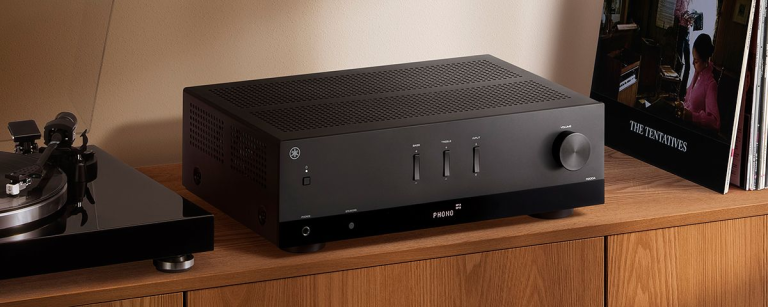
Most turntables ask you to set tracking force, balance a counterweight, and align a cartridge before you play a single record. The Audio-Technica AT-LP60X skips all of that by design — it’s a fully automatic belt-drive turntable built around the idea that setup shouldn’t be the barrier to playing your first record. That simplicity is a real tradeoff, not a free lunch, and this Audio-Technica AT-LP60X review covers exactly what you’re gaining and giving up compared to a manual deck, along with real specs on its built-in preamp and cartridge.
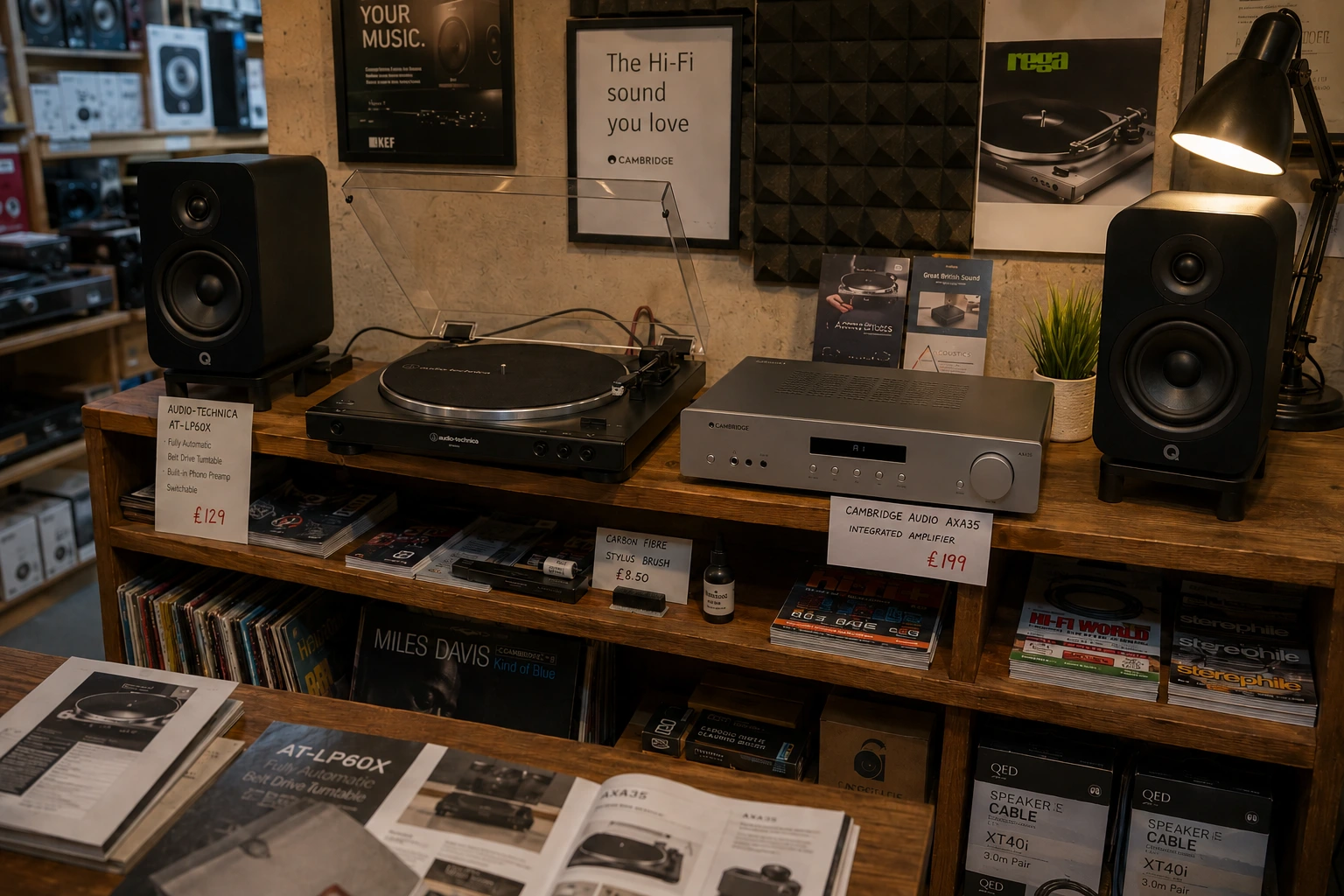
Specs at a Glance
| Spec | Detail |
|---|---|
| Drive Type | Belt-drive, DC servo motor |
| Speeds | 33-1/3 and 45 RPM |
| Operation | Fully automatic (auto-start, auto-stop, auto-return) |
| Cartridge | Integral Dual Magnet (AT3600L), replaceable diamond stylus (ATN3600LC) |
| Platter | Die-cast aluminum, anti-resonance design |
| Preamp Output | Switchable Phono (2.5mV nominal) / Line (150mV nominal) |
| Included | RCA cable, 45 RPM adapter, hinged dust cover, felt mat |
What “Fully Automatic” Actually Means
On a manual turntable, you cue the tonearm onto the record by hand and lift it off again when the side ends — miss the cue and you can scratch the record or wear the stylus against the runout groove. The AT-LP60X removes that step entirely: press start, and the tonearm lowers itself onto the first track automatically. When the record ends, the tonearm lifts, returns to its rest, and the platter stops on its own.
This isn’t a gimmick aimed at people who can’t be bothered to learn — it’s a genuine safety net for anyone new to vinyl, and it’s the single biggest differentiator between this turntable and most step-up decks, including others in this same lineup that require manual cueing. If your primary worry about getting into vinyl is damaging a record before you’ve learned the ropes, this is the feature that solves that specific anxiety.
The Honest Tradeoff — No Tracking Force Adjustment
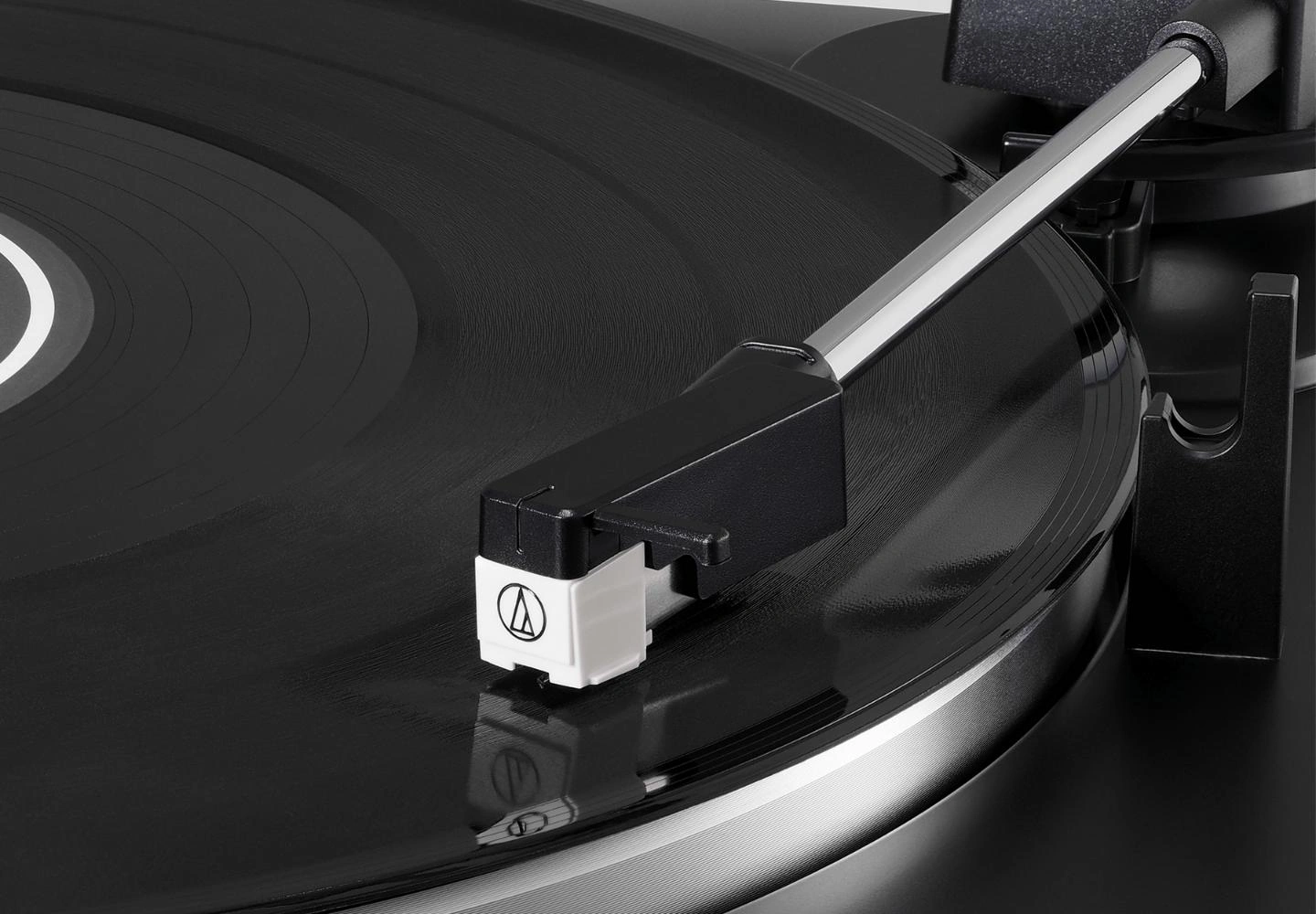
Here’s what that automation costs you, and it’s worth knowing before you buy rather than discovering it later: the AT-LP60X’s cartridge is fixed to the tonearm with no counterweight or tracking-force adjustment at all. Audio-Technica’s own manual confirms there’s simply no mechanism to set or fine-tune how much downward pressure the stylus applies to the record.
For a beginner, this is largely a non-issue — the tracking force is factory-set to a sensible value, and you’ll never have to touch it. But it does mean two things worth being clear-eyed about: you can’t fine-tune tracking to squeeze out marginally better sound the way you could on an adjustable deck, and if you ever want to upgrade to a different cartridge down the line, this isn’t the turntable that lets you do it. That’s a deliberate design choice in exchange for true plug-and-play simplicity, not an oversight — but it’s the reason serious hobbyists graduate to a manual, adjustable deck once they know vinyl is a long-term hobby rather than a passing interest.
The Built-In Preamp — Real Numbers
The AT-LP60X includes a switchable phono preamp, which matters because turntables output a signal too weak and improperly equalized for a standard line input to play correctly without one. Flip the rear switch to PHONO and the turntable outputs a raw phono-level signal (2.5mV nominal) for connecting to an amplifier or receiver that already has a dedicated phono input. Flip it to LINE and the built-in preamp boosts and equalizes that signal to a standard 150mV line-level output — strong enough to plug directly into any AUX input, powered speakers, or a receiver with no phono stage at all.
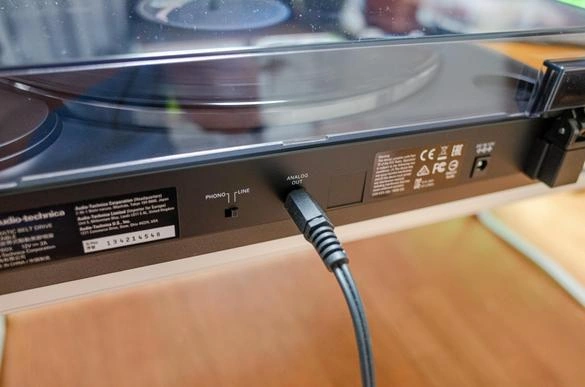
That flexibility is genuinely useful: it means this turntable works with almost any amplifier setup you already own, not just ones built specifically for vinyl. If you want to understand what a preamp is actually doing in that signal chain, our what does a preamp do guide covers the mechanics in more depth.
What It Actually Sounds Like
Through the LINE output into a basic powered speaker setup, the AT-LP60X sounds clean and unremarkable in the best way — no obvious rumble from the motor, no audible wow-and-flutter on sustained piano or vocal notes, and enough clarity in the midrange that vocals sound present rather than muffled. The die-cast aluminum platter genuinely earns its keep here: cheaper plastic platters on turntables in this price range tend to introduce a faint resonant coloration that this one avoids.
Where it shows its price tier is bass extension and overall dynamic punch — it’s noticeably more polite than a heavier-platter, adjustable deck like the Pro-Ject Debut Carbon EVO. For casual listening and building a collection, that’s a fair trade for the price and the zero-setup convenience.
Pros & Cons
- Genuinely plug-and-play — no tonearm setup or calibration required
- Built-in switchable preamp works with almost any amplifier or speaker setup
- Die-cast aluminum platter avoids the resonance issues of cheaper plastic platters
- Replaceable stylus keeps long-term maintenance simple and affordable
- No tracking-force adjustment — fine for beginners, a real limitation for hobbyists who want to fine-tune
- Cartridge isn’t user-upgradeable if you outgrow the stock sound
- Bass extension and dynamics are modest compared to adjustable, heavier-platter decks
Final Verdict
The Audio-Technica AT-LP60X does exactly what it’s built to do: remove every point of friction between buying a turntable and actually playing a record. The fixed cartridge and lack of tracking-force adjustment are real limitations, but they’re the direct, honest cost of that simplicity — not corners cut carelessly. For a first turntable, or for anyone who just wants to play records without becoming a hobbyist about the equipment, this is a genuinely dependable starting point.
If this is your first turntable, our vinyl setup for beginners guide covers everything else you’ll want to know — cartridge care, record handling, and building out the rest of your system — beyond just the turntable itself.