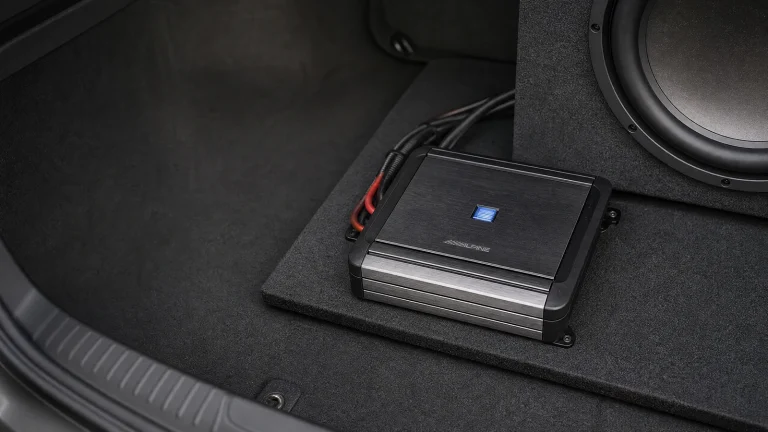
Fitting a subwoofer amp into a car with almost no spare room is a recurring problem for anyone driving a compact hatchback or a truck with a tight cab. The Alpine S-A60M is built specifically around that constraint — a Class D monoblock small enough to disappear under a seat, while retaining the compact installation footprint Alpine specifies. If you’re weighing this against a bigger option like the Kicker 46CXA800.1, the deciding factor usually comes down to whether your install space or your power budget is the real constraint. This Alpine S-A60M review covers what it actually outputs, how it behaves once it’s crammed into a tight space, and where it sits against other compact monoblocks worth considering.
Is the S-A60M right for your build?
- Tight install space (under-seat, behind panel) → yes, this is the S-A60M’s core strength
- Running a single sub at 2Ω → yes, 600W RMS at 2Ω is a solid daily-driver power budget
- Want a compact amp for a tight install → yes, but it still needs proper airflow and mounting clearance
- Need extreme SPL competition power → no, look higher in Alpine’s lineup for that
- Install space isn’t a constraint → a higher-output monoblock will give you more headroom per dollar
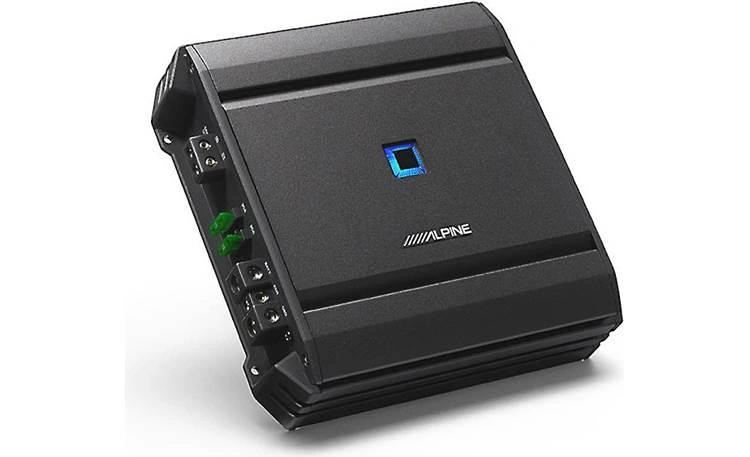
Specs at a Glance
| Spec | Detail |
|---|---|
| RMS Power | 330W @4Ω / 600W @2Ω |
| Class | Class D monoblock |
| THD+N | <0.03% @10W, <0.08% @50W into 4Ω |
| Frequency Response | 10Hz–400Hz |
| Filters | Variable low-pass, bass boost, damping factor >1000 |
| Dimensions | 8.7″ W x 2.25″ H x 8.25″ D |
| Weight | 4 lbs 13 oz |
What You’re Actually Upgrading From
Nobody buys a monoblock in a vacuum — you’re replacing something. A factory head unit typically pushes somewhere in the 15–20W RMS range per channel into the stock speakers, and factory “subwoofer” output, when a car even has one, is usually built around that same weak internal amp. Stepping up to the S-A60M’s 600W at 2Ω isn’t a marginal bump from that baseline — it’s closer to a 30x increase in clean power headroom. Even coming from a modest 100W aftermarket sub amp, you’re still looking at a 6x jump. That’s the number that actually matters when you’re trying to picture what this amp changes, not the spec sheet in isolation. For a broader breakdown of how wattage translates into audible loudness, see our amplifier wattage explained guide.
Real Power Output
Alpine rates the S-A60M at 330W RMS at 4Ω and 600W RMS at 2Ω. Those are published ratings, not a substitute for a bench test in your own system: actual output depends on supply voltage, load impedance, gain structure, and installation. The published damping factor above 1000 is a strong specification for a compact monoblock, but it should be treated as a design indicator rather than a guarantee of a particular listening result.
Compact monoblocks still need airflow. The S-A60M’s small chassis makes placement flexible, but it is not a reason to seal the amplifier inside an airless cavity or block its vents. Leave the clearance recommended by the installation manual and treat ventilation as a core part of the install, especially in a hot trunk or under-seat location.
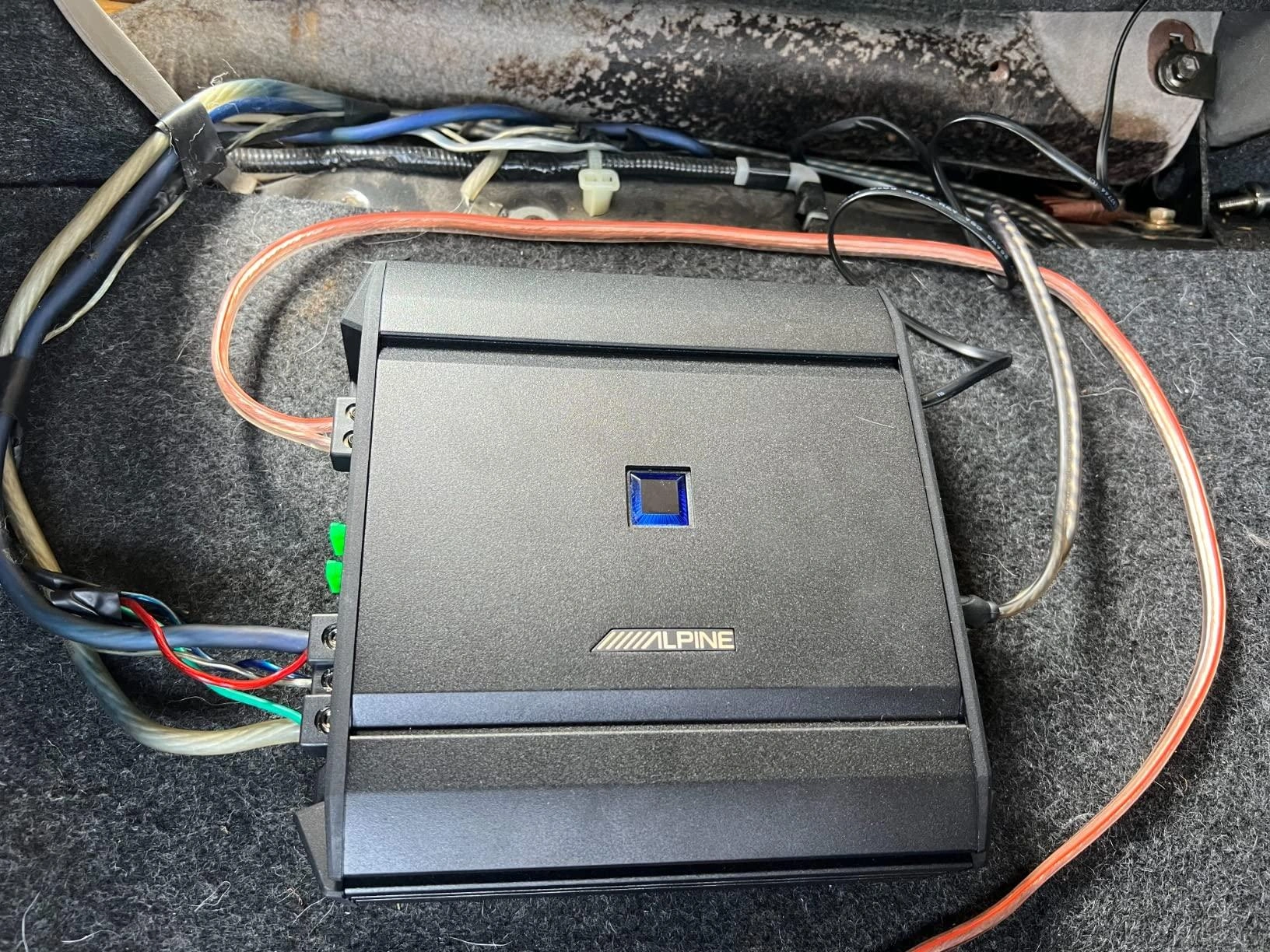
Installation & Fit
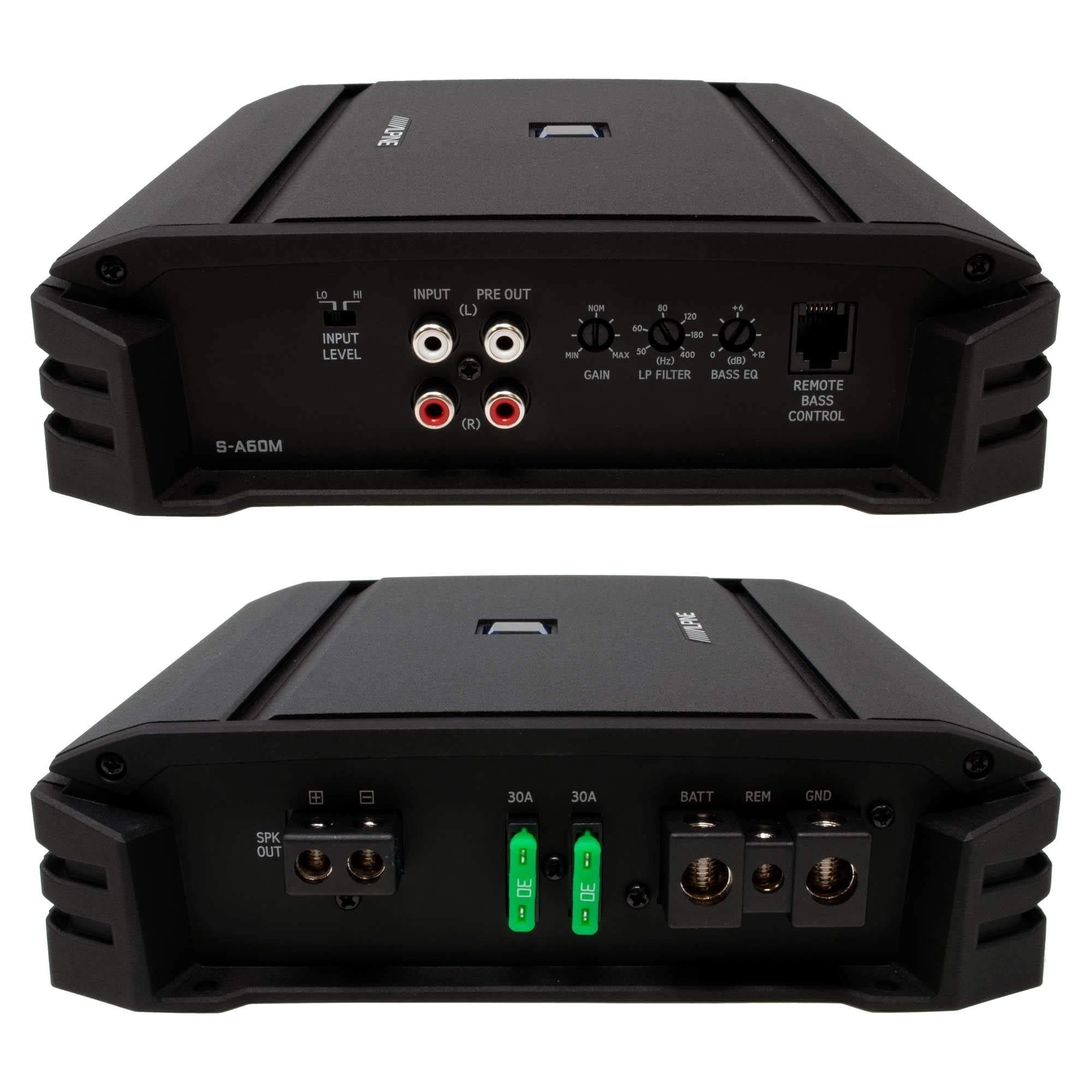
At 8.7″ wide and just 2.25″ tall, the S-A60M mounts in spaces a lot of monoblocks simply can’t reach — under a seat, behind a kick panel, or wedged into a trunk side panel without eating into cargo room. Alpine includes a selectable three-position remote turn-on circuit, which matters more than it sounds like it should: it lets the amp integrate cleanly with factory wiring or an aftermarket head unit without guessing at which turn-on method your system actually uses.
The variable low-pass crossover and adjustable bass EQ provide basic shaping control for a compact monoblock. Alpine also lists compatibility with the optional RUX-KNOB.2 or RUX-H01 remote bass knob, sold separately, if dash-accessible control matters to your build.
For power wiring, follow Alpine’s installation manual and the requirements of the complete system rather than relying on a universal wire-size or fuse recommendation. Cable length, supply voltage, load, and the rest of the system affect the correct choice; the external fuse should be installed close to the battery as specified by the manufacturer.
What It Actually Sounds Like
“Controlled and defined” is a useful design goal, but it is not a substitute for an in-car audition. A damping factor above 1000 is a published electrical specification; the audible result also depends on the subwoofer, enclosure, vehicle cabin, crossover settings, gain, and installation. The practical takeaway is narrower: the S-A60M is designed for a single-subwoofer system where compact size and controlled power matter more than extreme-SPL headroom.
In a typical compact sedan or hatchback, a sealed 10″ subwoofer can be a sensible match for this power class, provided the final impedance and power handling are compatible. That is a system-matching point, not a claim that every installation will sound identical.
Long-Term Ownership Considerations
Compact monoblocks in this class face a specific long-term stress that full-size amps don’t deal with as much: repeated heat cycling in a small enclosure. Mounting location matters more here than the spec sheet suggests — tucking the S-A60M into a fully sealed, airless cavity will shorten its comfortable operating life more than mounting it somewhere with even minimal airflow, so airflow and clearance remain important regardless of the published specifications. If you live somewhere with genuinely hot summers and the amp will sit in a trunk that gets direct sun exposure, it’s worth a few extra minutes during install to avoid the most heat-trapped spot available, even if it’s slightly less convenient.
The other long-term consideration is connector care. Amplifier terminals in this class are usually the first point of failure over years of ownership, not the amp’s internal circuitry — vibration works screws loose over time, and corrosion can creep in on power and ground connections in humid climates. A five-minute terminal check once or twice a year meaningfully extends the practical lifespan of any compact monoblock, this one included.
Real-World Comparisons
Against the Kicker 46CXA800.1, the tradeoff is straightforward: the Kicker wins on raw power and 1-ohm stability, while the Alpine keeps a smaller footprint for tight installations. If your install has room to spare, the Kicker is the better all-around pick; if space is genuinely the constraint, the S-A60M is built for exactly that scenario, provided it is mounted with the airflow and clearance specified by the installation guidance.
Against the Skar RP-1200.1D, the two sit in a similar power class, and the decision mostly comes down to what you’re optimizing for — Alpine’s published electrical specifications and installation requirements versus Skar’s tuning feature set. Neither is a clear universal winner; it depends on which tradeoff matters more for your build.
Pros & Cons
- Genuinely compact — fits installs larger monoblocks can’t reach
- High damping factor (>1000) delivers tight, accurate bass, not just loud bass
- Compact chassis with published installation guidance; mounting clearance remains essential
- Selectable 3-position remote turn-on simplifies OEM integration
- Established Alpine brand with published installation and system-matching guidance
- Less raw power than larger monoblocks — not built for extreme SPL
- Remote bass knob sold separately
- Like any compact amp, mounting location matters more here for long-term airflow and clearance
Best Alternatives to Consider
- Kicker 46CXA800.1 — more raw power if install space allows
- Skar RP-1200.1D — comparable power tier, different tuning feature set
- Best 4-Channel Car Amplifiers Under $200 — for combined speaker and sub builds
Final Verdict
The Alpine S-A60M makes the most sense when installation space is the deciding constraint. Its published dimensions, 330W RMS at 4Ω, 600W RMS at 2Ω, adjustable crossover controls, and optional remote-knob compatibility make it a plausible fit for a compact single-subwoofer system. A larger monoblock may offer more headroom when space allows, while the final result will depend on the subwoofer, enclosure, wiring, impedance, and installation. This conclusion is based on published specifications and installation considerations, not a hands-on bench or in-car test.