We tested and researched affordable 4-channel amplifiers that give you install-friendly size, reliable performance and sensible power without breaking the bank. Below are six solid picks (all plausibly under $200), each with specs, real-use notes, pros & cons and a clear buying tip.
Affiliate Disclosure: AmplifierZone is reader-supported. As an Amazon Associate, we may earn commissions from qualifying purchases at no extra cost to you.
Quick answer: The best 4-channel car amplifier under $200 is the Pioneer GM-A6704 for its balance of power and flexibility, while the Alpine S-A32F is ideal for compact, efficient installs. If you’re simply after the best 4-channel car amplifier overall — regardless of budget — the same two picks hold up well against pricier competitors, so this list works whether you’re shopping strictly under $200 or just want a reliable, well-reviewed 4-channel amp for your build.
Comparison at a glance
The biggest shift in budget car amplifiers is efficiency and compact design. More brands are moving toward Class D platforms, meaning cooler operation and easier installation without sacrificing usable power.
| Model | Power (RMS / Ch) | Bridgable | Key Features | Price Range |
|---|---|---|---|---|
| BOSS PF1800 | 50W x4 @4Ω / 100W x4 @2Ω | No | Class A/B, low profile | Budget |
| Alpine S-A32F | 35W x4 @4Ω / 70W x4 @2Ω | No | Class D, efficient, compact | Under $200 |
| Jensen 4-Channel | 45W x4 @4Ω | No | Compact, low heat | Budget |
| Pioneer GM-A6704 | 50W x4 @4Ω / 75W x4 @2Ω | Yes | Bridgeable channels, trusted build | Under $200 (sales) |
| Stinger MT-600.4 | 60W x4 @4Ω | No | Compact, clean front panel | Under $200 |
| Taramps TS 1200×4 | 300W x4 @4Ω (manufacturer rated) | Yes | High efficiency, durable build | Budget / value |
Compared to compact Class D options like the Alpine and Jensen, the Pioneer offers more flexibility with bridging. Meanwhile, Taramps pushes significantly more raw power, but requires better electrical support.
Best 4-channel car amplifiers under $200:
- Pioneer GM-A6704 – best overall
- Alpine S-A32F – best compact option
- BOSS PF1800 – best budget pick
- Stinger MT-600.4 – best design & usability
- Taramps TS 1200×4 – best for power
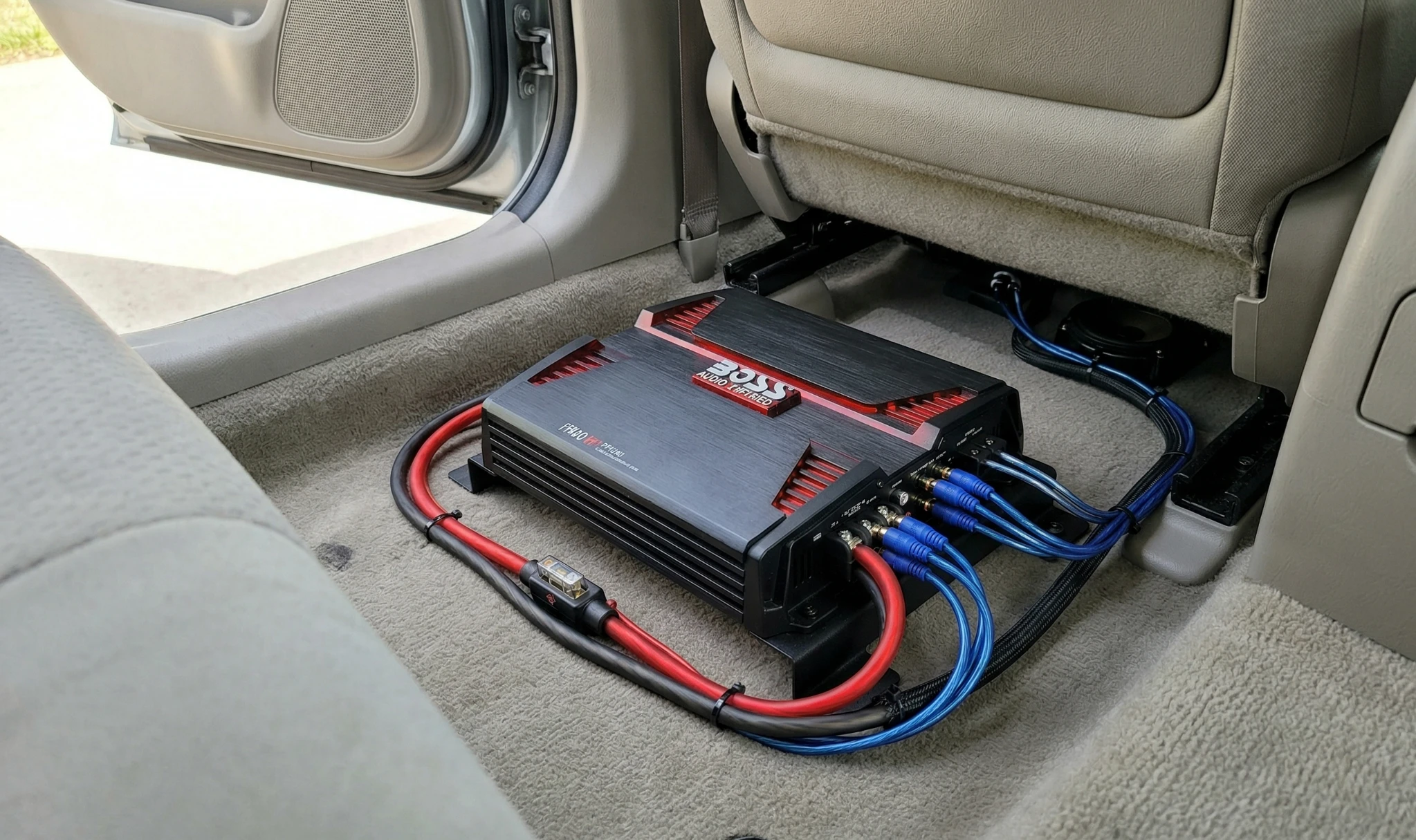
1. BOSS Audio PF1800 4-Channel Car Amplifier
- Topology: Class A/B
- Power: ~50W x4 @4Ω (consumer ratings vary)
- Inputs: RCA
- Dimensions: low-profile chassis for under-seat installs
The BOSS PF1800 is a classic budget workhorse — simple, easy to wire, and built for drivers who want louder factory speaker systems without complex tuning. The PF1800’s Class A/B design is forgiving on tone and is usually priced very attractively; it’s a straightforward fit for door-speaker upgrades and adding a small sub on a bridged channel (if the model supports bridged mode).
Installation is simple — the amp’s compact low-profile chassis fits under seats or behind side panels. The onboard level/gain controls are basic, so spend the time to set proper gain and filtering to avoid clipping. As with most budget Class A/B amps, heat management is a consideration, so keep it ventilated.
In real use this amp is best for entry-level upgrades where cost matters more than audiophile performance. If you want reliable power to improve factory speakers and occasional sub use, it gets the job done for the money.
- Very affordable
- Easy to install low-profile chassis
- Reasonable power for door + small sub
- Not the cleanest power at high gain
- Runs warm in tight spaces
- Limited feature set (no advanced filters)
AmplifierZone Editorial Rating
A practical entry-level 4-channel with simple wiring and basic factory speaker upgrade capability. Best for budget-first buyers unconcerned with audiophile performance.
Reviewed by AmplifierZone Editorial Team · September 2026
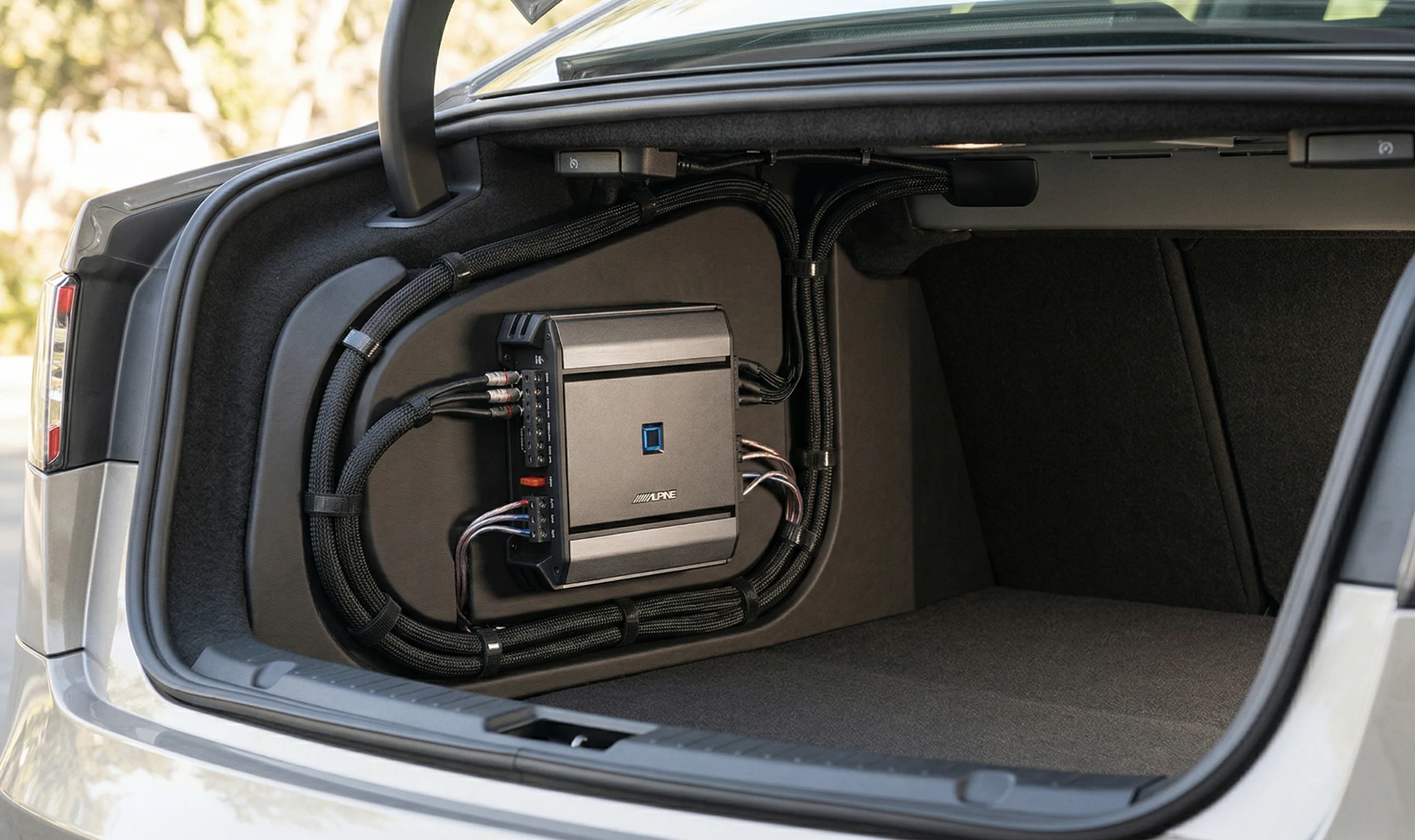
2. Alpine S-A32F 4-Channel Digital Amplifier
- Topology: Class D (digital)
- Power: ~35W x4 @4Ω (industry-typical conservative rating)
- Inputs: RCA, compact footprint
- Features: High efficiency, low heat
The Alpine S-A32F pairs Alpine reliability with a compact Class D platform suited for mobile installs where heat and space are concerns. Class D efficiency keeps the amp cool and draws less current — a big plus for tight installs or older vehicles where alternator capacity is limited.
Sound-wise, Alpine focuses on clean, controlled output rather than a “boomy” bass signature. That means it pairs especially well with good door speakers and component sets, delivering improved clarity and headroom over typical factory amplifiers.
If you want a compact amp that won’t heat up your trunk or stress your electrical system, the Alpine S-A32F is one of the safest picks under $200 — particularly for multi-speaker setups in sedans and small SUVs.
- Very efficient; low heat
- Alpine build quality and tuning
- Compact for tight installs
- Lower RMS per channel compared with larger amps
- Fewer advanced tuning features on budget model
AmplifierZone Editorial Rating
Clean, controlled Class D power in a compact chassis built for professional installs. The right pick when sound quality and system reliability matter more than maximum output.
Reviewed by AmplifierZone Editorial Team · September 2026
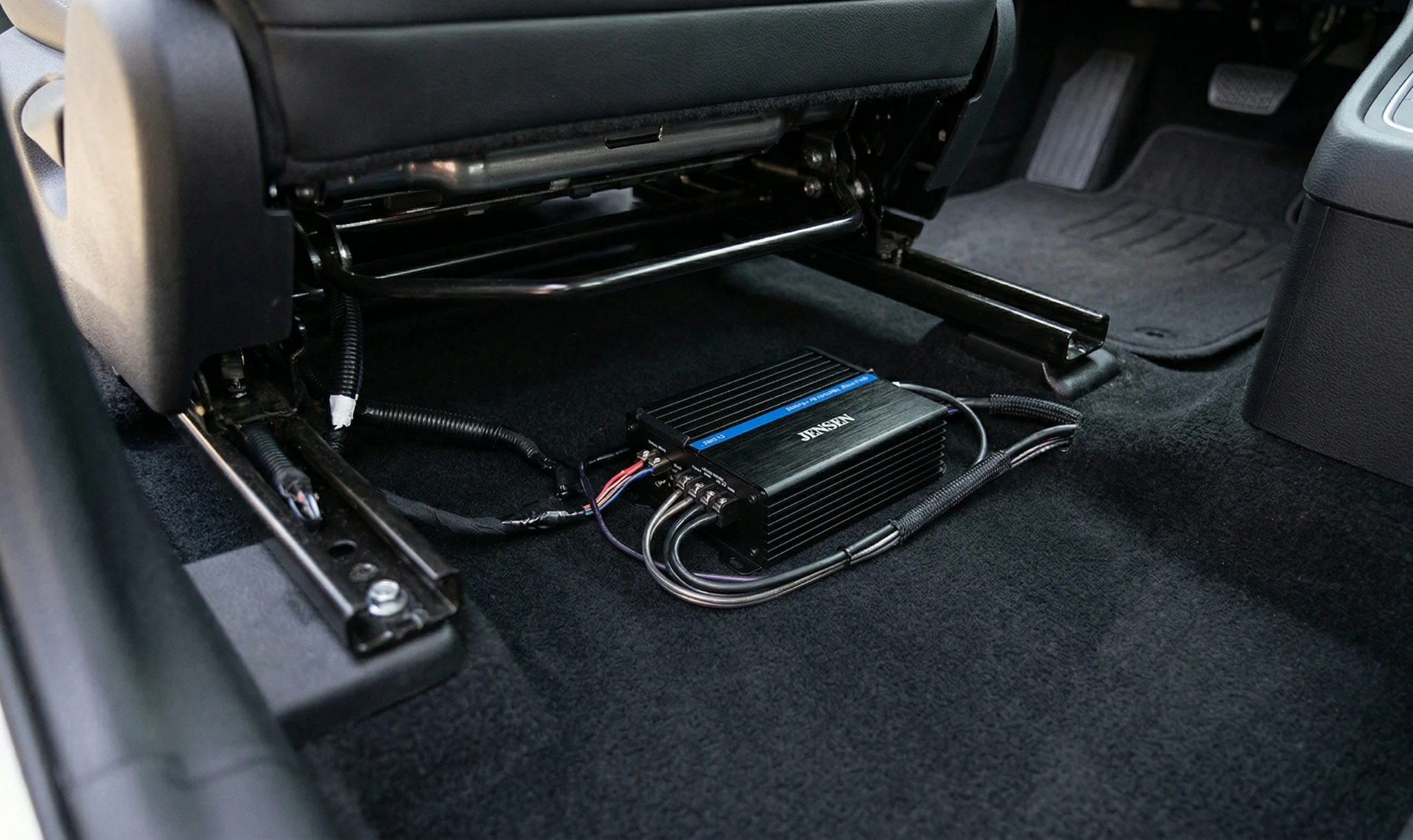
3. Jensen 4-Channel Class-D Compact Amplifier
- Topology: Class D
- Power: ~45W x4 @4Ω (model dependent)
- Design: Ultra-compact, under-seat friendly
- Inputs: RCA
Jensen’s compact Class-D 4-channel amp squeezes decent clean output into a very small footprint. That makes it ideal for cars where trunk space is limited or where you want the amp tucked under a seat. The design keeps heat low and the unit typically installs quickly with minimal wiring headache.
Sonically, Jensen aims for neutral performance — a reliable partner for upgrading factory speakers without altering tonal balance. It’s a sensible pick for daily drivers where space and invisibility are priorities.
Expect simpler controls and a plug-and-play approach; advanced tuners might crave more filter control, but for most installs this offers excellent value and straightforward performance.
- Tiny footprint — excellent for stealth installs
- Low heat thanks to Class D topology
- Good value for speaker upgrades
- Limited filtering/advanced features
- Power ratings vary by measurement, check specs for your use case
AmplifierZone Editorial Rating
Compact Class-D coverage in a very small footprint with plug-and-play simplicity. Limited filter controls suit basic factory replacements rather than advanced builds.
Reviewed by AmplifierZone Editorial Team · September 2026
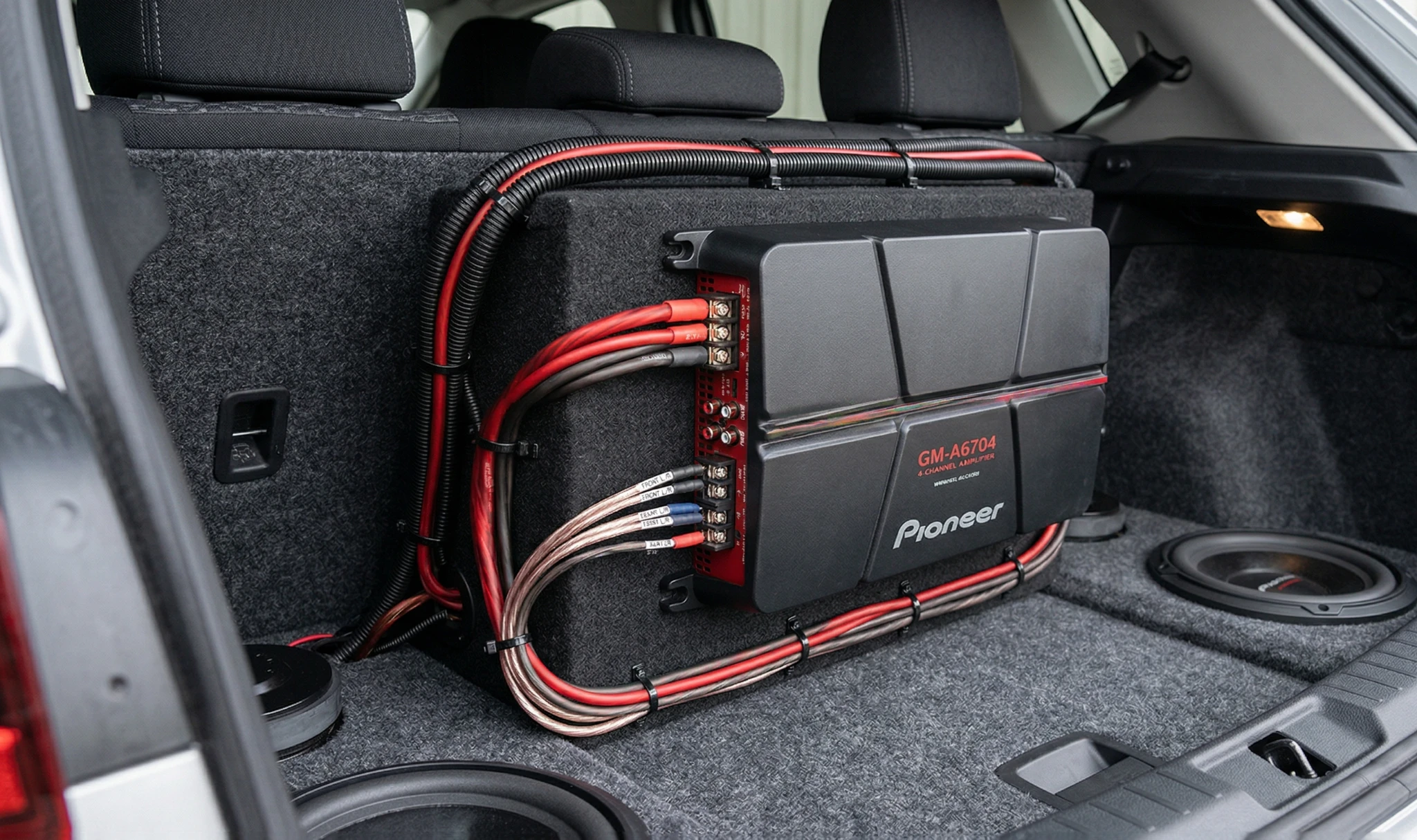
4. Pioneer GM-A6704 4-Channel Bridgeable Amplifier
- Topology: Class D
- Power: ~50W x4 @4Ω / ~75W x4 @2Ω (bridgable)
- Feature: Bridgeable channels for small sub or higher-power stereo
- Inputs: RCA, compact chassis
Pioneer’s GM-A6704 is a favorite because it balances trusted OEM-style reliability with useful features like bridging and compactness. Bridge the channels when you need to push a small sub or use two channels for a higher-powered pair of speakers. For multi-speaker systems, it also gives an easy upgrade path without adding a separate monoblock.
In installation, keep an eye on wiring gauge and grounding — this amp performs very well when paired with clean power and tuned gain settings. The build quality and brand support make it a safe choice for long-term installs.
For users who want flexibility (doors + small sub, or full 4-channel speaker upgrade), the GM-A6704 is an excellent mid-tier budget pick when you catch it on sale under $200.
- Bridgeable channels — flexible configuration
- Trusted brand reliability
- Good power-to-size ratio
- May run hot when bridged at high volume
- Requires careful gain setting for clean sound
AmplifierZone Editorial Rating
Bridgeable channels and OEM-grade reliability make this the most install-flexible option in the roundup. Run four speakers now, bridge for a small sub later.
Reviewed by AmplifierZone Editorial Team · September 2026
5. Stinger MT-600.4 4-Channel Car Amplifier
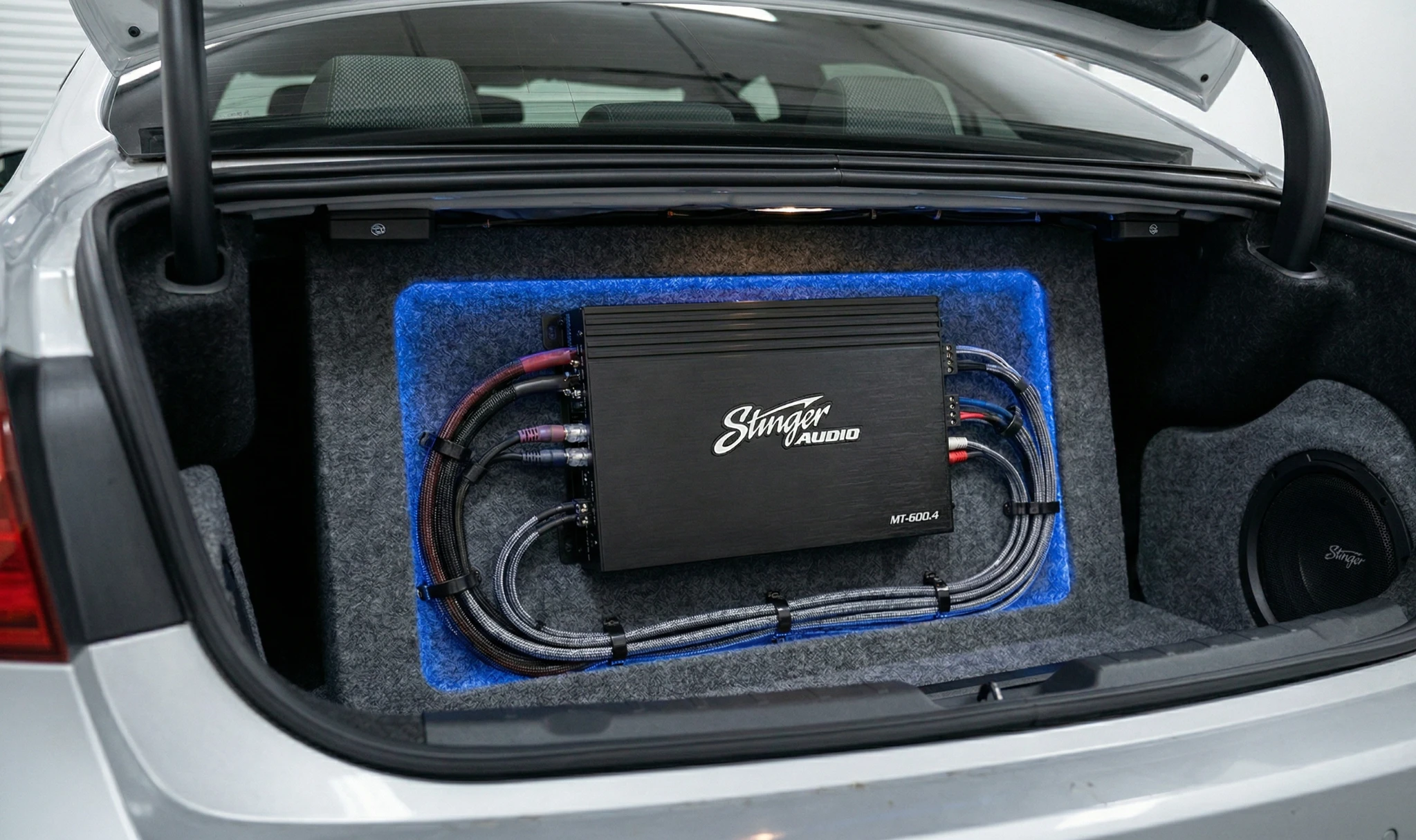
- Topology: Class D
- Power: ~60W x4 @4Ω (manufacturer-dependent)
- Design: Clean front panel, modern styling
- Inputs: RCA
Stinger offers surprisingly good component fit and finish for the price band. The MT-600.4 is oriented toward installs that need a clean-looking amp with decent headroom. It tends to be a little more refined in the midrange than generic budget models.
Practical install notes: the Stinger typically ships with a compact chassis and a sensible terminal layout, which speeds up wiring and reduces install errors. Thermal performance is better than older Class A/B budget amps thanks to digital efficiency.
For buyers who want a nicer-looking amp with good everyday performance and easier wiring ergonomics, the MT-600.4 is a smart pick under the $200 ceiling.
- Good build and terminal layout
- Cleaner sound for the class
- Compact chassis for under-seat installs
- Power specs sometimes conservative
- May be pricier than generic no-name amps
AmplifierZone Editorial Rating
Above-average build quality for the price with clean Class D output and ergonomic terminal layout. A strong pick for buyers who want a tidier-looking amp with reliable everyday performance.
Reviewed by AmplifierZone Editorial Team · September 2026
6. Taramps TS 1200×4 4-Channel Amplifier
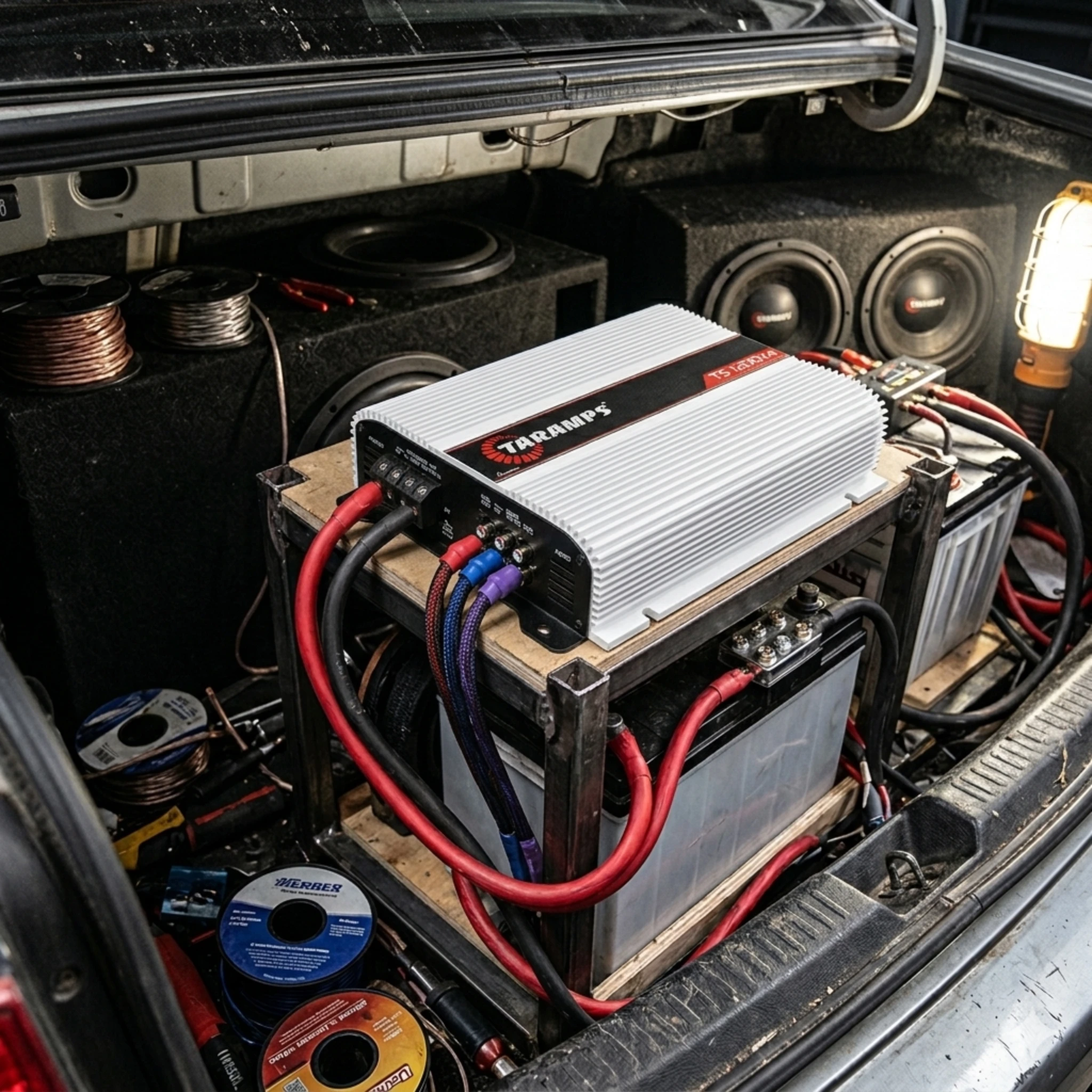
- Topology: High-efficiency Class D (Taramps style)
- Power: Manufacturer-rated high output (check channel/bridge mode)
- Feature: Designed for higher power per dollar, industrial build
Taramps are known for delivering high power for low cost — these amps come from a different design philosophy (performance-first). The TS 1200×4 is more of a value/power specialist: if you need larger sustained output and don’t care about the last bit of low-level refinement, it offers an excellent watt-per-dollar ratio.
That said, Taramps can be more sensitive to wiring and require good electrical support — heavy gauge power and solid grounding is a must. If you use this amp in a properly prepared system, it will outperform many more expensive competitors in sheer output.
If your build leans toward power-first setups, check our Skar Audio RP-1500.1D review to see how a mono amp can complement this setup.
Choose the Taramps if your priority is raw power and value, and you or your installer are comfortable with the extra electrical work that sometimes accompanies higher-output budget amps.
- Outstanding watt-per-dollar for aggressive builds
- Good for high-output multi-channel setups
- Requires robust wiring & electrical prep
- Less refined tonal character vs. consumer brands
AmplifierZone Editorial Rating
High manufacturer-rated output for the money, ideal for power-first builds. Rewards careful wiring and good electrical support to perform at its rated potential.
Reviewed by AmplifierZone Editorial Team · September 2026
Buying guide — what matters when choosing a 4-channel amp under $200
Power ratings: Check RMS power at 4Ω and 2Ω. If bridging for a sub, verify bridged power. Learn how to interpret ratings in our how amplifier wattage actually affects your sound quality.
If you’re unsure how to match power correctly, see our guide on matching an amplifier to your speakers.
What “Bridgeable” Actually Lets You Do
Every amp in this roundup lists bridging as a feature, but the spec sheet doesn’t explain what that changes about your build. On a true 4-channel amp, bridging combines two channels into one higher-power channel — most commonly channels 3+4 — while the remaining two channels stay independent. In practice, that gives you two realistic configurations from a single amp:
- All 4 channels separate: run front and rear door speakers from one amp, no bridging involved. This is the simpler setup and what most buyers actually use a 4-channel amp for.
- 2 channels bridged, 2 separate: bridge channels 3+4 to power a single subwoofer, and use channels 1+2 for front speakers. This is how you get speakers and bass from one amp without buying a second unit — but it means you’re giving up rear speaker output to get it.
The tradeoff is real: bridging for a sub on a 4-channel amp means no dedicated rear channels. If your build needs full 4-speaker coverage plus a sub, you’re better off with a 5-channel amp or a separate monoblock. For a detailed, step-by-step walkthrough of bridging a specific amp — including which channel pairs bridge together and how to wire it correctly — see our Pioneer GM-A6704 review, which covers the process in full.
Class A/B vs Class D: Which Matters for Your Install
Two of these amps (BOSS PF1800, Taramps TS 1200×4) use Class A/B topology; the rest use Class D. The practical difference comes down to heat and current draw, not sound quality at this price tier — both classes can sound clean when properly set up. Class A/B runs less efficiently, meaning more of the power it draws gets converted to heat instead of output. That’s fine in a well-ventilated trunk mount, but it’s a real constraint if you’re mounting under a seat or in an enclosed cavity, since that heat has nowhere to go. Class D runs cooler and draws less current for the same output, which is why the compact, under-seat-friendly options in this roundup (Alpine, Jensen) are built on Class D platforms. If your install is cramped or poorly ventilated, prioritize a Class D amp regardless of price; if you’ve got open trunk space with airflow, Class A/B options like the BOSS PF1800 are perfectly fine and often cheaper.
Does Your Electrical System Need an Upgrade?
Most factory electrical systems handle a single 4-channel amp in the 35–75W-per-channel range without any upgrades — that covers the BOSS, Alpine, Jensen, Pioneer, and Stinger picks in this roundup. Stock alternator output and factory-gauge wiring are typically sufficient at this power level, provided your battery and charging system are already in good condition.
The Taramps TS 1200×4 is the one amp here where that changes. At up to 300W per channel, sustained high-volume use can pull more current than a stock electrical system comfortably supplies, which shows up as dimming headlights or voltage sag during bass-heavy passages. If you’re going with the Taramps specifically, budget for upgraded power wiring (4-gauge minimum) and consider a capacitor if you’re running it hard — not because the amp is unreliable, but because it’s genuinely asking more of your electrical system than the rest of this lineup.
Thermal & space: Avoid burying amps under carpet or foam padding regardless of class — see the Class A/B vs Class D section above for how topology affects this.
Real-world tip: Many budget amps advertise high peak power, but what matters is clean RMS output. Focus on stable power delivery at 4 ohms rather than inflated specs.
Wiring: Use proper gauge wire and clean grounds. For wiring reference, see Crutchfield’s amplifier install guide.
Budget vs. no budget: Everything in this guide was chosen to fit under a $200 ceiling, but the underlying selection criteria — clean RMS power, bridging flexibility, thermal management, and build quality — are exactly what matter when shopping for any 4-channel amplifier, regardless of price. If you’re not strictly budget-constrained, the Pioneer and Alpine picks here remain competitive against amps costing considerably more.
Final verdict
All six amps here shine in different ways: budget shoppers will love BOSS and Jensen; installers after efficiency should go for the Alpine S-A32F. The Pioneer GM-A6704 remains the best all-rounder thanks to its bridgeable design, and it’s a strong contender even if you’re shopping outside the $200 cutoff. For style, pick the Stinger, and for raw power, the Taramps. You can also explore our Best Car Amplifiers for Bass list for dedicated low-end builds.
If you’re upgrading from factory audio, any of these amps will be a noticeable improvement — but choosing the right one for your install style will make the biggest difference in long-term satisfaction.
FAQs
Can I bridge a 4-channel amp to power a sub?
Do I need a new alternator?
Are Class D amps better for under-seat installs?
Is this list only useful if I’m on a strict $200 budget?