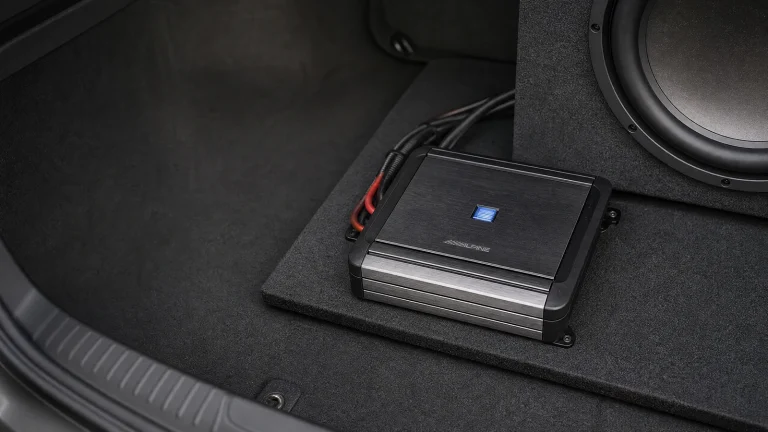
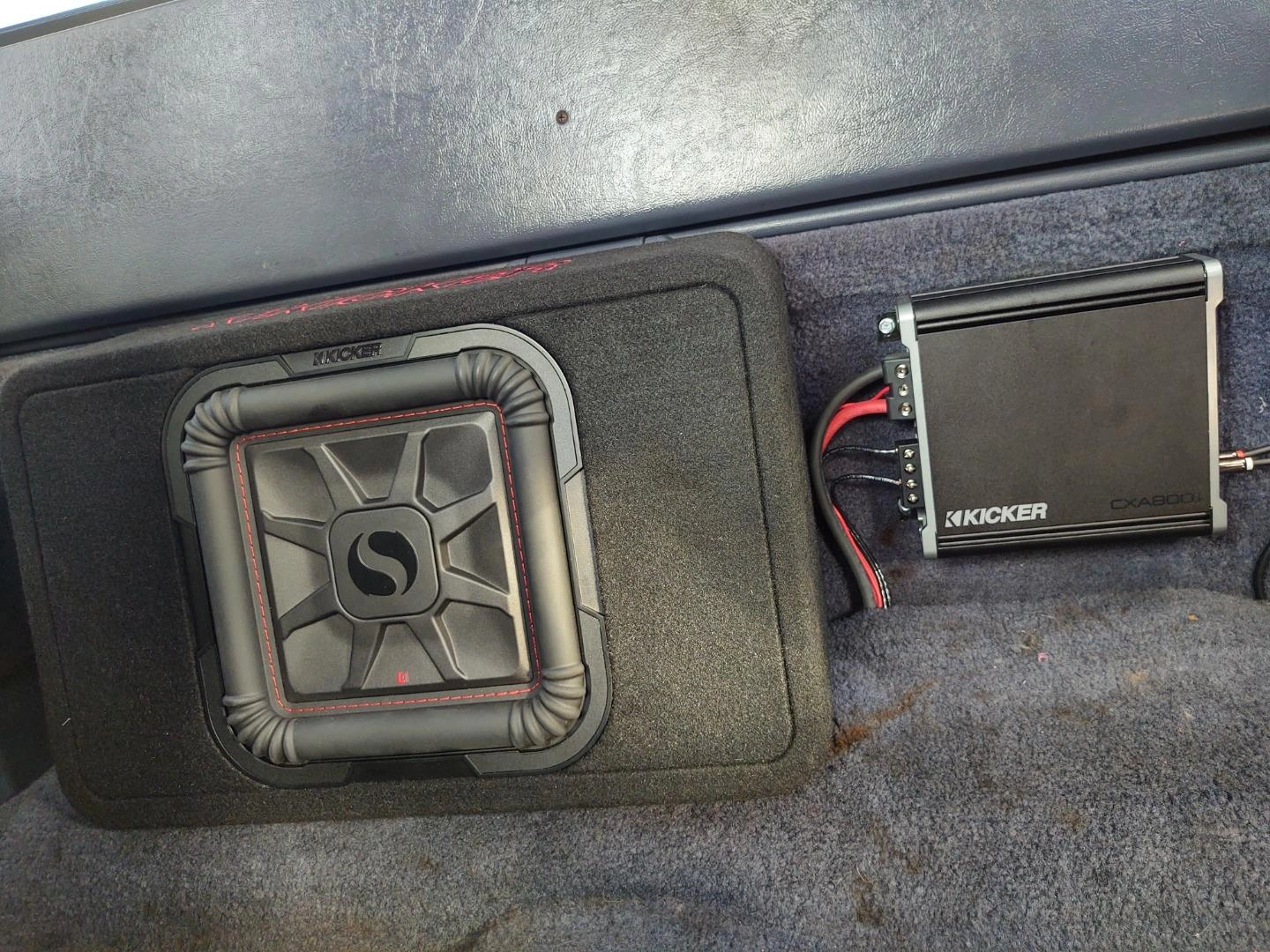
Most budget monoblocks stop being stable once you drop below 2 ohms — wire a single sub down to 1 ohm and they either shut down under thermal protection or distort long before they should. The Kicker 46CXA800.1 doesn’t have that ceiling. It’s rated and built for genuine 1-ohm operation, which opens up wiring configurations that would fry a lot of amps in its price range — including some that cost more, like the Alpine S-A60M. This Kicker 46CXA800.1 review gets into what that 1-ohm rating actually buys you, how the amp performs against independent owner dyno tests, and where it lands next to the Skar RP-1200.1D and other monoblocks worth cross-shopping.
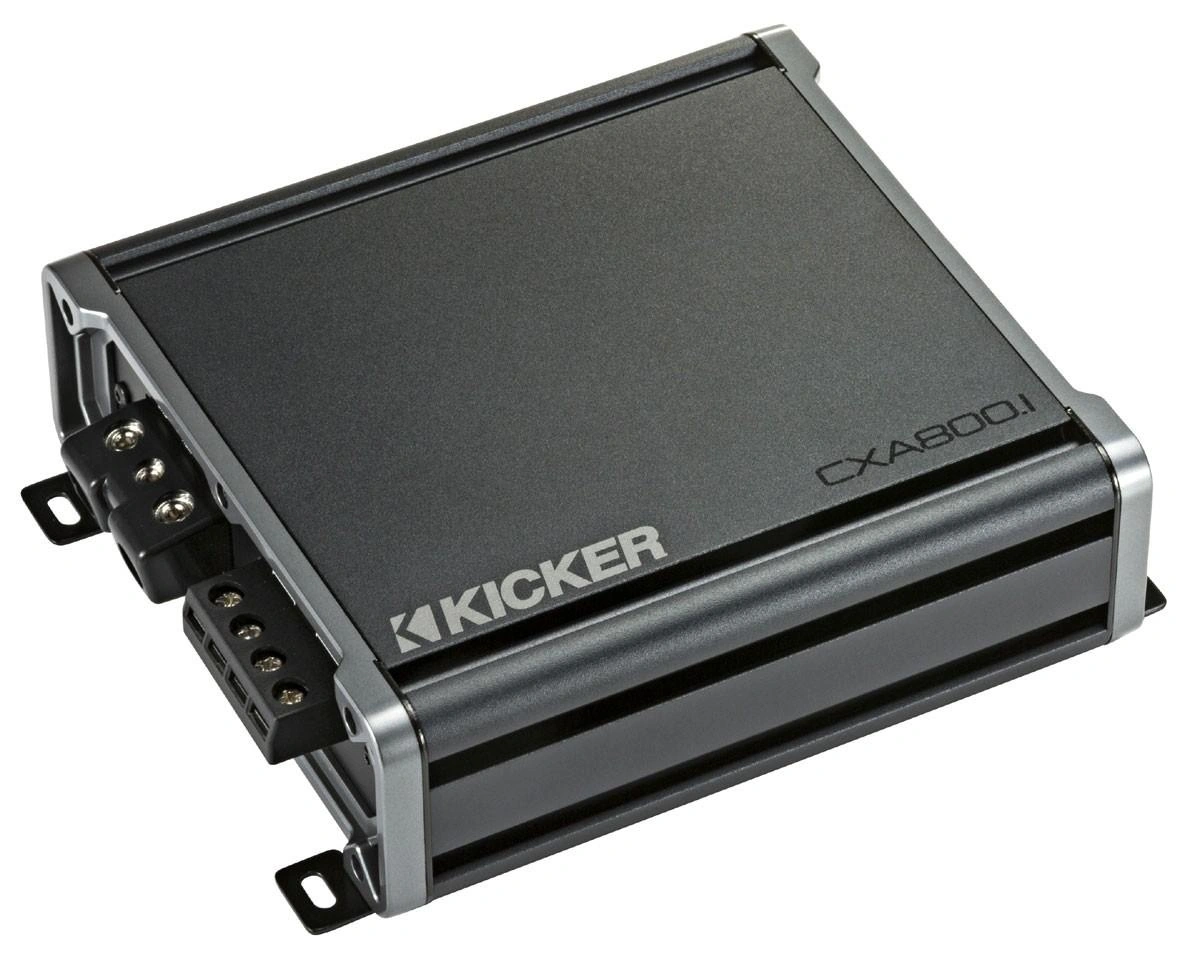
Specs at a Glance
| Spec | Detail |
|---|---|
| RMS Power | 300W @4Ω / 600W @2Ω / 800W @1Ω |
| Class | Class D, 1-ohm stable monoblock |
| Signal-to-Noise | > 95 dB |
| Frequency Response | 25Hz–200Hz |
| Bass Boost | KickEQ, up to 6dB variable |
| Filters | 12dB crossover, 24dB subsonic filter |
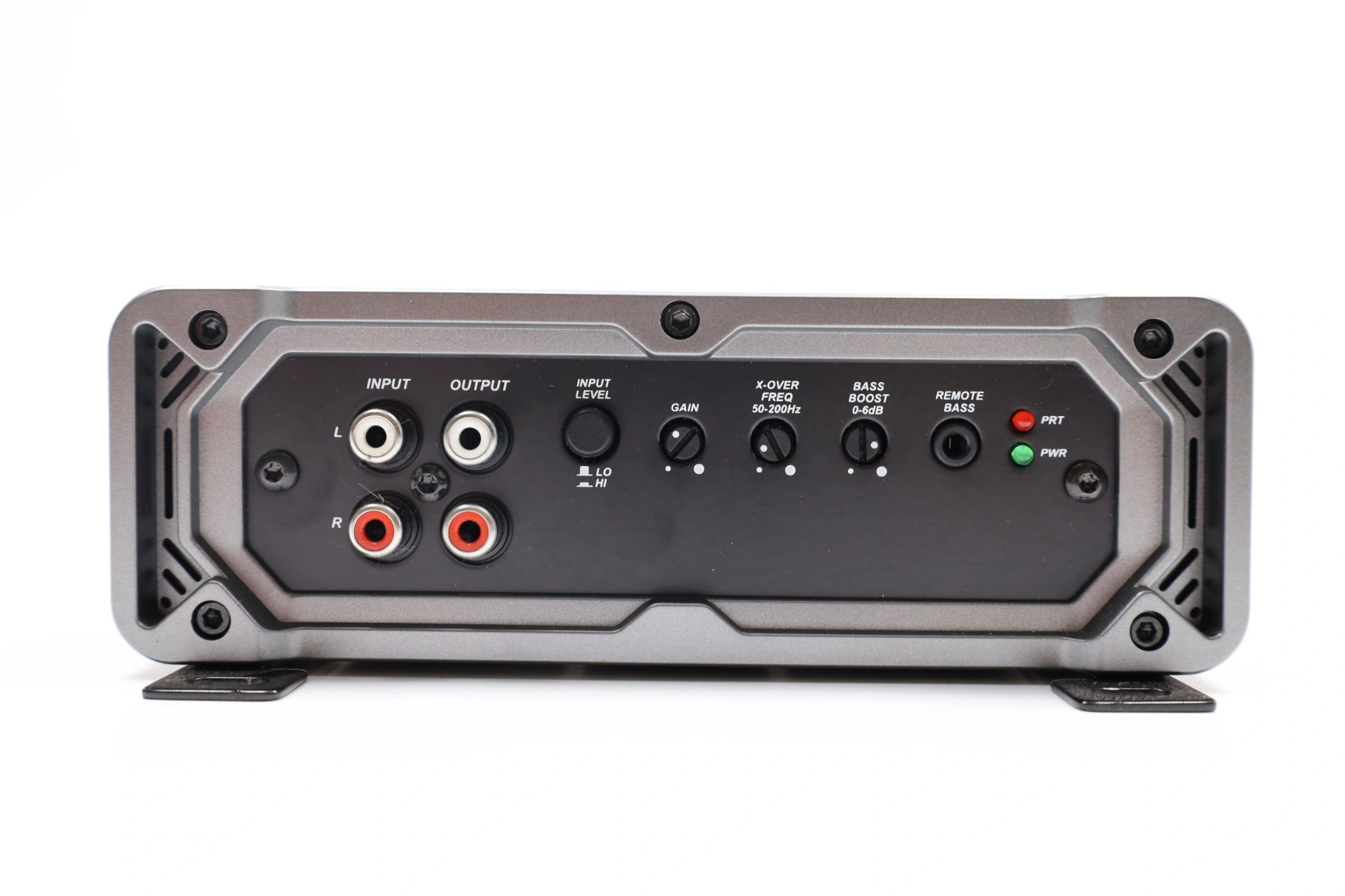
| Speaker-Level Input | Accepts up to 40V (400W) input signal |
What 1-Ohm Stability Actually Buys You
A lot of car audio marketing throws impedance numbers around without explaining what they change for the person installing the amp. Here’s the practical version: most budget monoblocks list a 2-ohm minimum. Wire a subwoofer configuration that presents 1 ohm to those amps — a common outcome when running a dual voice coil sub in parallel — and you’re either voiding the warranty, tripping thermal protection, or both.
The 46CXA800.1 doesn’t have that restriction. It’s built and rated to run stably at 1 ohm, which means:
- A dual voice coil sub wired in parallel at 1 ohm is fair game, not a workaround
- You get meaningfully more output (800W vs 600W) from the same amp just by choosing a lower-impedance wiring configuration
- There’s more flexibility in matching this amp to whatever subwoofer you already own, rather than shopping for a sub that fits the amp’s impedance ceiling
Worth explaining the wiring itself, since “dual voice coil sub wired in parallel” only means something if you know how the two coils actually combine: a DVC sub has two separate voice coils, each with its own nominal impedance — commonly 2Ω or 4Ω per coil. Wiring those two coils in parallel roughly halves the combined impedance for equal coils, so a common 2Ω DVC sub wired in parallel presents 1 ohm to the amp — which is exactly the load the 46CXA800.1 is built to handle without derating. Wire that same sub’s coils in series instead and you’d get 4 ohms, a perfectly safe load for cheaper amps too, just without the extra headroom this amp’s 1-ohm rating unlocks.
This is the single biggest practical difference between this amp and something like the Alpine S-A60M, which tops out around 2 ohms for its rated performance.
Real Output vs Owner-Reported Dyno Results
Kicker’s own numbers — 300W at 4Ω, 600W at 2Ω, 800W at 1Ω — are conservative rather than inflated. Independent dyno tests posted by owners in car audio forums have shown this amp pulling as high as 925W at 1 ohm on a properly wired system, which suggests Kicker left some margin in its published spec rather than padding it the way some budget brands do.
What that means day to day: you’re not fighting the amp to get its rated output. Clean power shows up where Kicker says it will, and there’s headroom above that if your electrical system can support it.
Connecting to a Factory Head Unit Without a Converter
Factory stereos are the most common reason installers reach for a line-output converter — most aftermarket amps only accept RCA-level input, and a factory deck doesn’t provide that. The 46CXA800.1 sidesteps this problem entirely.
- Its speaker-level inputs accept up to 40 volts (400 watts) of signal directly from a factory amplifier’s speaker outputs
- That means no LOC, no extra box wired into the harness, and one less point of failure in the signal chain
- The three-second turn-on/off delay also matters here — it’s specifically there to eliminate the pop or thump that instant-on designs can introduce through factory speaker wiring
Wiring and Fusing for Real 1-Ohm Draw
Running 800W at 1 ohm means pulling serious current — roughly 75-80 amps at full output on a 13.8V system — and this is exactly where the 1-ohm rating stops being an abstract spec and starts mattering for what’s actually in your trunk. Kicker specifies 4-gauge power and ground wire with an 80-amp external fuse, and unlike some monoblocks, the fuse isn’t built into the amp — it has to be installed separately within 18 inches of the battery, which is easy to overlook if you’re used to amps that fuse themselves.
One thing worth knowing before you buy a fuse holder: some owners have reported AGU-style fuses failing without any visible sign of damage, triggering the amp’s protection mode for no obvious reason — swapping to an ANL or MANL-style fuse holder resolved it for at least one reported case. It’s not a universal issue, but if your amp trips into protect mode unexpectedly and everything else checks out, a fuse that looks fine but has actually failed internally is worth ruling out before you start chasing a wiring problem that isn’t there.
KickEQ, Subsonic Filter & Tuning
KickEQ adds up to 6dB of variable bass boost, and it’s controllable remotely through the optional CXARC dash controller if you want that adjustment within reach while driving rather than buried in the trunk. The more genuinely useful feature, though, is the 24dB subsonic filter — it cuts frequencies below your subwoofer’s safe operating range before they ever reach the driver. That’s real protection against over-excursion damage on heavy bass content, not just a marketing bullet point.
Kicker vs Alpine vs Skar
Against the Alpine S-A60M, this comes down to what your install actually needs. The Alpine is smaller and specifically engineered against thermal shutdown in tight spaces, but it doesn’t match the Kicker’s 1-ohm stability or headroom. If your amp has to disappear into a cramped mounting spot, Alpine wins; if you have room and want more output with low-impedance flexibility, the Kicker takes it.
Against the Skar RP-1200.1D, power output sits in a similar bracket, but the Kicker’s genuine 1-ohm rating is the differentiator most spec sheets in this category don’t emphasize honestly. For anyone planning a low-impedance wiring setup specifically, that makes the Kicker the safer pick of the two.
Pros & Cons
- Genuine 1-ohm stability — handles loads that shut down cheaper monoblocks
- Conservative power ratings — real-world output matches or exceeds Kicker’s own numbers
- Speaker-level inputs accept up to 40V — no line-output converter needed for factory integration
- KickEQ bass boost + 24dB subsonic filter built in
- Mono-only — needs a separate amp if your build also runs speakers
- 800W is more power than many single-sub builds actually need
Best Alternatives to Consider
- Alpine S-A60M — smaller footprint for tight-space installs
- Skar RP-1500.1D — more raw output for larger single-sub or multi-sub setups
- Rockford Fosgate P500X2 — 2-channel option if your build also needs speaker power
Final Verdict
The 1-ohm rating is what makes the Kicker 46CXA800.1 worth singling out — it’s not a spec most buyers think to check until they’re already stuck with a wiring configuration their amp can’t handle. Between the honest power ratings, the factory-friendly speaker-level inputs, and real subsonic protection, this amp does more of the unglamorous work correctly than most of its direct competitors. It’s not the right pick if you’re trying to combine speakers and a sub on one amp — but for dedicated single-sub duty at low impedance, it’s a genuinely strong option.
Frequently Asked Questions
What is the real RMS output of the Kicker 46CXA800.1?
Is the Kicker 46CXA800.1 truly 1-ohm stable?
Does the 46CXA800.1 need a line-output converter for a factory stereo?
What is KickEQ?