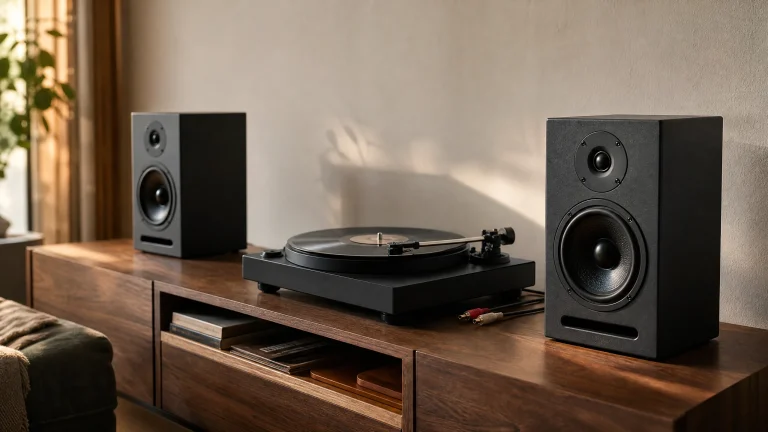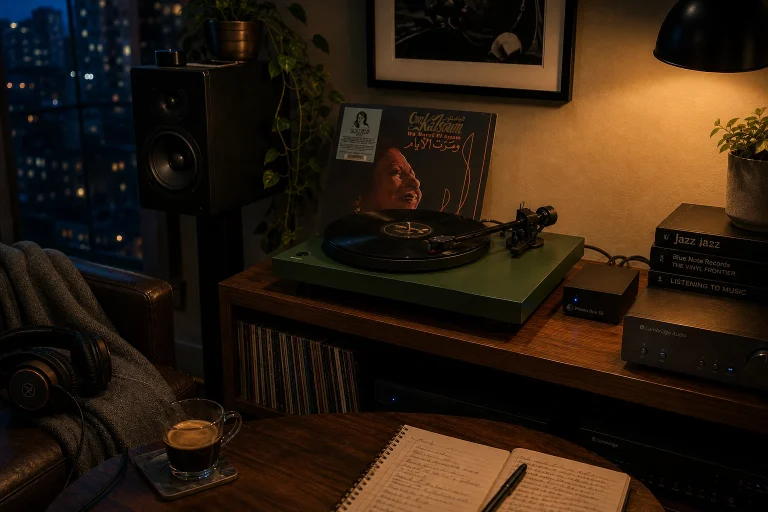
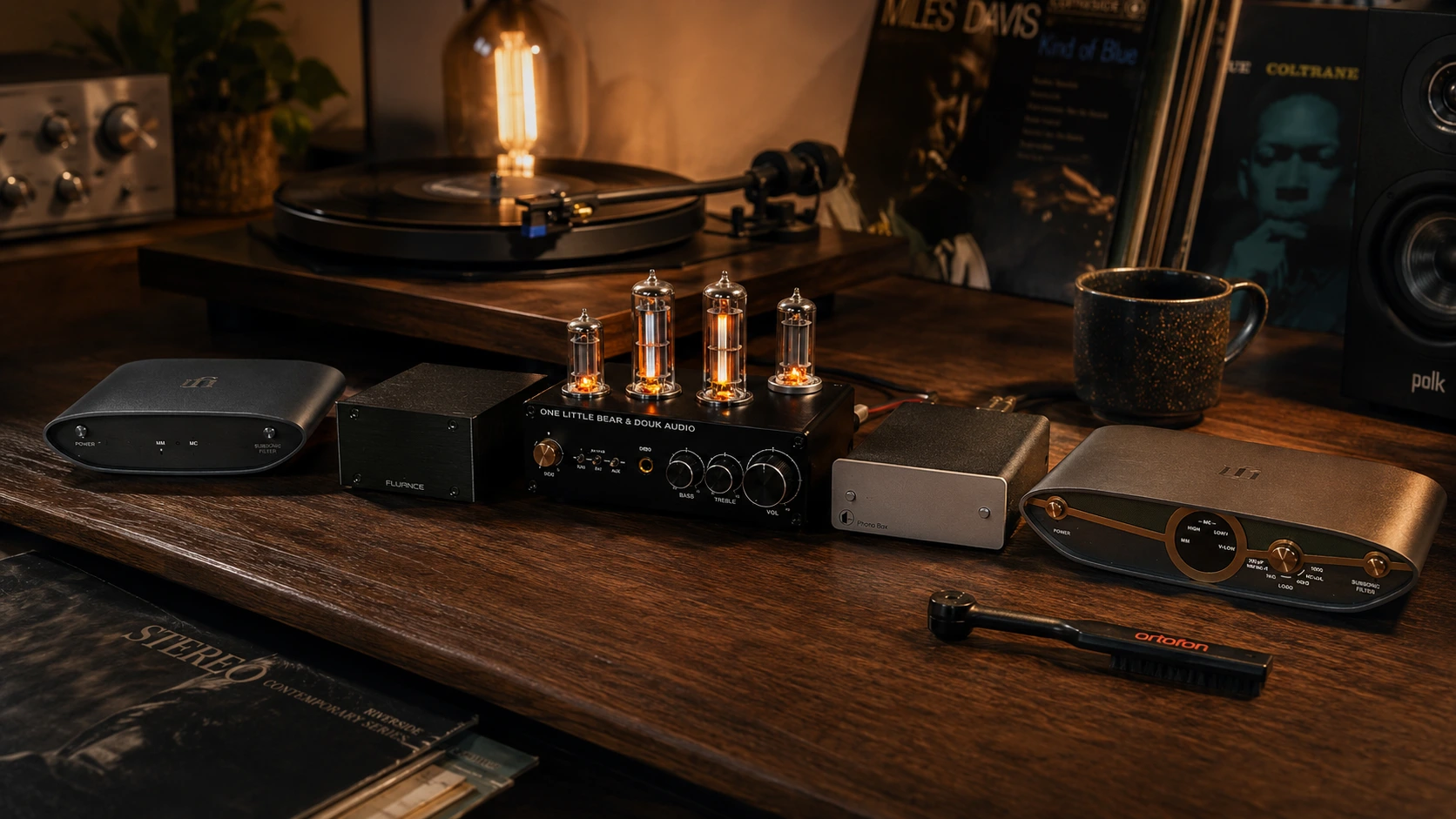
A dedicated phono preamp is the best phono preamp under $200 upgrade most vinyl listeners overlook — and the one that often makes the biggest single difference to what a turntable actually sounds like. The built-in phono stages in budget integrated amplifiers and entry-level turntables are functional but basic: average noise performance, imprecise RIAA equalisation, and circuit quality that limits what even a good cartridge can resolve. A dedicated external phono preamp at $100 or more fixes all three problems at once. Specifically, this roundup covers five picks from $99 to $249, from the best entry-level MM/MC option to a genuinely audiophile-grade unit that competes well above its price. If you are still at the very beginning of the vinyl journey and want to understand what a phono preamp actually does, the best phono preamps under $100 covers the entry-level options at lower cost first.
Every unit here has been assessed for noise performance, cartridge compatibility, RIAA accuracy, and practical value at its price point. Furthermore, the roundup is ordered cheapest to most expensive — the entry picks work correctly for most listeners, and the higher-priced units justify their cost with specific, audible improvements that matter to more invested listeners.
Quick Picks
- Best entry MM/MC pick: iFi Zen Air Phono — $99, MM and MC support, subsonic filter, clean iFi circuit
- Best entry MM pick: Fluance PA10 — $99.99, Amazon’s Overall Pick, dedicated L/R channel amplifiers, selectable high-pass filter
- Best tube/character pick: Douk Audio T9 — $119.99, vacuum tube circuit, headphone output, MM/MC, tone controls
- Best trusted brand MM/MC: Pro-Ject Phono Box DC — $148.66, Amazon’s Overall Pick, clean solid-state circuit, highest purchase validation in this group
- Best overall: iFi Zen Phono 3 — $249, -151dBV noise floor, 36–72dB gain, adjustable loading, subsonic filter, 4.4mm balanced out
This article contains affiliate links. If you purchase through them, we may earn a commission at no extra cost to you. This helps support AmplifierZone and allows us to keep creating in-depth, unbiased audio guides.
Best Phono Preamps — Comparison
Five units mapped by cartridge compatibility, gain range, and key features so you can match the right preamp to your turntable and cartridge before reading the full reviews. For the technical background on why MM and MC cartridges require different gain and loading, the MM vs MC phono preamp guide covers the full explanation.
| Unit | MM/MC | Gain | Subsonic Filter | Balanced Out | Best For |
|---|---|---|---|---|---|
| iFi Zen Air Phono | MM + MC | 36–66dB | Yes | No | Entry MM/MC |
| Fluance PA10 | MM only | ~40dB | Yes (selectable) | No | Entry MM |
| Douk Audio T9 | MM + MC | 40/60dB | No | No | Tube character |
| Pro-Ject Phono Box DC | MM + MC | 40/60dB | No | No | Trusted brand MM/MC |
| iFi Zen Phono 3 | MM + MC | 36–72dB | Yes (intelligent) | Yes — 4.4mm | Top pick |
1. iFi Zen Air Phono — Entry MM/MC Phono Preamp
Best for: Vinyl listeners who want MM and MC cartridge support at the entry price point — $99 with iFi’s subsonic filter, low-noise circuit, and a clean RIAA stage that handles both cartridge types without adjustment complexity
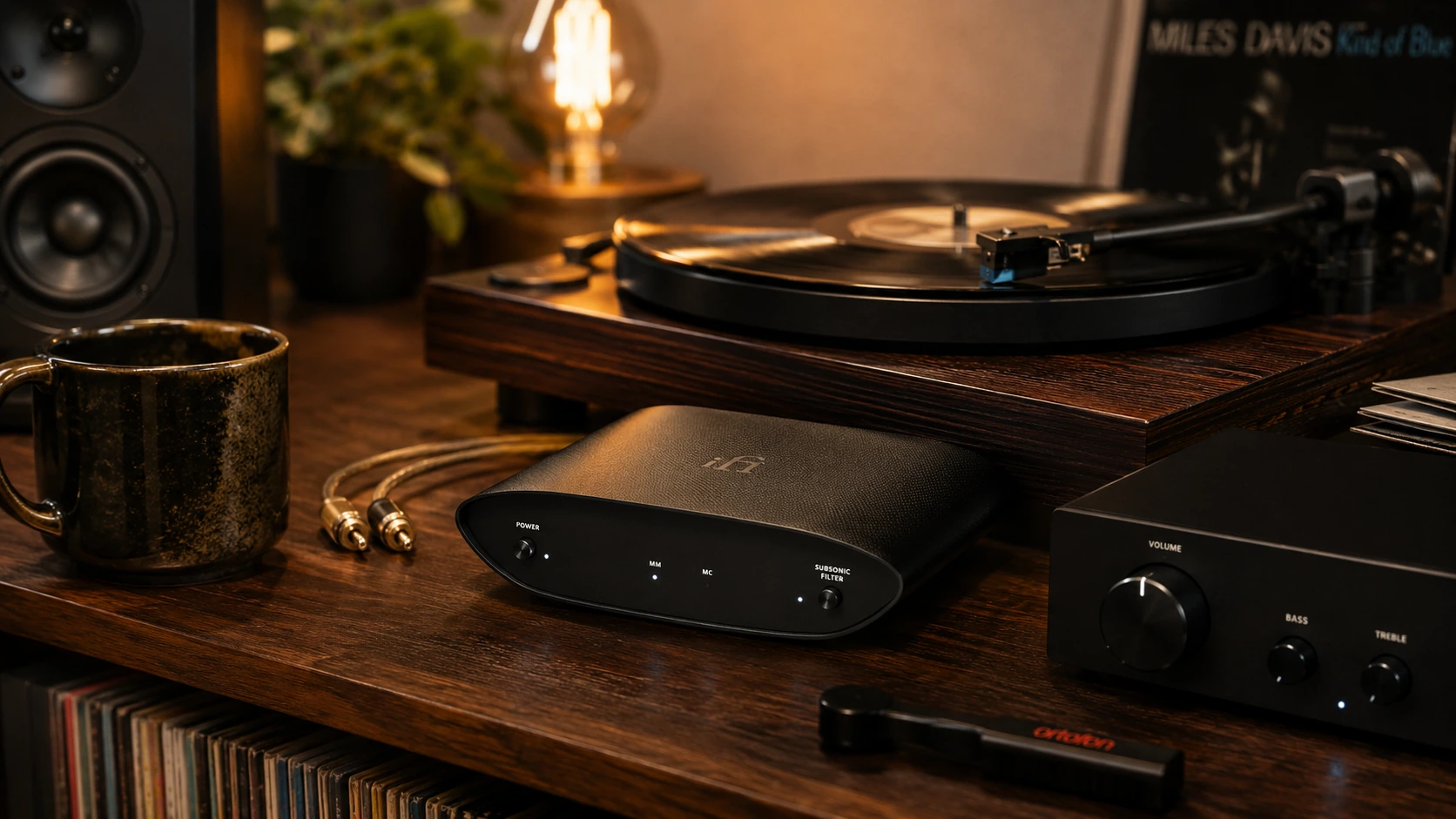
- Cartridge compatibility: MM and MC
- Gain: 36dB (MM), 48dB (MC high), 66dB (MC low) — switchable
- Input impedance: 47kΩ (MM), 470Ω (MC high), 100Ω (MC low)
- Subsonic filter: Yes — iFi’s intelligent filter removes warp frequencies
- Output: RCA stereo
- Balanced output: No
- Power: DC wall adapter
What the Zen Air Phono delivers at $99
Specifically, the iFi Zen Air Phono is the entry point in iFi’s phono preamp range — and it brings three things that most $99 phono preamps do not offer together in one unit: genuine MM and MC cartridge support, iFi’s subsonic filter, and a low-noise circuit derived from the more expensive Zen Phono series. The subsonic filter removes the low-frequency noise generated by warped vinyl — a real audible problem on older records that most entry preamps do nothing to address. Specifically, the three-position gain switch covers the vast majority of cartridge types without requiring the listener to understand impedance matching in detail. Consequently, for first-time dedicated preamp buyers who own or plan to own an MC cartridge, the Zen Air Phono eliminates the need to upgrade the preamp when they step up the cartridge.
Zen Air Phono vs Zen Air Phono 2
iFi released the Zen Air Phono 2 at $129 with an updated circuit and noise floor improvements. For most listeners at this price point, the original Zen Air Phono at $99 represents the better value — the noise floor improvement in the updated model is audible only on highly resolving systems with sensitive MC cartridges. That said, if you are specifically planning to use a low output MC cartridge from the start, the Zen Air Phono 2 is worth the $30 difference for its improved low-gain noise performance.
- MM and MC support at entry price — covers both cartridge types
- iFi subsonic filter — removes warp noise other preamps leave in
- Three-position gain switch — simple MC compatibility without complex adjustment
- iFi circuit quality — brand with proven audio engineering heritage
- No adjustable MC loading — fixed impedance values, not ideal for all MC cartridges
- No balanced output
- Lower review count than Fluance PA10 at the same price
Entry MM/MC pick — subsonic filter, three-position gain, iFi circuit quality. Best first dedicated phono preamp for MC cartridge owners.
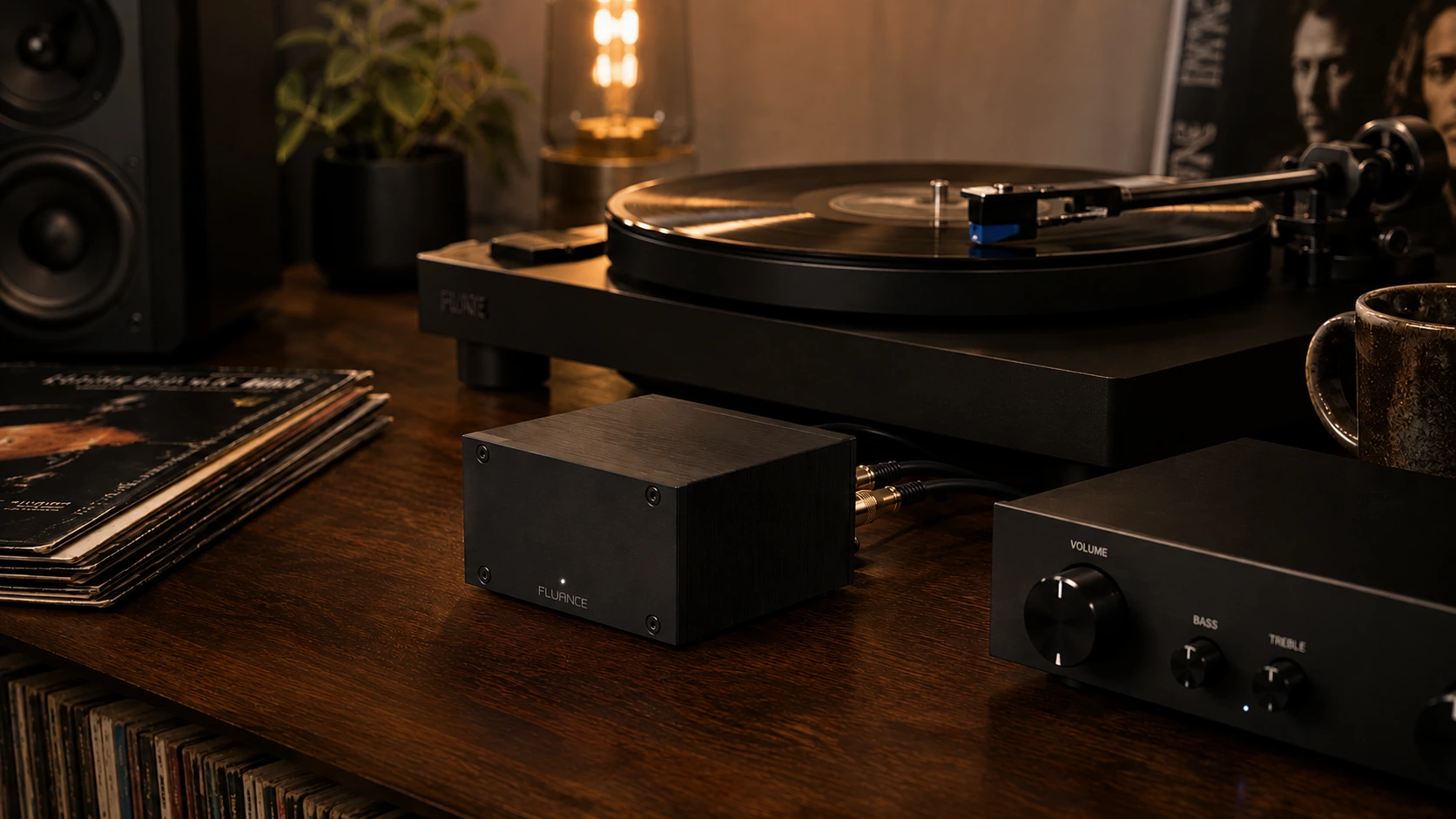
2. Fluance PA10 High Fidelity MM Phono Preamp
Best for: MM cartridge users who want Amazon’s most validated entry phono preamp — Amazon’s Overall Pick, selectable high-pass filter, and dedicated left/right channel amplifiers for improved stereo separation
- Cartridge compatibility: MM only
- Gain: ~40dB
- Input impedance: 47kΩ (standard MM)
- High-pass filter: Selectable — reduces rumble and warp noise
- Channel design: Dedicated left and right channel amplifiers
- Internal shielding: Yes — reduces electromagnetic interference
- Output: RCA stereo
- Power: External DC adapter
Why the PA10 is the default MM recommendation
Specifically, the Fluance PA10 earns its Amazon’s Overall Pick status through a combination of consistently positive owner feedback, genuine circuit quality above the entry-level competition, and a feature set that addresses real vinyl listening problems. Specifically, the dedicated left and right channel amplifiers improve stereo separation and channel balance in ways audible on well-recorded music. The selectable high-pass filter reduces low-frequency rumble from the turntable motor and warp-related noise from older records. Internal electromagnetic shielding reduces the hiss and interference pickup that is common in basic phono preamp circuits. Consequently, for listeners with any MM cartridge — Audio-Technica AT-VM95 series, Ortofon 2M Red/Blue, Nagaoka MP series — the PA10 is the standard recommendation at this price and delivers a clear, audible improvement over any built-in amplifier phono stage at this level.
The MM-only limitation
However, the PA10’s significant constraint is MM-only compatibility. If you plan to upgrade to an MC cartridge, the PA10 will not work and you will need a second preamp purchase. Specifically, for listeners who are certain they will stay with MM cartridges — the vast majority of entry and mid-range turntable owners — this is irrelevant. For listeners who are uncertain about their future cartridge direction, the iFi Zen Air Phono at the same price adds MC capability.
- Amazon’s Overall Pick — highest validation at entry price
- 200+ monthly purchases — sustained real-world purchasing volume
- Dedicated L/R channel amplifiers — better stereo separation than shared-circuit alternatives
- Selectable high-pass filter — reduces rumble and warp noise
- Internal shielding — cleaner signal than unshielded competitors
- MM only — no MC cartridge support
- No balanced output
- No subsonic filter (high-pass filter is a partial substitute)
Best entry MM pick — Amazon’s Overall Pick, dedicated L/R channel amplifiers, selectable high-pass filter.
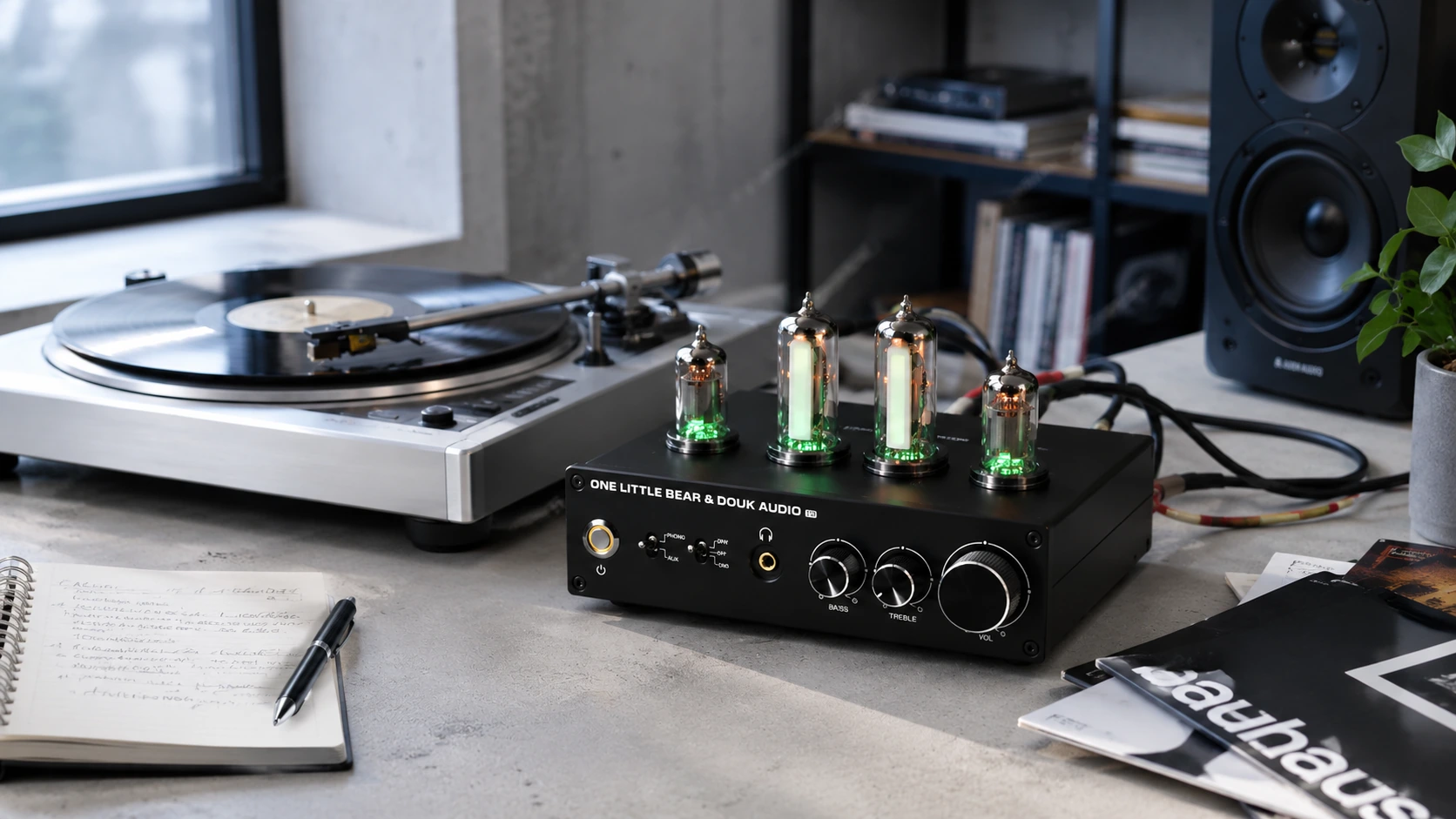
3. Douk Audio T9 Vacuum Tube MM/MC Phono Preamp
Best for: Vinyl listeners who want a tube-amplified phono stage with headphone output and tone controls — the only unit in this group that adds a tube circuit, bass/treble adjustment, and a 3.5mm headphone jack at this price
- Cartridge compatibility: MM and MC
- Amplifier circuit: Vacuum tube hybrid
- Gain: Switchable MM/MC (approximately 40dB/60dB)
- Tone controls: Bass and treble adjustment
- Headphone output: Yes — 3.5mm front panel
- Output: RCA stereo
- Balanced output: No
- Power: External DC adapter
What the tube circuit adds
Specifically, the Douk Audio T9 is the most characterful unit in this group — it adds a vacuum tube gain stage to the signal path, which introduces a degree of harmonic warmth and tonal density that solid-state circuits do not produce. Specifically, for listeners who primarily play jazz, classical, folk, and vocal recordings on vinyl, tube phono amplification adds an organic, analogue quality to the playback experience that complements the format. Furthermore, the tone controls allow bass and treble adjustment directly at the preamp — useful for compensating for the tonal character of older recordings or bright cartridges without touching the amplifier’s EQ settings. Additionally, the headphone output is a genuinely useful feature for late-night vinyl listening: connect headphones directly to the T9 and listen at full fidelity without disturbing anyone, using the tone controls to adjust to taste.
The trade-offs of tube character at this price
Specifically, tube preamps at $119 represent a compromise compared to solid-state at the same price — the tube circuit contributes character at the cost of measured performance. Its noise floor is higher than the PA10 or Zen Air Phono, and the RIAA accuracy is less precise than dedicated solid-state circuits optimised purely for measurement performance. Consequently, for listeners who prioritise sonic character and musical engagement over measured accuracy, the T9 is the correct choice. For listeners who want the lowest possible noise floor and the most accurate RIAA equalisation at this price, the Fluance PA10 or iFi Zen Air Phono are the stronger technical options.
- Vacuum tube circuit — warm, organic character distinct from solid-state
- Headphone output — silent vinyl listening without a separate headphone amp
- Bass and treble tone controls — practical tonal adjustment at the preamp
- MM and MC support — handles both cartridge types
- Visually distinctive — glowing tubes add to the vinyl listening aesthetic
- Higher noise floor than solid-state competitors — tubes add noise
- Tone controls add circuit complexity some listeners would prefer to bypass
- Lower purchase validation than Fluance PA10 or Pro-Ject Phono Box DC
- No subsonic filter, no balanced output
Best tube pick — vacuum tube circuit, headphone output, MM/MC, tone controls. Most characterful unit in this group.
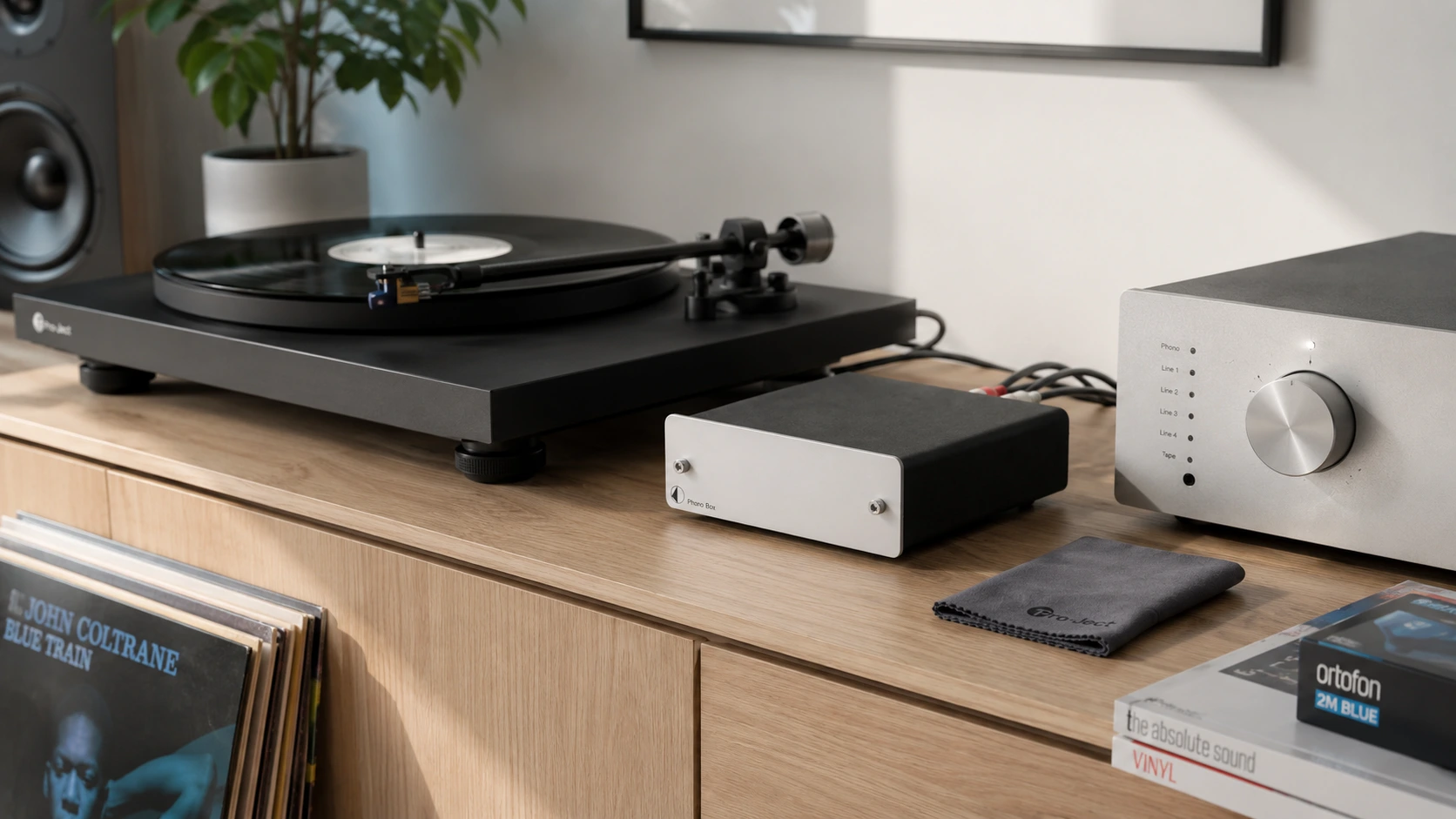
4. Pro-Ject Phono Box DC MM/MC Phono Preamp
Best for: Listeners who want a trusted audiophile brand with a proven track record — Amazon’s Overall Pick with the highest purchase validation in this group, simple MM/MC switching, and the clean, transparent circuit character that Pro-Ject is known for
- Cartridge compatibility: MM and MC
- Gain (MM): 40dB
- Gain (MC): 60dB
- Input impedance (MM): 47kΩ
- Input impedance (MC): 100Ω
- MM/MC switching: Internal DIP switch
- Output: RCA stereo
- Balanced output: No
- Power: DC wall adapter (included)
Pro-Ject’s approach to phono amplification
Specifically, Pro-Ject has been making phono preamps alongside their turntables since the early 1990s — the Phono Box DC is the most established entry-level MM/MC product in their range, and consistent purchasing volume across its Amazon listing makes it the most validated phono preamp in this group by a significant margin. The circuit is designed for transparency — accurate RIAA equalisation, low noise, and no added tonal colouration. Specifically, the DIP switch MM/MC selection is set once and left alone — not a convenience feature, but correct engineering practice for a setting that rarely changes. For listeners with Pro-Ject turntables, the Phono Box DC is the natural pairing; the circuits are designed and voiced by the same engineering team. Additionally, for listeners upgrading from any other turntable brand, Pro-Ject’s reputation for precise RIAA accuracy and low distortion makes it a reliable choice at this price.
The DIP switch limitation
Specifically, switching between MM and MC requires accessing the DIP switches on the underside of the unit — the case must be flipped over to do this. Consequently, for listeners who frequently switch cartridges between MM and MC, this is a genuine inconvenience. For listeners who set the cartridge type once and leave it, the inconvenience is irrelevant. The iFi Zen Air Phono’s front-panel switch is more practical for multi-cartridge users.
- Amazon’s Overall Pick — highest validation in this group
- Pro-Ject brand trust — decades of phono preamp engineering experience
- MM and MC support — 40dB/60dB gain, 47kΩ/100Ω loading
- Neutral, transparent circuit — no added tonal character
- Compact, well-built chassis
- MM/MC switching via internal DIP switch — inconvenient to change
- No subsonic filter
- No adjustable MC loading beyond the fixed 100Ω
- No balanced output, no headphone output
Best trusted brand pick — Amazon’s Overall Pick, transparent Pro-Ject circuit, MM/MC support. Highest validation in this group.
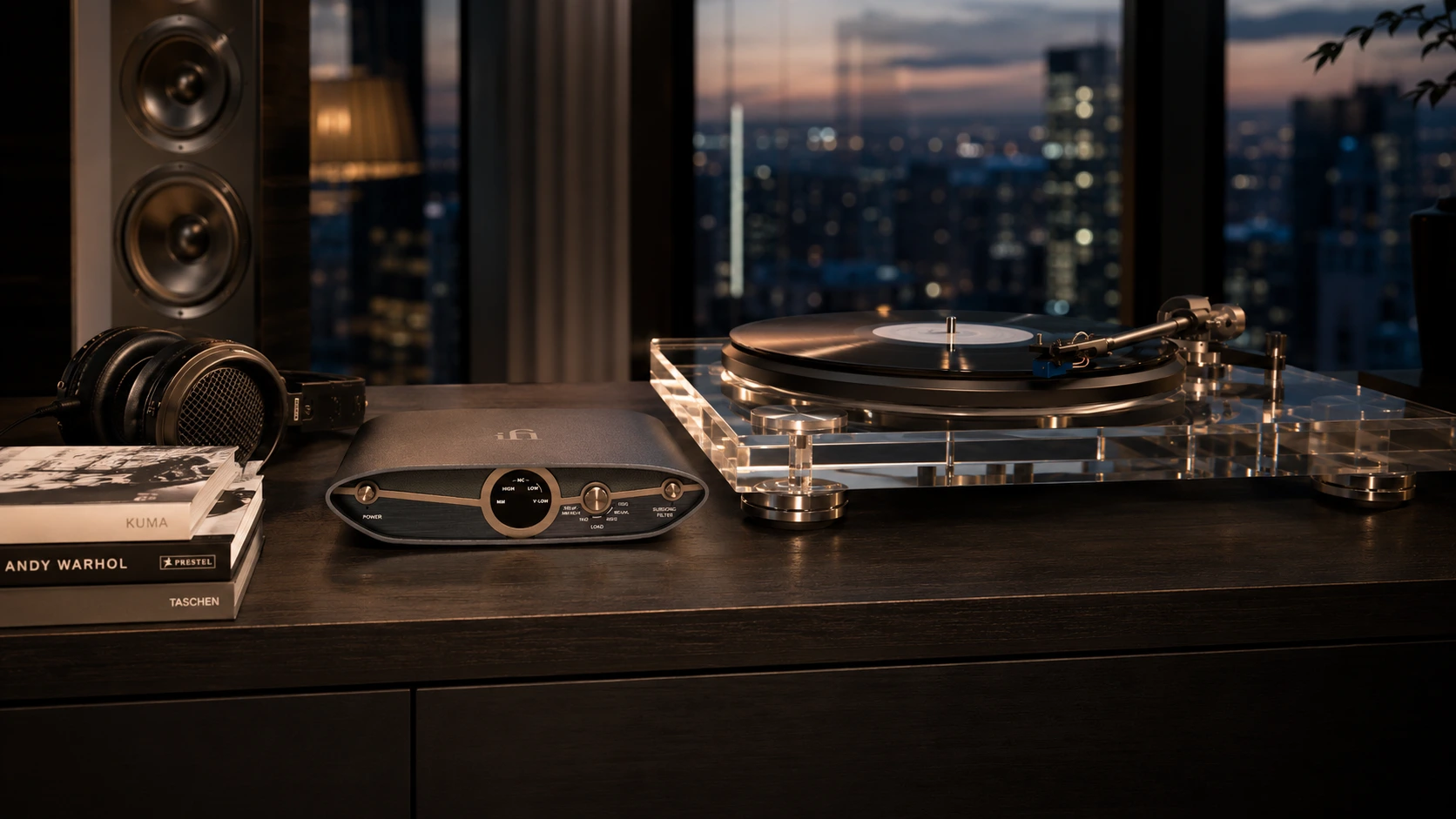
5. iFi Zen Phono 3 MM/MC Phono Preamp
Best for: Listeners who want the most technically capable phono preamp in this group — -151dBV noise floor, 36–72dB gain range, four adjustable loading settings, intelligent subsonic filter, and 4.4mm balanced output in a single unit at $249
- Cartridge compatibility: MM and MC (high, low, very low output)
- Gain: 36dB / 48dB / 60dB / 72dB — four independent settings
- Loading: 47kΩ / 1kΩ / 470Ω / 100Ω — four independent settings
- Noise floor: -151dBV EIN — 20dB quieter than some Stereophile Class A+ phonos
- Subsonic filter: Yes — intelligent warp correction without bass loss
- Balanced output: Yes — 4.4mm Pentaconn
- Output: RCA stereo + 4.4mm balanced
- RIAA accuracy: ±0.15dB from 20Hz–20kHz
- Power: Isolated internal power supply
Why the Zen Phono 3 is in a different class
Specifically, the iFi Zen Phono 3 is not a marginal improvement over the other units in this group — it is a fundamentally more capable device. Specifically, its -151dBV noise floor is 20dB quieter than many phono preamps that cost significantly more, including some that achieve Stereophile Class A+ ratings. In practice, this means background silence on quiet vinyl passages that no other unit here can match. The four-position gain control — 36, 48, 60, 72dB — covers every cartridge type from high-output MM to very low output MC. No compromise is required. Furthermore, the independent four-position loading control (47kΩ, 1kΩ, 470Ω, 100Ω) allows precise tonal matching to the MC cartridge’s internal impedance. This is the feature that separates a correct MC setup from merely a functional one. Specifically, the intelligent subsonic filter removes warp-related low-frequency noise without affecting bass frequencies or adding group delay — a more sophisticated solution than the simple high-pass filters in the Fluance PA10. The 4.4mm balanced output allows connection to amplifiers with balanced inputs, reducing noise pickup over longer cable runs.
When the Zen Phono 3 is worth the premium
Specifically, the Zen Phono 3 is worth the $100 premium over the Pro-Ject Phono Box DC for two specific listener types: anyone with a low output MC cartridge who needs 60–72dB of clean, low-noise gain with adjustable loading; and anyone whose vinyl setup has reached a level where the phono preamp is genuinely the limiting factor in resolution and noise performance. However, for listeners with an MM cartridge on a budget turntable, the Fluance PA10 or iFi Zen Air Phono represent better value — the Zen Phono 3’s performance advantage is only fully accessible when the rest of the system can resolve what it delivers.
- -151dBV noise floor — quieter than many Stereophile Class A+ phono stages
- Four gain settings (36–72dB) — covers every cartridge from MM to very low output MC
- Four loading settings (47kΩ–100Ω) — precise impedance matching for MC cartridges
- Intelligent subsonic filter — warp correction without bass loss or group delay
- 4.4mm balanced output — reduces noise on long cable runs to balanced inputs
- ±0.15dB RIAA accuracy — reference-grade equalisation at this price
- Most expensive unit here at $249
- Performance advantage over the Pro-Ject is only audible on higher-quality systems
- Newer listing — lower purchase validation than the Pro-Ject Phono Box DC
Best overall pick — -151dBV noise floor, 36–72dB gain, adjustable loading, intelligent subsonic filter, 4.4mm balanced output. Most capable unit in this group.
How We Chose the Best Phono Preamps
Selection criteria
Every unit was assessed on four criteria: noise floor performance relative to price, RIAA equalisation accuracy, cartridge compatibility breadth, and real-world owner validation through review counts and purchase volume. Specifically, units were excluded if their noise performance did not meaningfully improve on typical built-in amplifier phono stages — the primary reason to buy a dedicated preamp. Units were also excluded if their MC gain fell below 60dB without clear disclosure of that limitation. For a complete explanation of why MM and MC cartridges need different gain and loading — and how to identify which type your turntable uses — our MM vs MC phono preamp guide covers the technical background.
Do you actually need an external phono preamp?
If your integrated amplifier has a phono input, it already includes a built-in phono stage — and for casual listening, it may be adequate. However, budget built-in stages typically have higher noise floors, less accurate RIAA curves, and circuit quality that limits what even a good cartridge can resolve. Consequently, an external preamp at $100–$150 usually delivers a clearly audible improvement in noise floor and detail retrieval. For a full picture of which integrated amplifiers include phono stages capable enough to skip the external preamp entirely, the integrated amplifiers with phono input guide covers the relevant options.
Which phono preamp is right for you?
- MM cartridge, want maximum validation: Fluance PA10
- MM or MC cartridge, want iFi quality at entry price: iFi Zen Air Phono
- Want tube character, headphone output, tone controls: Douk Audio T9
- Want trusted brand MM/MC, most reviews in group: Pro-Ject Phono Box DC
- Want the best performance available under $250: iFi Zen Phono 3
Best Phono Preamps — Final Verdict
For most MM cartridge listeners
The Fluance PA10 is the default recommendation for any listener with an MM cartridge who wants the most validated entry phono preamp available — Amazon’s Overall Pick and dedicated left/right channel amplifiers at $99.99 represent the safest first purchase in this category. Read the full Fluance PA10 review for the complete assessment. Additionally, for listeners with an MM cartridge who also want iFi’s subsonic filter and the option to use an MC cartridge in future, the iFi Zen Air Phono at $99 is the correct alternative at the same price.
Character-first listeners
The Douk Audio T9 is the correct choice for listeners who want tube warmth, a headphone output for late-night vinyl sessions, and tone control flexibility in a single compact unit — the only unit here that adds all three features at $119.99.
For brand-trust MM/MC buyers
Additionally, the Pro-Ject Phono Box DC is the recommendation for listeners who want the most validated MM/MC option — Amazon’s Overall Pick and Pro-Ject’s decades of phono engineering behind a transparent, accurate circuit at $148.66. Read the full Pro-Ject Phono Box DC review for the full breakdown. On turntable setup fundamentals and connecting a phono preamp in a complete signal chain, the turntable to amplifier connection guide covers the full process.
For the most capable setup
The iFi Zen Phono 3 is the correct investment for listeners with a low output MC cartridge, a higher-quality turntable, and a system where the phono preamp is the limiting component. Read the full iFi Zen Phono 3 review for the complete technical assessment. Its -151dBV noise floor, four independent gain and loading settings, and intelligent subsonic filter represent reference-grade performance at $249 — a price point where it has no meaningful competition. For listeners deciding between the phono preamp upgrade path and the amplifier upgrade path in a vinyl system, the best amplifiers for turntable guide maps the amplifier side of that decision.
Frequently Asked Questions
Phono preamp basics
Do I need a separate phono preamp if my amplifier has a phono input?
Not necessarily — a phono input on an integrated amplifier already includes a built-in phono stage. However, budget built-in stages typically have higher noise floors and less accurate RIAA curves than dedicated external units at $100 or more. For casual listening, built-in stages are adequate. For listeners who want to hear what their cartridge is capable of — particularly on complex musical passages and quiet vinyl sections — an external preamp delivers an audible improvement in detail retrieval and noise floor. The improvement is most apparent when the rest of the system (turntable, cartridge, amplifier, speakers) is of reasonable quality.
Can I use any phono preamp with any turntable?
Yes — all phono preamps use standard RCA connections and accept any turntable’s output signal. The key compatibility question is the cartridge type: MM-only preamps work with MM cartridges, and MM/MC preamps work with both. Additionally, some older turntables have a built-in phono preamp already — if your turntable has a line output switch or a line/phono selector, it already includes an internal preamp. In that case, connect it to a line input on your amplifier, not to an external phono preamp (using both creates double RIAA equalisation and produces a bass-heavy, distorted result).
Choosing between units
Is the iFi Zen Phono 3 worth the premium over the Pro-Ject Phono Box DC?
For MC cartridge users with a higher-quality system — yes. The Zen Phono 3’s -151dBV noise floor, four adjustable loading positions, and wider gain range (36–72dB) are meaningfully better than the Pro-Ject’s fixed 100Ω loading and 60dB MC gain. For MM cartridge users or listeners with a budget turntable where the noise floor advantage is masked by other system limitations, the $100 premium is harder to justify. The Pro-Ject Phono Box DC delivers correct, clean, and accurate MM/MC amplification — the Zen Phono 3 refines it further for listeners whose systems can resolve the difference.
What is a subsonic filter and do I need one?
A subsonic filter removes very low frequencies (below 20Hz) from the signal — specifically the rumble and warp-related noise that vinyl playback introduces below audible frequencies. Without a subsonic filter, woofer cones in speakers can visibly pump on warped records, wasting amplifier power and potentially stressing the speaker’s suspension. The iFi Zen Air Phono and Zen Phono 3 include subsonic filters. The Fluance PA10 includes a selectable high-pass filter that performs a similar function. If your records are in good condition and your speakers are small bookshelf models with limited bass extension, a subsonic filter is nice to have but not essential. For larger speakers or older record collections, it is a genuine practical benefit.
More questions
How do I know if my turntable already has a built-in phono preamp?
Most modern budget turntables — Audio-Technica AT-LP120, LP60, Rega Planar 1, Pro-Ject Debut Carbon — include a switchable built-in phono preamp. Check for a line/phono switch on the back of the turntable or in the settings menu. If the switch exists and is set to line, the turntable already applies RIAA equalisation internally — connect to a line input, not a phono input. If the turntable has no such switch, it has no built-in preamp and must connect to a phono input or an external phono preamp. Check the turntable’s manual or the manufacturer’s specifications page if uncertain.