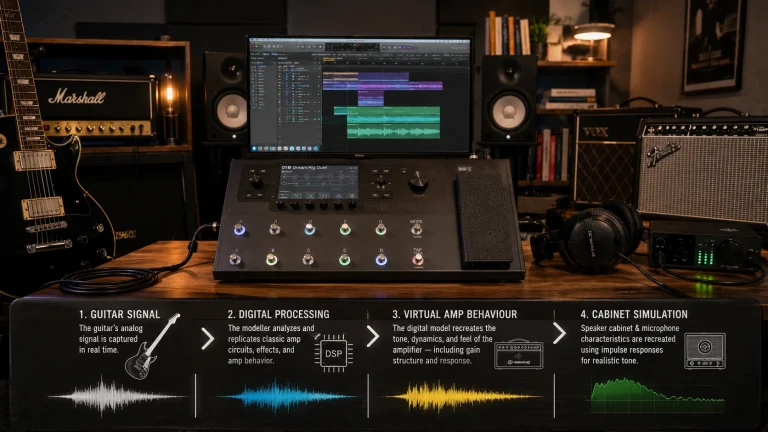
You’ve spent real money on a pair of headphones. They sound decent. But the phrase “headphone amplifier” keeps coming up — attached to words like “transforms” and “unlocks” and “night and day difference.” You’re wondering whether your headphones are being held back. Whether you’re missing something. Whether a box costing another $100 or $200 is the answer.
The honest answer is: maybe. It depends almost entirely on which headphones you own and what you’re plugging them into. A headphone amp genuinely changes things for some setups — for others, it adds cost and complexity and nothing else. This guide cuts through both camps — the audiophile hype and the dismissive “you can’t hear the difference” crowd. The answer is more specific than either side admits.
Quick Answer: You need a headphone amplifier if your headphones are high-impedance (150Ω+), planar magnetic, or if you’re running them from a laptop, phone, or TV that can’t drive them cleanly. You don’t need one if your headphones are sensitive, low-impedance IEMs or earbuds that already perform well from your current source. The biggest variable isn’t the amp — it’s whether your headphones are currently being driven correctly.
This article contains affiliate links. If you purchase through them, we may earn a commission at no extra cost to you. This helps support AmplifierZone and allows us to keep creating in-depth, unbiased audio guides.
The Short Answer — and Why It’s Not Simple
Most audio questions have a single correct answer. This one has two, depending on context:
Do you need a headphone amplifier?
- No — if your headphones are sensitive, low-impedance IEMs or consumer earbuds, and your source (phone, laptop, DAP) already drives them cleanly
- No — if your headphones have a built-in amplifier (wireless/Bluetooth models handle their own amplification)
- Yes — if your headphones are high-impedance (150Ω or above) and sound quiet, flat, or thin from your current device
- Yes — if your headphones are planar magnetic, which need consistent current regardless of impedance
- Yes — if your source has a noisy output and you hear hiss, background buzz, or a closed-in soundstage even at moderate volume
- Probably — if your headphones are 32–80Ω and you notice compressed dynamics or a strained quality at higher volumes
The reason this isn’t a single-word answer is that the headphone amplifier market is shaped by two very different audiences: people who genuinely need one to use their headphones as designed, and people who buy one hoping it will improve headphones that already work well from their existing source. The first group hear a clear, immediate difference. The second often don’t — because there wasn’t a problem to solve.
When You Genuinely Don’t Need a Headphone Amp
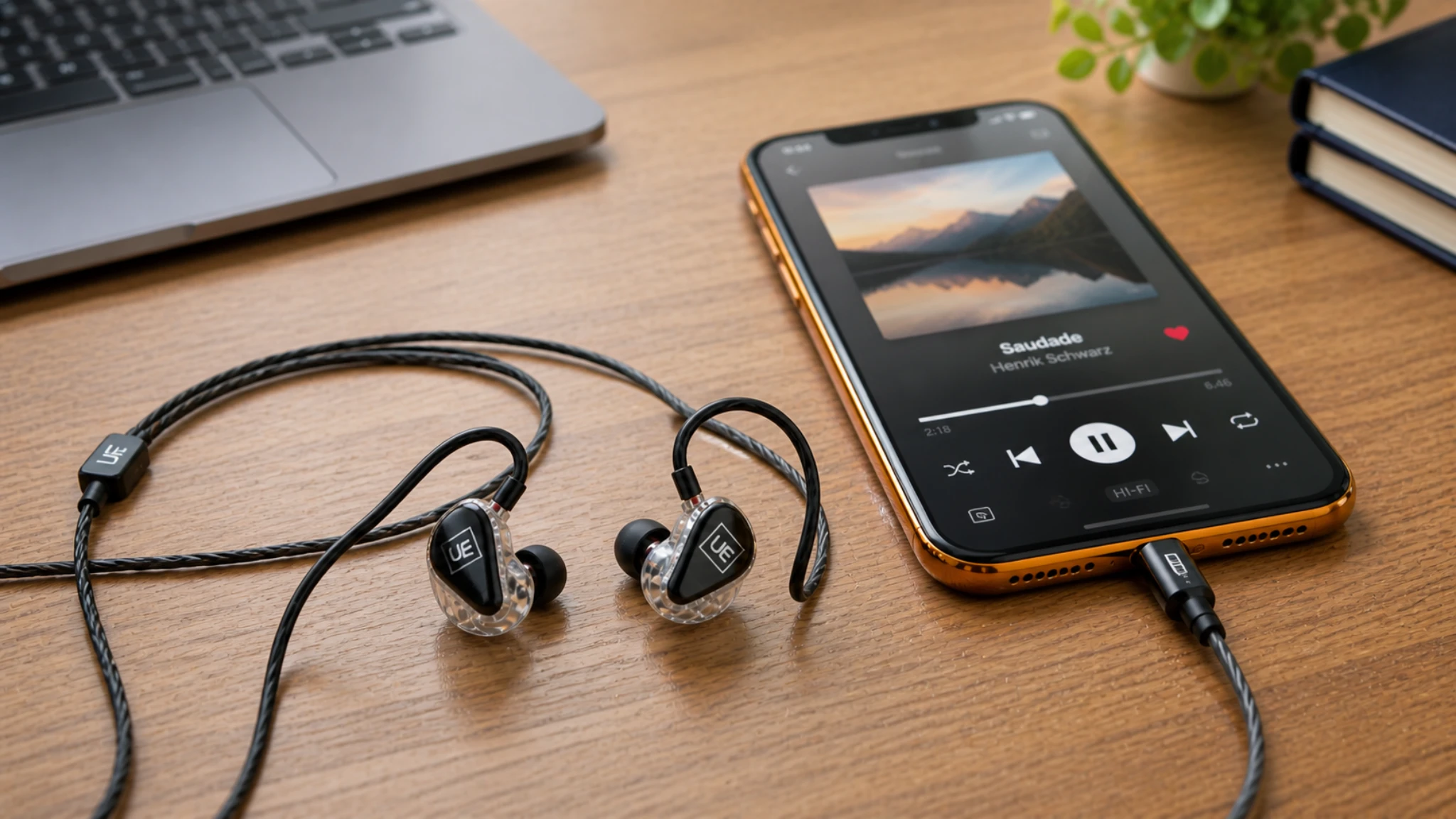
If your headphones fall into any of the following categories, a dedicated headphone amplifier is unlikely to produce a meaningful improvement — and may actually cause problems:
Sensitive IEMs and low-impedance earphones
IEMs are designed for portable devices. They need very little current, and their high sensitivity — often 100dB/mW or above — means they respond dramatically to small signals. Plug them into a powerful desktop amp without a low-gain mode and you introduce more hiss than your phone ever produced. The phone was already doing the job. The amp is solving a problem that wasn’t there.
Wireless and Bluetooth headphones
These handle their own amplification internally — the amp is built in, between the Bluetooth receiver and the drivers. Plugging a Bluetooth headphone into a wired amp defeats the wireless feature without improving anything. The signal path bypasses the built-in electronics rather than working with them.
Entry-level earbuds and budget headphones
At this level, the driver quality is the limiting factor — not the amplification. More power won’t improve a fundamentally basic transducer. If your headphones aren’t resolving enough to reveal detail, an amp has nothing better to reveal.
Headphones that already perform well from your source
Some well-regarded headphones work excellently from a phone or laptop — the Sony WH-1000XM series in wired mode, certain Audio-Technica closed-backs, most consumer over-ears. They were designed to. If you’re getting clean, full-volume audio with no obvious strain or hiss, the source is doing its job.
Quick test: Turn your volume to about 60–70% on your device. If your headphones are uncomfortably loud at that level, your source has no trouble driving them. If you’re pushing 90–100% and the sound still feels thin or constrained, that’s a different situation — and one where an amp genuinely helps.
When a Headphone Amp Makes a Real Difference

There are specific scenarios where a dedicated amplifier produces an improvement that is not subtle, not placebo, and not something that requires a trained ear to identify.
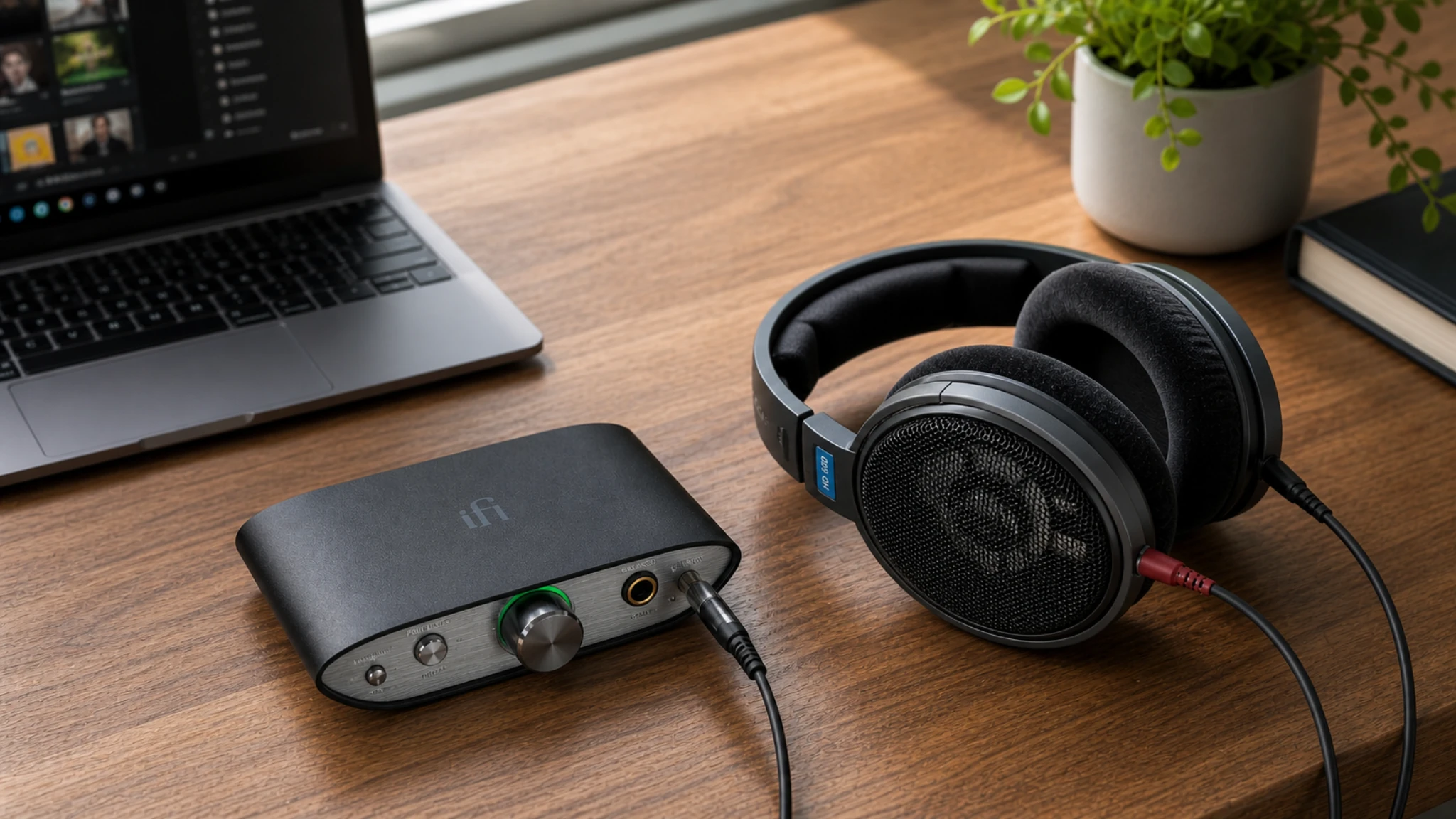
High-impedance dynamic headphones (150Ω and above)
The Sennheiser HD 6XX, HD 600, HD 650, and HD 800 series. Beyerdynamic DT 990 Pro (250Ω or 600Ω variants). AKG K712 Pro. These headphones were engineered to operate from amplifiers that can deliver meaningful voltage swing at high impedance loads. A phone or laptop output simply cannot provide this. The result from a phone is a thin, dynamically compressed presentation where the bass lacks weight and the soundstage seems constricted. On a proper amp, the same headphones open up — bass extends and controls, transients sharpen, and the sense of space that these headphones are known for becomes audible.
Planar magnetic headphones
Planar magnetics — Hifiman, Audeze, Dan Clark, and others — use a different driver technology. Their impedance stays stable across frequencies, but they demand consistent current across the entire range. Most phones and laptops aren’t built for this. Without a dedicated amp, planars sound sluggish in the bass and slightly closed-in at the top. With one, they tighten up considerably.
Any headphone driven from a noisy source
Some laptops — especially thin and light models — produce audible noise: a faint hiss, a whine that changes with processor load, or a buzz. The audio circuitry shares board space with the GPU and CPU, and electrical noise bleeds into the output stage. This isn’t a headphone problem. A dedicated amp driven from an external DAC removes it entirely. The noise disappears because the headphone signal no longer shares the laptop’s compromised ground plane.
Mid-impedance headphones from inadequate sources
Headphones in the 80–150Ω range — Sony MDR-7506, Beyerdynamic DT 770 Pro 80Ω, Audio-Technica ATH-M50x — sit in an interesting middle territory. Most devices can drive them to usable volume. The problem is control. At higher levels you may notice congestion in busy passages, bass lacking punch, or a slightly brighter top end. A clean amp resolves these issues consistently, if not dramatically.
The Two Numbers That Actually Govern This Decision

Every headphone has two specifications that determine whether it needs an amplifier: impedance and sensitivity. Most buyers check neither before purchasing. Then they wonder why their new headphones sound underwhelming from a laptop.
Impedance (measured in Ω)
Impedance is the resistance a headphone presents to the signal driving it. Low-impedance headphones (16–32Ω) are easy to drive. High-impedance models (150–600Ω) require more voltage to produce the same volume and control. How impedance works across different stages of the signal chain is covered in detail in this guide to amplifier impedance.
As a practical guide:
- Under 50Ω — easy to drive from any source; amp unlikely to add much
- 50–150Ω — most modern devices manage, but quality varies; a good amp improves control
- 150–300Ω — genuinely benefits from a dedicated amp; phone output starts to show its limits
- 300Ω+ — requires a dedicated amp for correct voltage delivery; sounds demonstrably worse without one
Sensitivity (measured in dB/mW)
Sensitivity measures how much volume a headphone produces per milliwatt of power. High-sensitivity models (100dB/mW and above) get loud quickly from any source. Low-sensitivity models (under 90dB/mW) need more power to open up dynamically — and often need an amp to get there.
The combination that most clearly requires an amp: high impedance + low sensitivity. Take the Sennheiser HD 600 — 300Ω at 97dB/mW, manageable from a good amp but genuinely challenging for a phone. Compare that to the Hifiman HE-400se: 25Ω and 91dB/mW. Low impedance, but low sensitivity, and planars behave differently enough that an amp still improves them meaningfully.
Least helpful combination: low impedance + high sensitivity. IEMs at 16Ω and 110dB/mW get dangerously loud from a phone at 30% volume. Adding an amp introduces more power and more noise to a situation that already had too much of both.
Where to find these numbers: Check the manufacturer’s product page under “Specifications.” Impedance is listed in Ω. Sensitivity is listed in dB/mW or dB/mW at 1kHz. If you only have access to the box, these specs are almost always printed there as well.
What About a DAC — Is That Different From an Amp?

This question comes up constantly, and conflating the two leads to a lot of unnecessary purchases. A DAC (digital-to-analogue converter) and a headphone amplifier do completely different things — and whether you need one, both, or neither depends on where the weakest link in your chain currently is.
What a DAC does
A DAC converts the digital audio signal from your computer, phone, or streaming device into analogue. Every device that plays audio has one built in. The question isn’t whether you have a DAC — it’s whether the one you have is any good. Cheap, integrated DACs produce more noise and distortion than standalone units. If your headphones sound grainy or thin even through a decent amplifier, the DAC is often the culprit.
What an amplifier does
An amplifier takes that analogue signal — however clean or noisy — and increases its power to drive the headphone drivers. If your source already provides a clean analogue output from an external DAC or CD player, you just need an amp. If your source is digital — USB from a computer, streaming from a phone — you need a DAC first, then an amp. Or more practically, a DAC/amp combo that handles both.
Which one should you buy first?
For most people building a headphone setup from a laptop, a combined DAC/amp unit makes the most sense — it replaces the mediocre built-in DAC and adds proper amplification in one step. For anyone already running through an external DAC, a pure amplifier is the right addition. This comparison of Bluetooth DAC/amp combinations covers where each upgrade makes the most sense, including wireless setups where the signal chain differs.
Common mistake: Buying a headphone amp without addressing the DAC first, when the DAC is the actual problem. A better amplifier faithfully amplifies everything upstream of it — including the noise and distortion from a poor integrated DAC. If your source is already noisy, an amp makes it more audible, not less. Fix the weakest link first.
The Honest Test: Should You Actually Buy One?

Before spending money, run through these questions in order. They’re designed to give a specific answer rather than a general recommendation.
Step 1: What’s the impedance and sensitivity of your headphones? Anything above 150Ω needs an amp. Planar magnetics — regardless of impedance — almost always benefit from one. Sensitive IEMs under 32Ω almost certainly don’t. Check the specs first and let the numbers lead.
Step 2: What’s your source device? A dedicated audio interface, AV receiver, or quality DAP already has a better amplifier stage than most standalone amps under $100. A laptop, phone, tablet, or smart TV does not. Consumer devices built for everything tend to do audio poorly. That’s worth addressing.
Step 3: Do you hear specific problems, or just a vague sense that something’s missing? Specific problems point to a real amplification issue: audible hiss, congested bass at volume, headphones running out of power before reaching a comfortable level, or a soundstage narrower than reviews suggest. A general feeling the sound could be “better” — without being able to say how — usually points to the headphones, the recordings, or expectations an amp won’t fix.
Step 4: Have you tried a different output on your current device? Some laptops have a dedicated headphone output that outperforms the USB audio port. Some receivers have a preamp output that does better than the headphone jack. Explore what you already have before spending money on new hardware.
Understanding how amplifier power and wattage actually translate to volume and control — and why more watts don’t always mean better sound — is worth reading before making a final call. The guide to amplifier wattage explained covers this with practical examples for headphone use cases specifically.
Final Verdict
The audiophile community overstates how often a headphone amp is necessary. The “you can’t hear the difference” camp understates it. The truth is narrower and more specific than either side usually admits.
You need a headphone amplifier when your headphones are high-impedance dynamics, planar magnetics, or clearly underperforming from your current source — quieter than they should be, thinner in the bass than reviews suggest, or noisy in a way that tracks your laptop’s processor load. In those situations, a dedicated amp makes a clear, immediate improvement.
You don’t need one if your headphones already perform well, if they’re sensitive IEMs that hiss from everything, or if you’re chasing a vague improvement without a specific diagnosis. Adding an amp to a working system doesn’t make it better. It just adds components.
The best way to know for certain is to borrow one or use a return policy. Real-world testing on your actual headphones from your actual source is more reliable than any spec chart. But if you want a framework for deciding before you buy, the specs and scenarios in this guide will get you there without the guesswork.
Once you’ve decided an amp is the right move, the practical next question is which one. The best headphone amplifiers under $200 covers every realistic option at this budget — from a $70 entry-level DAC/amp to a $199 balanced unit — with a clear role assigned to each. For a broader look at whether to prioritise the DAC or the amp first, this guide to DAC vs amplifier upgrades walks through the decision in detail.
Frequently Asked Questions
Will a headphone amp make my headphones sound louder?
Yes — but loudness is rarely the point. The meaningful improvements are control, dynamics, and noise floor. A dedicated amp drives demanding headphones with better authority: tighter bass, more present transients, a quieter background. If your headphones are already loud enough but sound flat or constrained, an amp opens them up. Not because they’re louder — because they’re getting the power and control they were built for.
Does a headphone amp improve sound quality for Spotify or streaming services?
It depends on your current setup, not the streaming service. A headphone amp improves the amplification stage — how cleanly the analogue signal drives your headphone drivers. If your source is a phone or laptop with a noisy or underpowered output, an amp (paired with an external DAC) removes that noise and provides better control. Whether Spotify or Tidal or Apple Music sounds “better” through the result depends on the quality of the recording and the resolution of the stream — not the amp itself. An amp doesn’t decode the stream differently; it amplifies whatever signal it receives more cleanly.
Can a headphone amp damage my headphones?
In normal use, no. A headphone amp delivers the signal your headphones need — and at reasonable listening levels, most units handle this without issue. The risk arises from running sensitive, low-impedance headphones through a high-powered amp on High gain at high volume. That can produce SPL levels that damage drivers over time. It’s avoidable: use Low gain with sensitive headphones, keep volume sensible. Mismatching doesn’t destroy headphones instantly — extended high-volume use at the wrong gain setting causes the wear.
Is a headphone amp worth it for gaming?
For competitive gaming with a headset designed to be driven from a gaming controller or console controller jack — no, an amp adds little. For gaming with a serious pair of open-back headphones (Beyerdynamic DT 990, Sennheiser HD 600, or similar) driven from a PC motherboard — yes, genuinely. Positional audio in games benefits from the same improvements an amp provides for music: a wider soundstage, more distinct separation between directional cues, and a lower noise floor that makes quiet environmental sounds easier to place. The motherboard audio on most gaming PCs is genuinely poor for high-impedance headphones, and a DAC/amp combination fixes this clearly.
How much should I spend on a headphone amp?
Match the amp budget to your headphone budget — a rough guide is 30–50% of what you spent on the headphones themselves, up to a point. Spending $200 on an amp for $50 headphones makes no sense. Spending $100 on an amp for $300–$500 headphones is entirely reasonable. Above $200, diminishing returns set in quickly for most headphone pairings, and the improvements become harder to detect without serious listening time and high-resolution source material. For most people, the sweet spot is $70–$200, which covers the range from basic DAC/amps that solve entry-level problems to more capable balanced units that do justice to serious headphones.