
If you’re looking for the best Bluetooth DAC amp, then you’ve come to the right place! In this buying guide, we’ll discuss some of the best options on the market and help you decide which one is right for you.
We’ll cover everything from the basic features of various models to the pros and cons of each, so that you can make an informed decision before making your purchase. Whether you’re a music lover looking for better sound quality or an audiophile expert that’s searching for the perfect addition to your audio setup, read on for the best Bluetooth DAC amps of 2022.
Affiliate Disclosure: AmplifierZone is reader-supported. As an Amazon Associate, we may earn commissions from qualifying purchases at no extra cost to you.
The 5 Best Bluetooth DAC Amps
Here are some of the best Bluetooth DAC amps available today:
1. P1 Bluetooth 5.0 Vacuum Tube Preamplifier
 The P1 amplifier has three types of audio input and two types of output options; this means that it can be utilized as a USB DAC, a HiFi tube preamp, or a DAC headphone amp. The audio input types include Bluetooth, RCA, and USB stick, and the audio output types include 3.5mm headphone and RCA options.
The APTX-HD transmission is supported by Bluetooth 5.0, and the PC-USB (CM6642) supports 24bit 192kHz. It’s compatible with Mac OS X, Windows and Linux systems, as well as with a wide range of audio products like iPods, CD players, Blu-ray players, phones, MP3 players, TVs, Echo Dots, etc.
The P1 also features a bypass switch that is specifically designed to toggle the tone control on and off. The switch makes it convenient to experience original sound or to gain a more subtle sound with the bass and treble control knobs, which adds more pleasure and greater playability.
This amplifier has an exceptional appearance that makes it visually appealing, and is an appropriate size. The orange and blue light decorating vacuum tube also adds to its visual allure and style. This device delivers amazing sonic and visual delight; it’s ideal for all desktop audio systems.
Specifications:
- Package Dimensions: 10.2 x 8.7 x 2.5 inches
- Item Weight: 1.65 pounds
- ASIN: B07TJS2DBT
- Item Model Number: DZ066
- Manufacturer: Nobsound
- Chip Architecture: CM6642+QCC3034+NE5532+classic 47
- PC-USB Input Sampling Frequency: 192K/24Bit
- THD: 0.01% , SNR: 103dB
- Bluetooth VER: 5.0
- Bass & Treble Range: ±6dB
- RCA output level: 2.3V
- Frequency Range: 20Hz-20kHz(±3dB)

Pros
- Features a bright LED that is ideal for low lighting environments
- DAC/headphone amplification provides excellent audio quality.
- No need to use software to tweak sound; simply stream it to preamp through USB.
- Useful features include bass and treble tone adjustments
- Bluetooth, USB, and AUX inputs are all selectable options
- Diverse variety of sounds with increased vibrancy
- P1 DAC unit provides smooth and consistent Bluetooth connection.

Cons
- Some knobs require fiddling in order to achieve successful fit
- Slight background sound that some people may find annoying
2. 1Mii DS220 Bluetooth Receiver with Audiophile DAC

The 1Mii DS220 turns a home stereo, amplifier, AV receiver or powered speakers into a Hi-Res Bluetooth system. LDAC and aptX HD decoding pair with a built-in audiophile DAC, and Optical and RCA outputs connect it to nearly any setup.
Bluetooth 5.3 with dual antennas gives stable streaming up to about 100 feet, and an OLED display shows the codec, volume and connection. Seven EQ modes (including Bass, Jazz, Classical, Rock and Pop) let you tune the sound with a click. This is the current DS-series receiver and the pick for a living-room system.
Pros
- LDAC and aptX HD with a built-in DAC
- Optical and RCA outputs
- OLED display and 7 EQ modes
- Stable Bluetooth 5.3 with dual antennas
Cons
- Receiver only: it does not power speakers
- Costs more than entry-level Bluetooth adapters
3. FX-Audio DAC-X6 Headphone Amp and Digital Audio Decoder
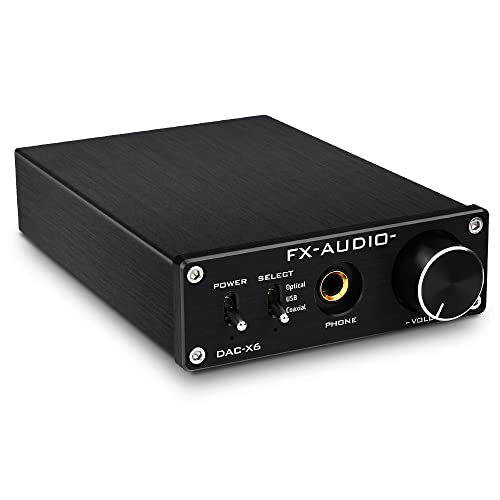
The FX-Audio DAC-X6 is a mini 2.0 DAC and headphone amplifier built around a TPA6120A2 headphone amp, LM4562NA op amp, SA9123, CS4398 DAC and CS8416 receiver chipset. The op amp can be swapped for upgrades, which makes it a good first step into external DACs.
The back panel has a Type-B USB input plus Toslink optical and coaxial digital inputs for a computer, TV, console or DVD player, and two RCA pre-outs to feed powered speakers or an amplifier. It is plug-and-play with no driver needed.
Pros
- Plug-and-play USB, optical and coaxial inputs
- Upgradable op amp
- RCA pre-outs for speakers or an amplifier
- Affordable entry into external DACs
Cons
- No Bluetooth
- Not a full-featured preamp
4. FiiO BTR7 Bluetooth Receiver and Headphone Amp

The FiiO BTR7 is a portable Bluetooth receiver, headphone amp and USB DAC in one. Bluetooth 5.1 supports LDAC, aptX Adaptive, aptX LL, aptX HD, aptX, AAC and SBC, and each channel uses an ES9219C DAC. It decodes up to PCM 384kHz and native DSD256 over USB and supports MQA.
Both 3.5mm single-ended and 4.4mm balanced headphone outputs are included, plus a built-in microphone with cVc 8.0 noise cancelling for calls. It is the current step up from the BTR5 and a strong choice if you want one pocketable device for wired and wireless listening.
Pros
- 3.5mm and 4.4mm balanced outputs
- ES9219C DAC per channel with PCM 384kHz and DSD256
- Wide Bluetooth codec support including LDAC
- Built-in microphone for calls
Cons
- Costs more than basic Bluetooth receivers
- Aimed at headphones, not for driving a speaker system
5. 1Mii B06HD+ Hi-Res LDAC Bluetooth 5.3 Receiver
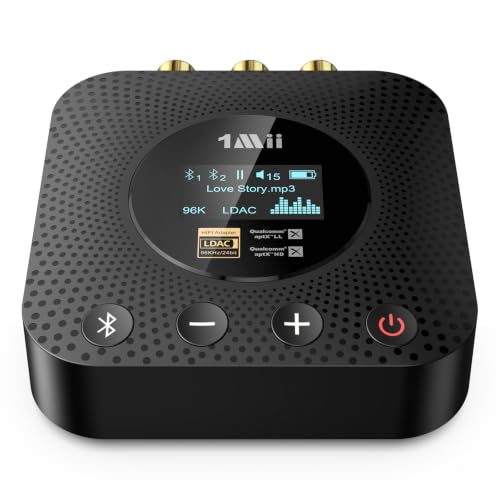
The 1Mii B06HD+ adds wireless streaming to an existing home stereo, AV receiver, powered speakers or amplifier. It supports LDAC, aptX HD and aptX Low Latency over Bluetooth 5.3, and its ES9018K2M DAC chip handles the digital-to-analog conversion. A display shows what is playing.
You can connect it over optical, coaxial, AUX or RCA, so it works with almost any setup. Range is up to about 197 feet outdoors and 50 to 80 feet indoors without obstacles, which is enough to move around the room freely.
Pros
- LDAC, aptX HD and aptX Low Latency support
- ES9018K2M DAC chip
- Optical, coaxial, AUX and RCA connections
- Display and Bluetooth 5.3 range
Cons
- Receiver only: it does not power speakers
- No built-in streaming apps or Wi-Fi
Factors To Consider When Buying A Bluetooth Dac Amp
When looking to buy a Bluetooth DAC amp, there are several factors that you need to consider:
-
Cost:
How much are you willing to spend? Bluetooth DAC amps can range from around $30 to well over $1000. It’s important to set a budget and find a system that fits your needs without breaking the bank.
-
An Onboard DAC:
Some amplifiers have their own digital-to-analog converter built in, which can save you the hassle of having to buy a separate one. If this is something that interests you, make sure the amp you choose has it.
-
Performance Capabilities:
What kind of audio formats do you want to be able to play? Some DAC amps only support specific audio formats, so you’ll need to make sure the one you choose can play the type of files you want to use.
Additionally, how much power do you need? A more powerful amp will generally deliver better sound quality, but it may be overkill if you’re just using it for basic listening tasks.
-
Compatibility With Your Devices And Audio Formats:
Not all DAC amps are compatible with every device; you’ll need to make sure the one you choose works with your gadgets. Additionally, some amps only support certain file formats, so you’ll need to make sure the files you want to use are supported by the amp.
-
Portability:
Do you want something that’s portable, or would you rather have an amp with higher output power?
A more powerful Bluetooth DAC amplifier generally delivers better sound quality, but it may be too much if you’re just using it for basic audio. If this is the case, you may want to consider smaller and more portable devices.
-
The Type Of Music You Prefer:
If you want to listen to classical music, you may need a different amp than if you were listening to rock or pop music.
That’s because classical music often has more complex arrangements that require higher quality equipment to reproduce them; smaller amps may not be able to handle the complexity of these arrangements as well as larger ones can.
-
Features:
Many DAC amps come with additional features such as noise cancellation or EQ settings. If these are things you’re interested in, make sure the amp you choose has them.
Bluetooth DAC Amp FAQs:
What is a Bluetooth DAC amp?
A DAC amp is a digital-to-analog converter that also includes an amplifier. This allows the device to not only convert the digital signal into an analog signal, but to amplify it as well. This can be helpful if you want to use wireless headphone outputs or a speaker with your phone or computer; it eliminates the need to use an additional amplifier.
What are some of the benefits of using a Bluetooth DAC amp?
Some of the benefits of using a Bluetooth DAC amp include better sound quality and ease of use. Since the amp combo device is portable, you can take it with you wherever you go and enjoy high-quality audio without having to worry about cords or cables.
Many DAC amps also include built-in Bluetooth technology, which makes connecting and streaming audio files a breeze.
What are some of the drawbacks of using a Bluetooth DAC amp?
While there are many benefits to using a Bluetooth DAC amp, one drawback is that it doesn’t have as good of a sound quality as an analog signal. However, this isn’t necessarily true for all types of music or audio files, since high-quality speakers and headphones can still produce great sound.
If you’re looking to use a Bluetooth DAC amp with multiple devices, make sure that both the device and the amp are compatible with each other.
Your Search For The Best Bluetooth DAC Amp: The Bottom Line
We hope that this buying guide has helped you better understand the features of the best Bluetooth DAC amps on the market, and the benefits and drawbacks of each model.
Remember, it’s important to consider what type of music you will be listening to, as well as performance capabilities and your budget when making your decision.
Leave a Reply
You must be logged in to post a comment.