You start looking at modern audio setups, and two terms keep coming up: wireless amplifier and streaming amplifier.
At first, they seem like the same thing. Both connect without cables and let you play music from your phone or apps. But once you look closer, the differences start to matter.
This is where most people get stuck. You are not sure which one you actually need, and choosing the wrong type can leave you with a setup that feels limited or more complicated than it should be.
If you are exploring different ways to modernize your system, this guide on what a streaming amplifier is explains how newer setups are changing the way people listen at home.
In reality, the choice is simpler than it looks. It comes down to how you want to play music, how independent you want your system to be, and how much control you expect from it.
This guide will break down the difference between wireless and streaming amplifiers in a clear, practical way so you can choose the one that actually fits your setup.
This comparison focuses on real-world usage, not just specs, so you can understand how a wireless vs streaming amplifier actually behaves in everyday listening.
Quick Answer: A wireless amplifier receives audio from your device using Bluetooth or Wi-Fi, and it depends on your phone or source. A streaming amplifier plays music directly from the internet using built-in apps and does not rely on your phone for playback.
Affiliate Disclosure: AmplifierZone may earn a commission if you purchase through links on our site, at no extra cost to you. We only recommend products that fit real systems and listening needs.
In this guide:
What Is a Wireless Amplifier?
A wireless amplifier is designed to receive audio from your device without using physical cables. In most cases, this happens through Bluetooth or sometimes Wi-Fi.
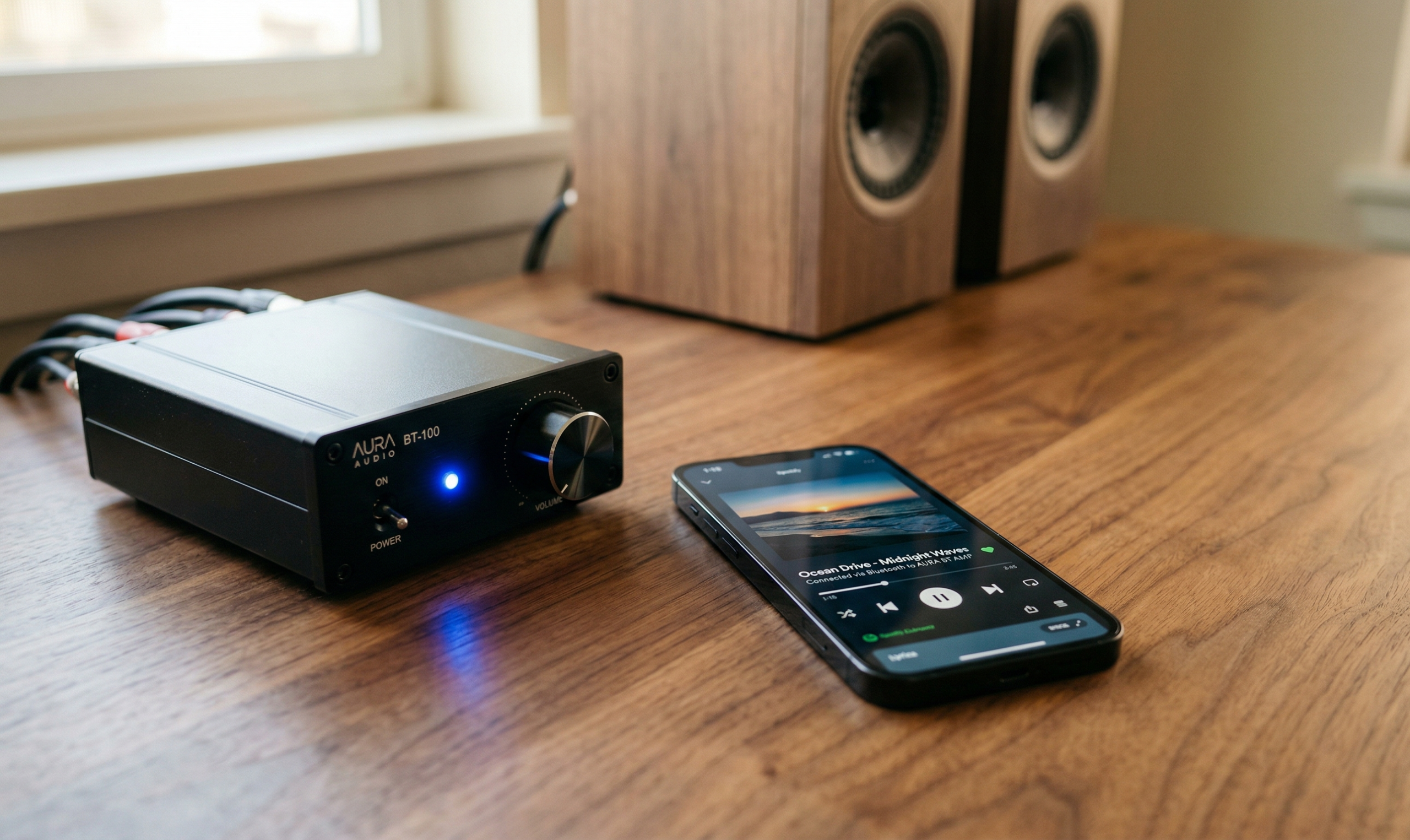
Instead of playing music on its own, the amplifier acts as a receiver. Your phone, tablet, or computer sends the audio, and the amplifier powers your speakers.
How It Works in Practice
You open an app on your phone, play music, and the amplifier receives that signal wirelessly. Everything is controlled from your device, including volume, tracks, and playback.
This makes wireless amplifiers simple and familiar to use, especially if you are used to Bluetooth speakers or headphones.
If you want to explore specific models, this guide to Bluetooth amplifiers for home use shows what to expect in real setups.
Where It Fits Best
Wireless amplifiers work best in setups where convenience matters more than advanced features. They are ideal for casual listening, small systems, and situations where you always have your phone nearby.
The trade-off is that your system depends entirely on your device. If your phone disconnects, runs out of battery, or leaves the room, the music stops.
What Is a Streaming Amplifier?
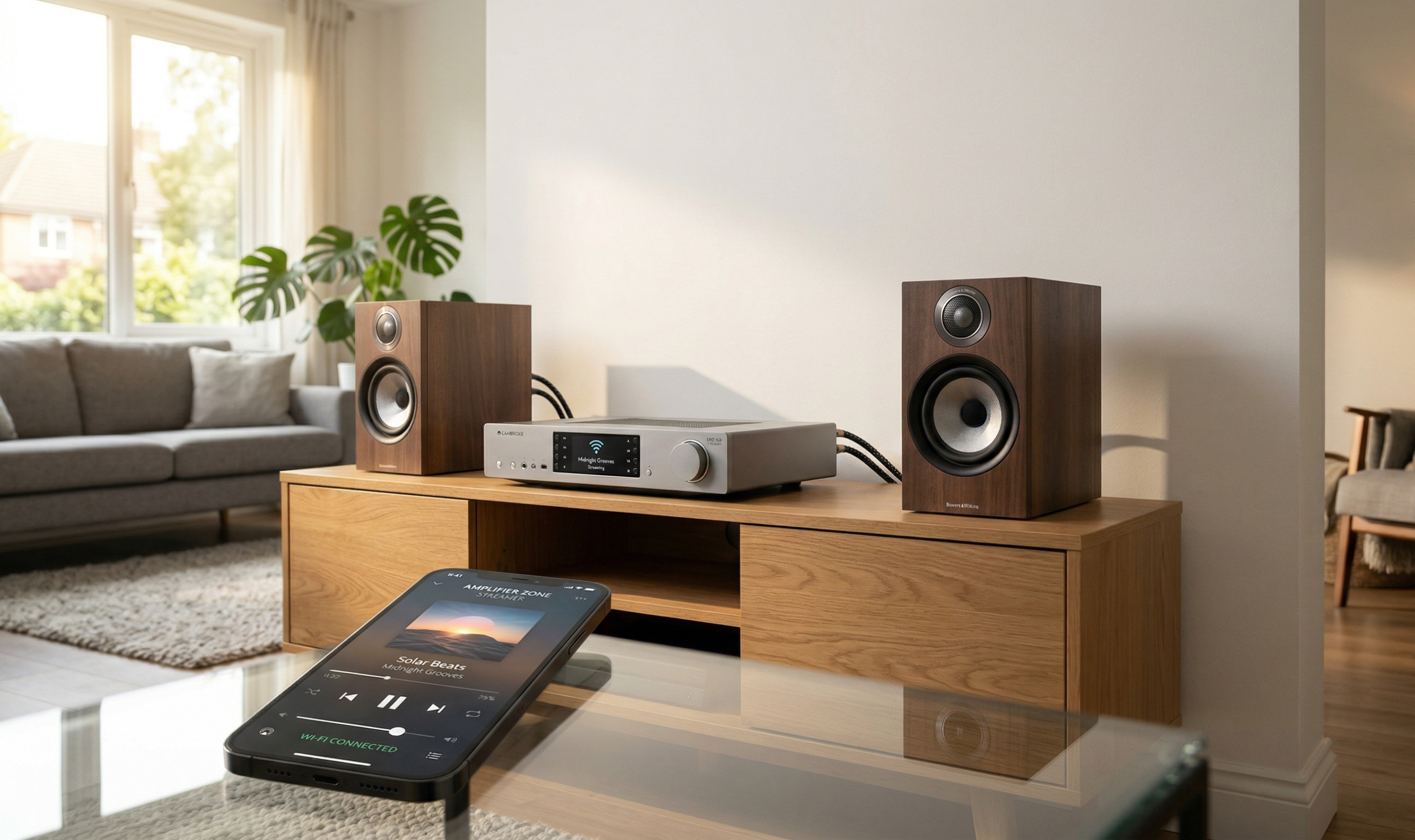
A streaming amplifier takes things a step further by handling music playback on its own. Instead of relying on your phone to send audio, it connects directly to the internet and streams music from online services.
This means the amplifier becomes the source. You can control it from your phone, but the music itself is not being pushed from your device. Once playback starts, it continues independently.
If you want a deeper breakdown of how these systems work, this guide on streaming amplifier guide explains the technology and use cases in more detail.

Built-In Streaming Platforms
Most streaming amplifiers support services like Spotify Connect, Apple AirPlay, or other built-in platforms. Instead of streaming from your phone, you are simply telling the amplifier what to play.
This changes how the system behaves. You can leave the room, take calls, or use your phone for something else, and the music will keep playing without interruption.
It also makes multi-room audio and higher-quality streaming easier, since the connection is handled directly through Wi-Fi rather than being compressed and sent over Bluetooth.
Why It Feels Different in Daily Use
The biggest advantage of a streaming amplifier is independence. Once it is set up, it behaves more like a standalone system than an accessory connected to your phone.
You are not tied to one device, and the system feels more stable over longer listening sessions. It is especially useful if you listen frequently or want a setup that feels more integrated into your home.
This is what separates streaming amplifiers from standard wireless ones. They are not just receiving audio, they are managing it.
Wireless vs Streaming Amplifier: Key Differences
At a glance, wireless and streaming amplifiers can look very similar. The real difference comes down to how they handle music playback and how much they depend on your device.
A wireless amplifier receives audio from your phone, while a streaming amplifier plays music directly from the internet.
That one distinction changes how each system behaves in everyday use.
This is the core difference between a wireless vs streaming amplifier, and it affects everything from convenience to sound quality.
If you want a quick side-by-side comparison, this table highlights the key differences:
| Feature | Wireless Amplifier | Streaming Amplifier |
|---|---|---|
| Connection Type | Bluetooth or Wi-Fi | Wi-Fi with built-in streaming |
| Music Source | Your phone or device | Online services (Spotify, AirPlay, etc.) |
| Phone Dependency | Required | Not required after playback starts |
| Ease of Use | Simple and familiar | More features, slightly more setup |
| Audio Quality | Good (depends on Bluetooth codec) | Usually higher via Wi-Fi streaming |

In practical terms, a wireless amplifier behaves like an extension of your phone. A streaming amplifier behaves more like a standalone system.
That difference affects everything from convenience to sound quality, and it becomes much more noticeable the longer you use the system.
Which One Should You Choose?
Now that the differences are clear, the right choice comes down to how you actually listen to music day to day.
Both types of amplifiers can sound great. The better option is the one that fits your habits and expectations without adding unnecessary complexity.
Choose a Wireless Amplifier if:
- You mainly play music directly from your phone or tablet
- You want a simple setup with minimal configuration
- You listen casually and don’t need advanced features
- You prefer switching apps and playlists directly on your device
If this sounds like your setup, exploring options like these Bluetooth amplifiers for home use can give you a good starting point.
Choose a Streaming Amplifier if:
- You want your system to work independently from your phone
- You use services like Spotify Connect or AirPlay regularly
- You prefer a more stable and integrated listening experience
- You plan to expand into multi-room or higher-quality streaming
If you are leaning toward this type of setup, this guide to the best wireless amplifiers for home speakers includes models with built-in streaming features.
There is no universal winner here. A wireless amplifier is often enough for casual listening, while a streaming amplifier makes more sense if you want a system that feels complete and independent.
Sound Quality Differences (Do They Matter?)
One of the most common questions is whether a streaming amplifier actually sounds better than a wireless one. The short answer is that it can, but the difference depends on how each system is used.
Wireless amplifiers that rely on Bluetooth often compress audio before sending it. This makes the connection fast and convenient, but it can slightly reduce detail, especially at higher volumes or with more complex music.
Streaming amplifiers usually deliver better sound quality because they use Wi-Fi instead of Bluetooth. This allows them to play higher-quality audio with fewer limitations.
However, the difference is not always dramatic. In a casual listening setup, especially with smaller speakers, both can sound very similar.
Where streaming amplifiers stand out is consistency. Because the signal comes directly from the internet, it is less affected by interruptions, device limitations, or compression issues.
In the end, sound quality is not just about the amplifier. Your speakers, room, and listening habits play a much bigger role than the connection method alone.
Common Mistakes to Avoid
Most confusion around wireless and streaming amplifiers comes from small assumptions that seem logical at first. Once you understand where these mistakes happen, choosing the right setup becomes much easier.

-
Assuming wireless and streaming mean the same thing
They are often used interchangeably, but they describe different ways of handling audio. This misunderstanding is the most common reason people end up with the wrong type of amplifier. -
Choosing based only on convenience
Wireless amplifiers are easy to set up, but they depend entirely on your device. Over time, that limitation can become frustrating if you want a more independent system. -
Overpaying for features you won’t use
Streaming amplifiers offer more functionality, but not everyone needs built-in apps or multi-room capabilities. Paying for features you never use does not improve your experience. -
Ignoring how you actually listen
The best choice is not about specs. It is about how you use your system day to day. A mismatch here is what usually leads to disappointment.
Most of these mistakes come from focusing on features instead of real usage. Once you think in terms of how the system fits into your routine, the right choice becomes much clearer.
Simple Decision Checklist
If you are still unsure which type of amplifier fits your setup, this quick checklist can help you decide without overthinking it.
- Do you want your system to work without your phone?
If yes, a streaming amplifier is the better choice. If not, a wireless amplifier will do the job. - Do you mainly play music from apps on your phone?
A wireless amplifier keeps things simple and familiar. - Do you care about higher-quality streaming and stability?
A streaming amplifier offers a more consistent experience through Wi-Fi. - Do you plan to expand your system later?
Streaming amplifiers are better suited for multi-room setups and future upgrades. - Do you prefer simplicity over features?
Wireless amplifiers are easier to set up and use for everyday listening.
Once you answer these questions, the right option usually becomes obvious. You are not choosing the “better” amplifier, you are choosing the one that fits your listening style.
At this point, the difference should be clear. You are not choosing between two similar devices, but between two different ways of using your system.
Wireless vs Streaming Amplifier: Which Is Better?
There is no single “better” option between a wireless amplifier and a streaming amplifier. The right choice depends entirely on how you plan to use your system.
If you want something simple that works directly from your phone, a wireless amplifier is often more than enough. It keeps things familiar and easy to manage.
If you want a system that feels more independent, stable, and integrated into your home, a streaming amplifier offers a better long-term experience.
Both can sound great when matched properly with your speakers and room. The difference is not just in features, but in how the system behaves day to day.
Once you focus on how you actually listen, the right choice becomes clear without needing to compare specs or chase features you may never use.
Frequently Asked Questions
Is a streaming amplifier better than a wireless amplifier?
Not necessarily. A streaming amplifier offers more independence and features, but a wireless amplifier can be the better choice for simple, phone-based listening setups.
Do I need Wi-Fi for a streaming amplifier?
Yes, most streaming amplifiers rely on a Wi-Fi connection to access music services and stream audio directly from the internet.
Can a wireless amplifier stream music on its own?
No, a wireless amplifier typically depends on your phone or device to send audio. It does not stream music independently.
Which option has better sound quality?
Streaming amplifiers usually offer better sound quality because they use Wi-Fi instead of Bluetooth, but the difference may be small in casual listening setups.
Is Bluetooth enough for home audio?
For most casual listening, Bluetooth is more than enough. However, for higher-quality or more stable playback, Wi-Fi-based streaming is usually the better option.