
You find a stereo receiver that promises everything—Bluetooth, USB, karaoke controls, and a bold “800W” power rating—all for a surprisingly low price.
That’s exactly the appeal of the Pyle PDA77BU stereo receiver. But once you actually use it, the question quickly shifts from “is this a great deal?” to “what does this really deliver in a real system?”
This Pyle PDA77BU review breaks down how it behaves in real-world setups—and whether it’s the right fit or a limiting factor.
Last updated: April 2026
Quick Answer: The Pyle PDA77BU is a budget-friendly, feature-packed receiver best for small rooms and casual listening—but it lacks the clean power and control of proper stereo amplifiers.
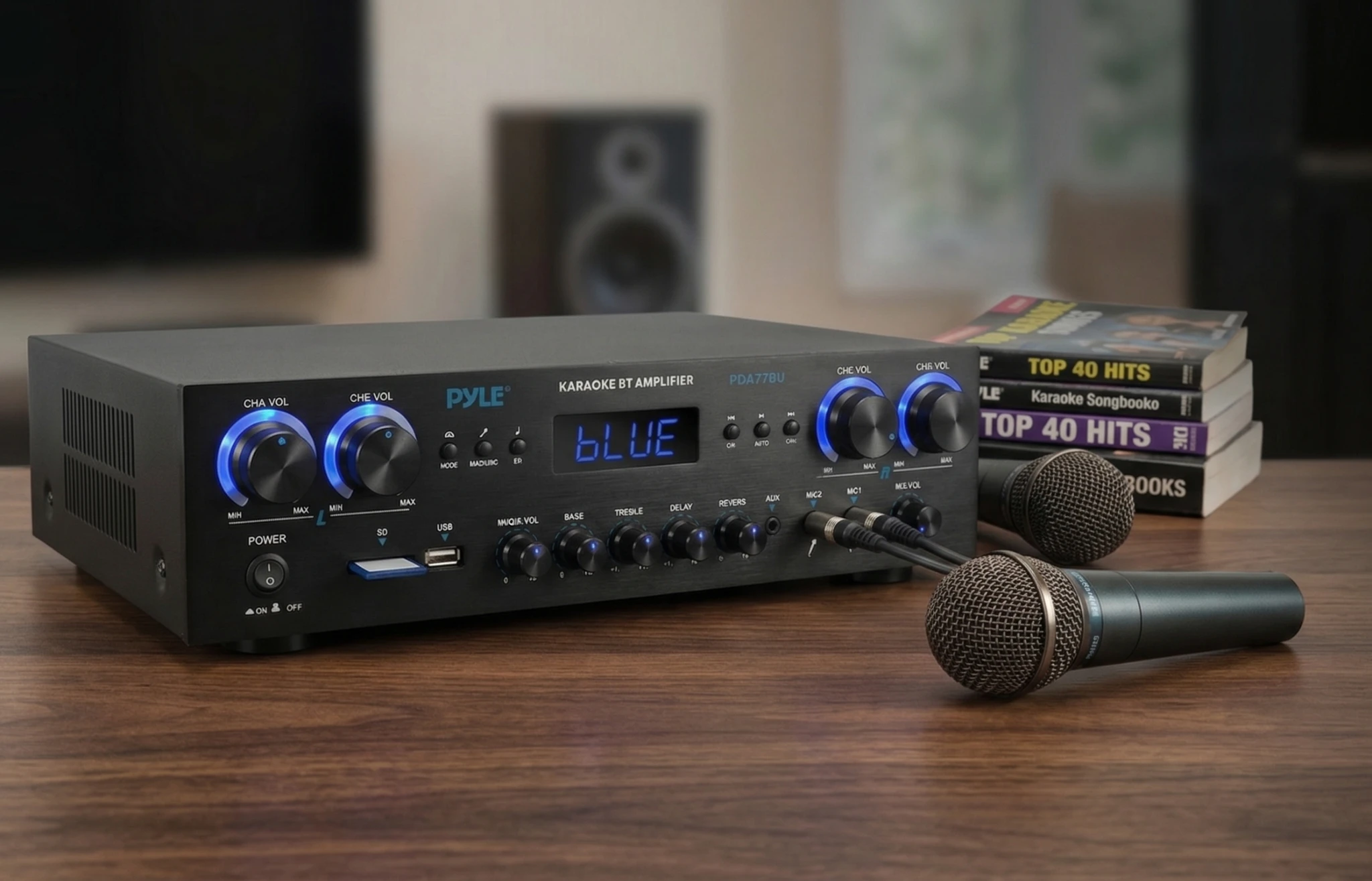
This article may contain affiliate links. If you purchase through these links, we may earn a commission at no extra cost to you.
Pyle PDA77BU Stereo Receiver
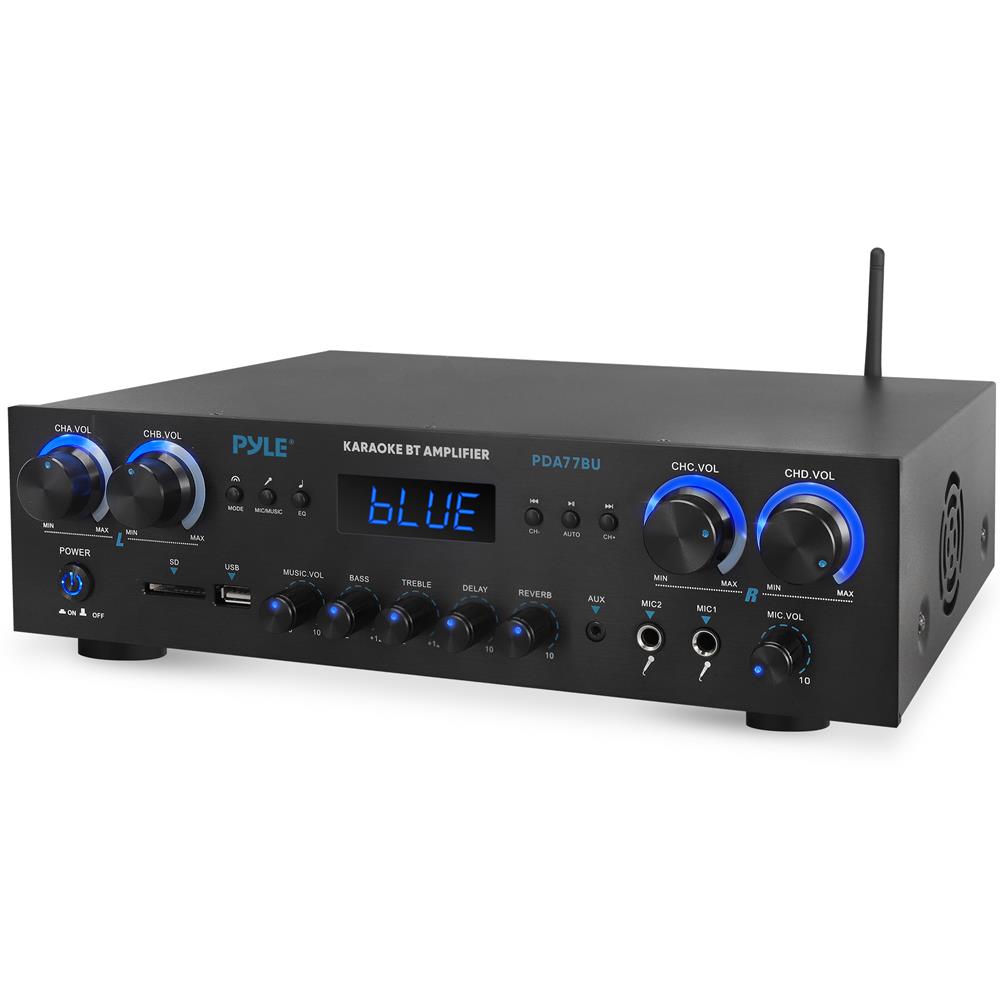
A simple, all-in-one receiver built for convenience—but with clear limitations once you push it.
- Type: 4-Channel Stereo Receiver
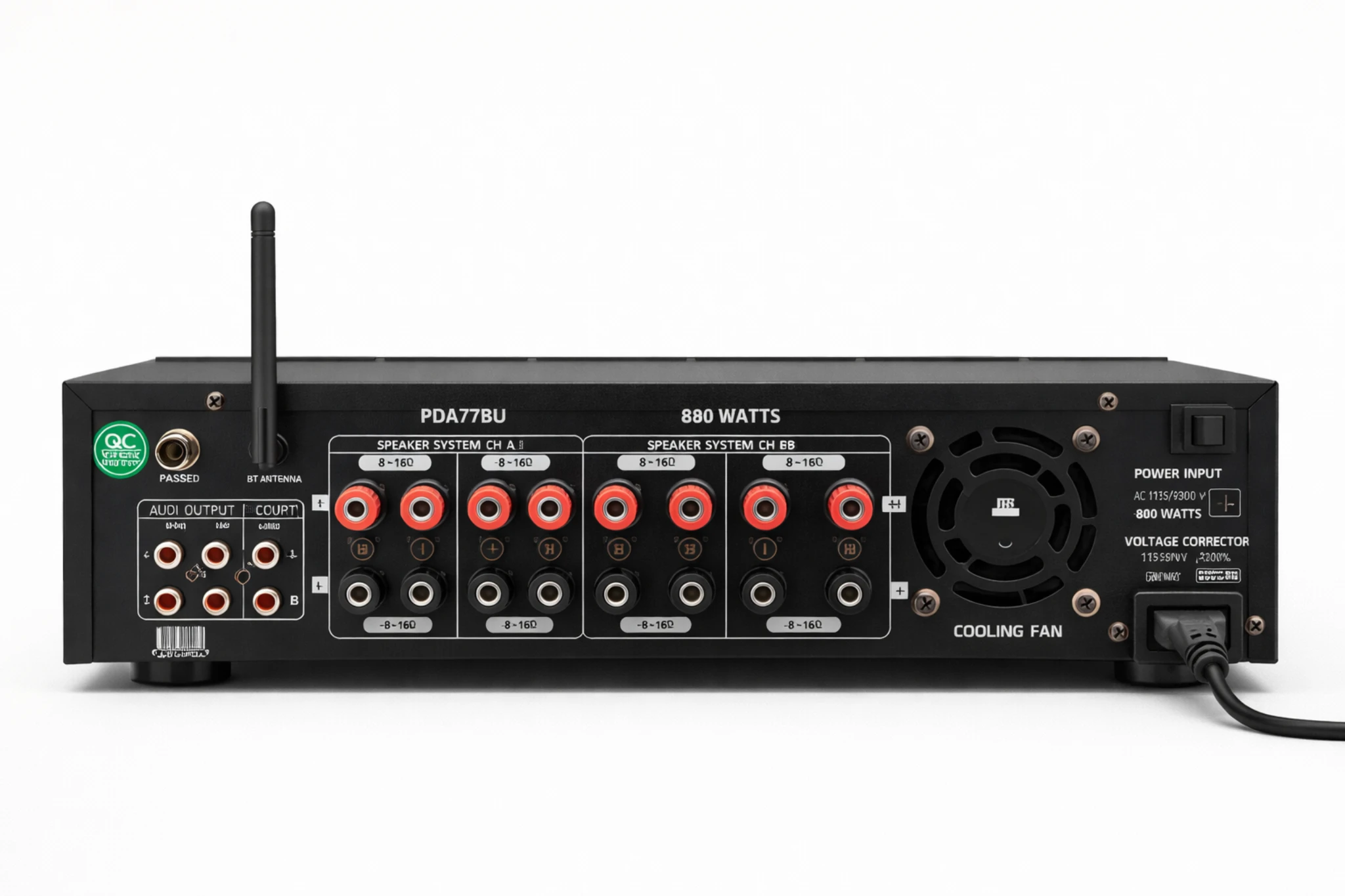
- Power Rating: 800W Peak
- Connectivity: Bluetooth, USB, SD, RCA
- Extras: Karaoke (mic, echo, delay), FM radio
- Best For: Casual setups, small rooms
Positioning: Entry-level, feature-first receiver for casual setups.
- All-in-one functionality
- Very beginner-friendly
- Affordable price point
- Good for casual and karaoke use
- Power output is misleading
- Limited sound clarity at higher volume
- Not suitable for demanding speakers
- Lacks long-term upgrade potential
Check latest price and availability on Amazon
What the Pyle PDA77BU Really Is
This isn’t a traditional amplifier—it’s a feature-first receiver built around convenience. You’re getting multiple functions in one device, but not the refined performance of dedicated audio gear.
That trade-off becomes clearer when you understand how amplifier ratings actually work. If you’re unsure, this guide on amplifier wattage explained will help you decode what those numbers really mean.
The “800W” Claim — What It Really Means
Direct answer: The 800W rating is peak power, not real output. In actual use, the Pyle PDA77BU delivers significantly less usable power and performs best at moderate volume levels.
This is where expectations often break. The number sounds powerful—but it doesn’t translate into real-world performance.
When pushed, the amplifier simply doesn’t have the control or consistency needed for clean output. That’s why understanding how much amplifier power you actually need matters far more than headline specs.
Real-World Sound Performance
At low levels, it performs acceptably. Music plays clearly enough, and it works well for background listening.
At higher volumes, the sound starts to feel strained rather than powerful—which is often more noticeable than raw loudness.
As volume increases, the system starts to lose control. Bass becomes loose, detail fades, and everything feels compressed. Push it further, and distortion becomes noticeable—especially in the highs.
This isn’t just about volume—it’s about control. And that’s exactly where budget receivers like this start to fall apart.
Features and Everyday Usability
The feature set is what makes this receiver appealing—and honestly, it’s the main reason most people consider it in the first place.
- Bluetooth: Simple and reliable for casual streaming
- USB/SD: Direct playback without extra devices
- Karaoke: Mic inputs with echo and delay controls
These features make it practical—but they also define its role. This is a convenience system, not a performance system.
Where It Works—and Where It Breaks Down
Where it works:
- Small rooms
- Casual music listening
- Beginner setups
Where it struggles:
- High volume listening
- Driving quality speakers
- Maintaining clarity
If your amplifier lacks control, it doesn’t just sound weaker—it limits your entire system. That’s exactly what happens with an amplifier holding your speakers back.
Better Alternatives for Sound Quality
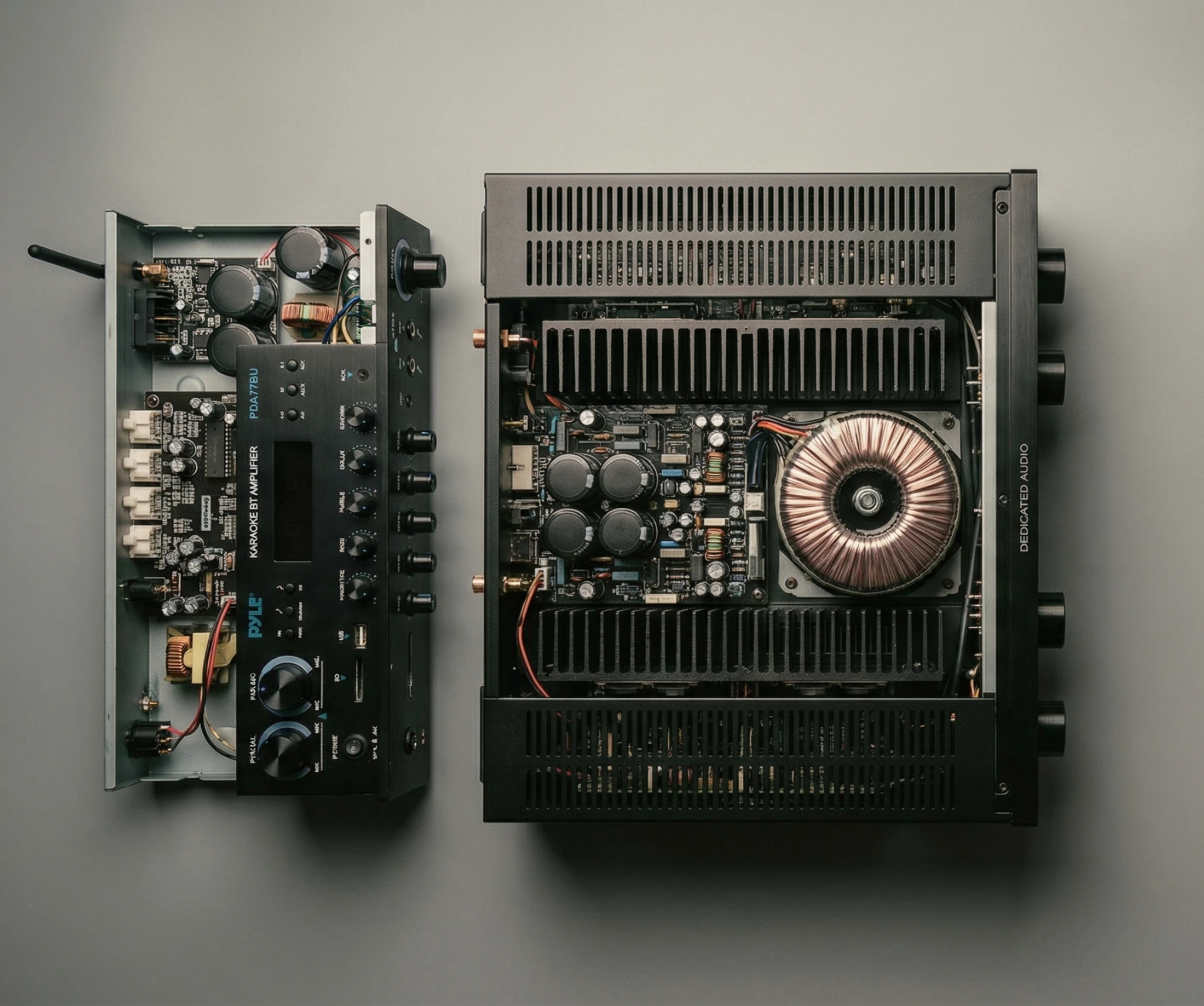
If sound quality is your priority, dedicated amplifiers outperform this type of receiver immediately.
Many of the best stereo amplifiers under $200 deliver cleaner sound, tighter bass, and far better long-term performance.
This is the real trade-off: features vs sound quality.
If you’re even slightly serious about sound quality, this is where upgrading makes a noticeable difference.
Best for: Beginners, small rooms, and casual listening setups.
Not ideal for: High-volume listening, serious audio setups, or future upgrades.
Final Verdict
The Pyle PDA77BU is not a scam—it’s just misunderstood.
If you treat it as a simple, affordable all-in-one solution, it delivers decent value. But if you expect real amplifier performance, it will fall short quickly.
This is a convenience-first receiver—not a performance amplifier. And once you understand that, the right decision becomes obvious.
For the right user, it works. For anyone chasing real sound quality, it’s a stepping stone—not a destination.