
You start looking at modern audio setups, and two terms keep coming up: wireless amplifier and streaming amplifier.
At first, they seem like the same thing. Both connect without cables and let you play music from your phone or apps. But once you look closer, the differences start to matter.
This is where most people get stuck. You are not sure which one you actually need, and choosing the wrong type can leave you with a setup that feels limited or more complicated than it should be.
If you are exploring different ways to modernize your system, this guide on what a streaming amplifier is explains how newer setups are changing the way people listen at home.
In reality, the choice is simpler than it looks. It comes down to how you want to play music, how independent you want your system to be, and how much control you expect from it.
This guide will break down the difference between wireless and streaming amplifiers in a clear, practical way so you can choose the one that actually fits your setup.
This comparison focuses on real-world usage, not just specs, so you can understand how a wireless vs streaming amplifier actually behaves in everyday listening.
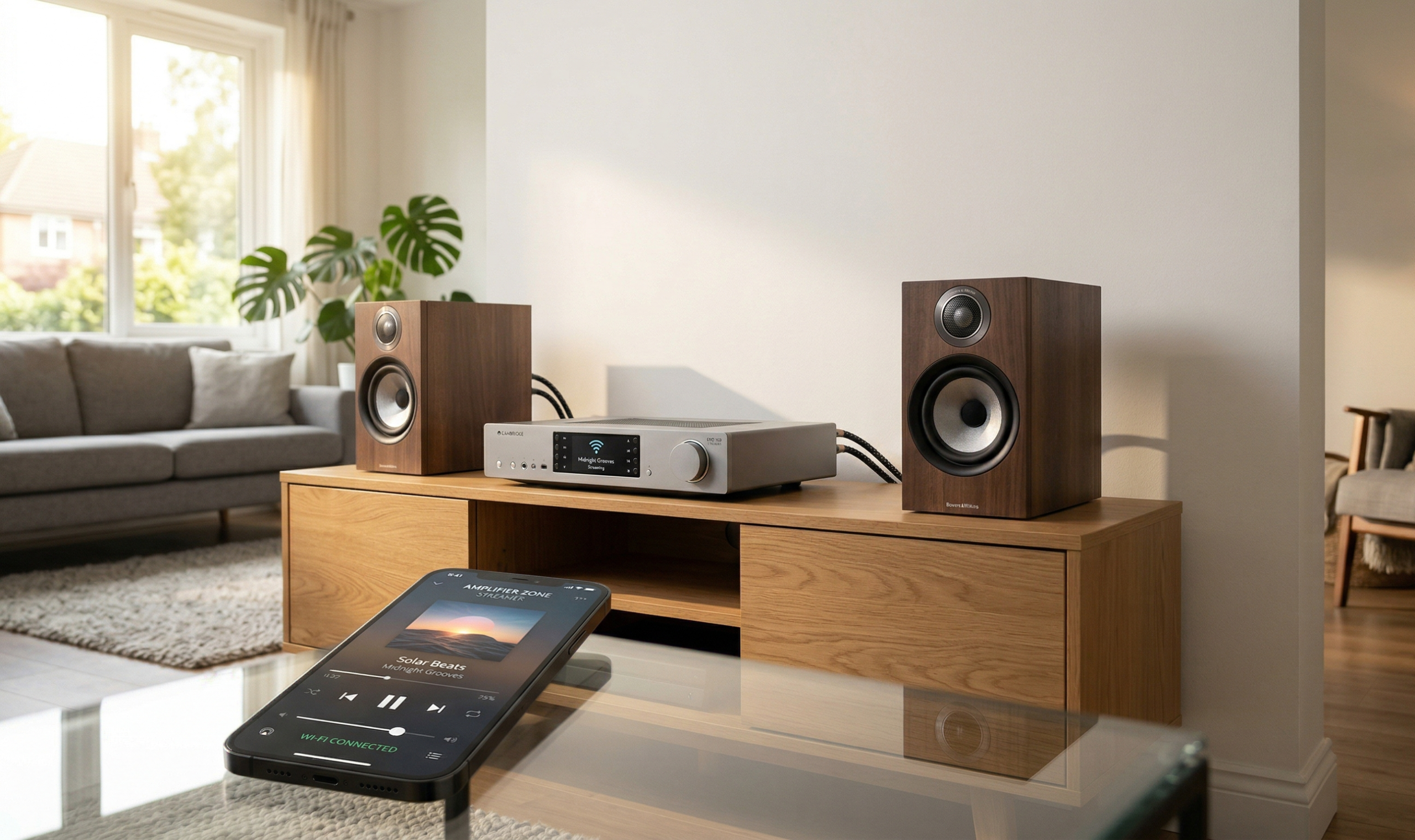
Quick Answer: A wireless amplifier receives audio from your device using Bluetooth or Wi-Fi, and it depends on your phone or source. A streaming amplifier plays music directly from the internet using built-in apps and does not rely on your phone for playback.
Affiliate Disclosure: AmplifierZone may earn a commission if you purchase through links on our site, at no extra cost to you. We only recommend products that fit real systems and listening needs.
In this guide:
What Is a Wireless Amplifier?
A wireless amplifier is designed to receive audio from your device without using physical cables. In most cases, this happens through Bluetooth or sometimes Wi-Fi.
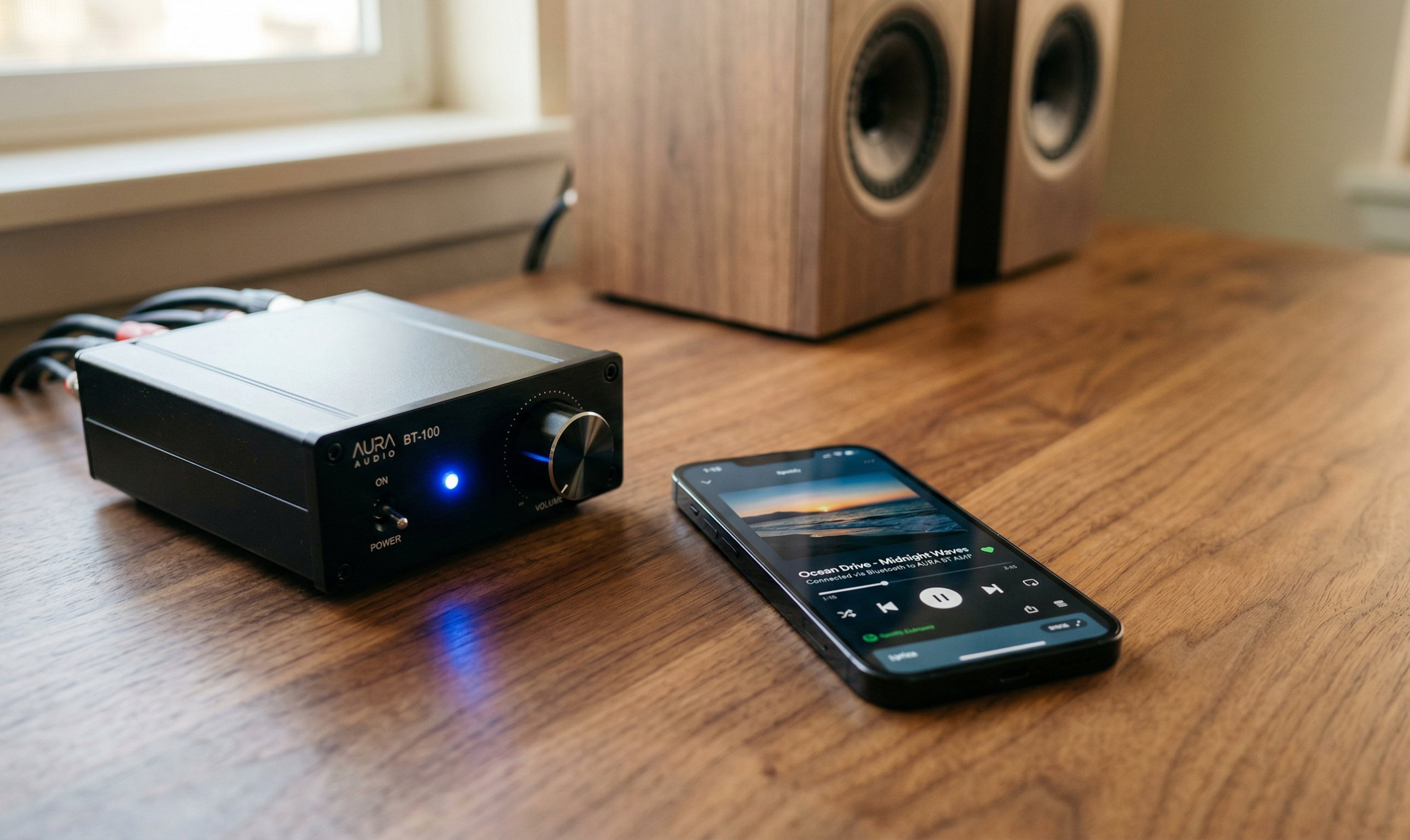
Instead of playing music on its own, the amplifier acts as a receiver. Your phone, tablet, or computer sends the audio, and the amplifier powers your speakers.
How It Works in Practice
You open an app on your phone, play music, and the amplifier receives that signal wirelessly. Everything is controlled from your device, including volume, tracks, and playback.
This makes wireless amplifiers simple and familiar to use, especially if you are used to Bluetooth speakers or headphones.
If you want to explore specific models, this guide to Bluetooth amplifiers for home use shows what to expect in real setups.
Where It Fits Best
Wireless amplifiers work best in setups where convenience matters more than advanced features. They are ideal for casual listening, small systems, and situations where you always have your phone nearby.
The trade-off is that your system depends entirely on your device. If your phone disconnects, runs out of battery, or leaves the room, the music stops.
What Is a Streaming Amplifier?
A streaming amplifier takes things a step further by handling music playback on its own. Instead of relying on your phone to send audio, i