
A power amplifier is the muscle of your home audio system — the component responsible for driving your speakers with clean, controlled energy. Unlike an integrated amplifier, which combines a preamp and power amp into a single unit, a dedicated power amplifier focuses solely on amplification, delivering better headroom, lower distortion, and improved dynamics.
Choosing the right power amplifier can dramatically transform your soundstage, especially if you’re working with demanding bookshelf or tower speakers. In this guide, we break down the best power amplifiers for home audio across three price tiers — Budget, Mid-Range, and High-End — so you can build a system that fits both your room and your goals.
If you’re new to amplifier power ratings, our guide on amplifier wattage is a great starting point. You may also want to explore our list of the best stereo amplifiers under $500 for additional system upgrade ideas.
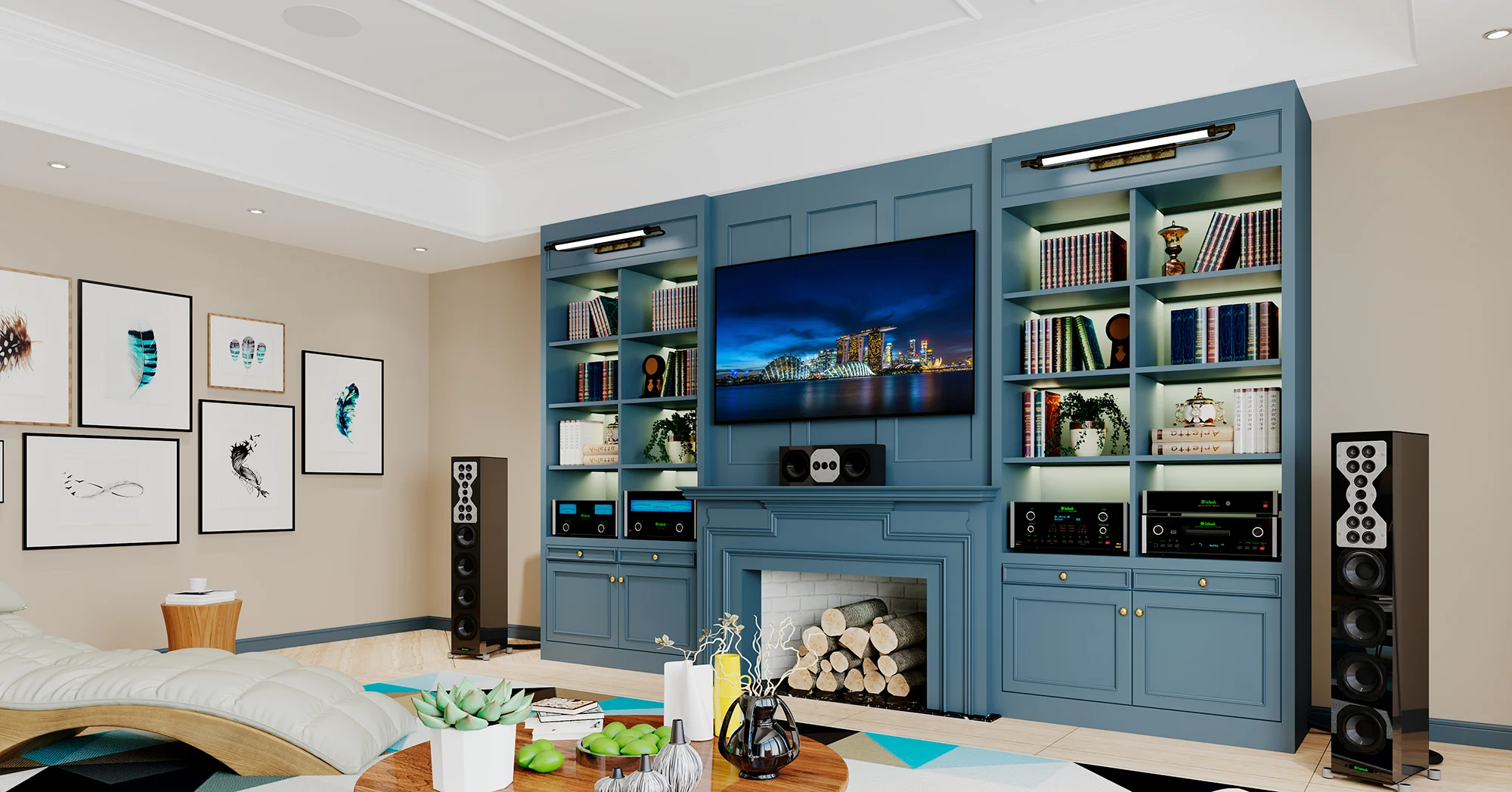
What Is a Power Amplifier?
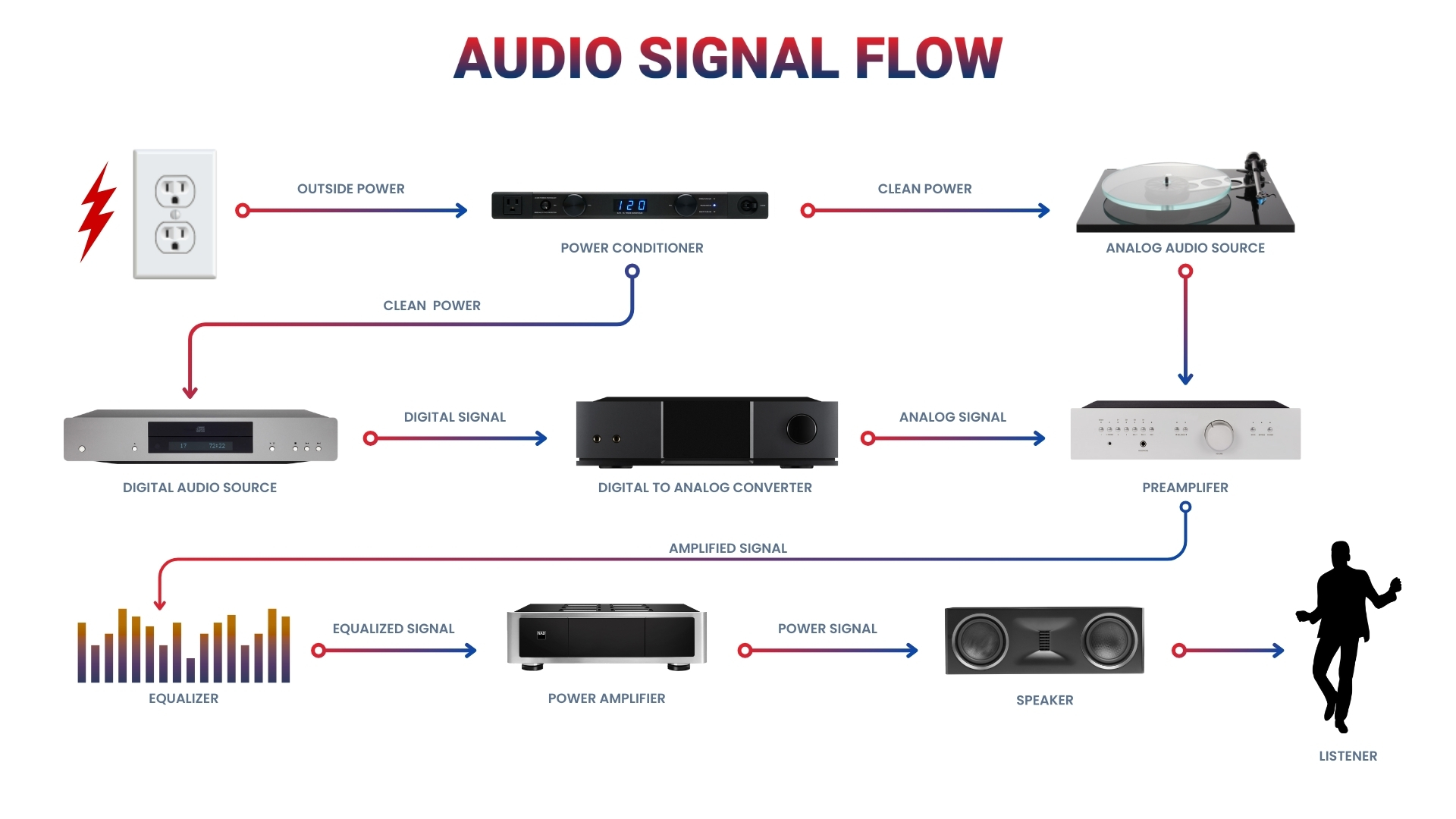
A power amplifier is a dedicated component that takes a low-level audio signal from a preamp, DAC, or receiver and boosts it to a level strong enough to drive loudspeakers. Its importance cannot be overstated: a clean, high-headroom amplifier ensures your speakers deliver accurate detail, controlled bass, and wide dynamic range without distortion.
In contrast, an integrated amplifier combines both preamp and power amplification in one chassis. While convenient, integrated amps tend to offer less raw power and fewer upgrade paths. With a standalone power amplifier, you can mix and match components, upgrade your preamp as your system grows, and achieve cleaner signal separation.
For a deeper look at how power amps differ from preamps and integrated models, see our breakdown here: Preamp vs. Amp — What’s the Difference?
How to Choose a Power Amplifier for Home Use
Selecting the right power amplifier depends on your speakers, room size, listening habits, and system configuration. The most important factors include wattage, impedance compatibility, amplifier class, input options, and cooling design. Understanding these variables ensures your amp and speakers work together efficiently without distortion, clipping, or power strain.
Start with wattage and speaker sensitivity. High-sensitivity speakers (90dB and above) require minimal power, while lower-sensitivity models benefit from stronger amplification to deliver clean dynamics. Impedance also matters: some amplifiers are stable at 4Ω loads, while others perform best at 8Ω. Matching your amp correctly prevents overheating and ensures optimal performance. Learn more here: What Is Amplifier Impedance?
Amplifier class also impacts sound and efficiency. Class A/B amps offer rich analog warmth but run hotter, while Class D amps are cool-running, efficient, and ideal for compact systems. Consider input options as well — RCA, XLR, or balanced — depending on your preamp. For choosing the best pairing, consult our guide: How to Match an Amplifier to Your Speakers.
Best Budget Power Amplifiers (Under $200)
Budget amplifiers deliver outstanding value thanks to modern Class D chipsets, which provide strong power, low distortion, and cool operation. These models are ideal for desktop setups, small rooms, and entry-level hi-fi systems. If you want to explore even smaller form-factor options, check out our guide on the best mini amplifiers.
1. Fosi Audio V3 Stereo Amplifier (300W ×2)
The Fosi Audio V3 stands out as one of the cleanest-sounding entry-level amplifiers thanks to the TPA3255 Class D chipset, which delivers excellent clarity, strong bass control, and very low noise. It drives bookshelf speakers confidently and performs particularly well in near-field or small listening environments.
The amplifier’s compact design makes it ideal for desktop audio, while the tuned circuit layout helps maintain stability even at higher volume levels. With a neutral sound profile and warm bass tilt, the V3 feels more refined than most amps in its price category.
If you want a no-nonsense amplifier that performs far above its cost, the V3 is one of the strongest budget picks available today. It’s perfect for beginner hi-fi setups and secondary spaces like offices or bedrooms.
- Power Output: 300W ×2 @ 4Ω
- Amplifier Class: Class D (TPA3255)
- Inputs: RCA
- Speaker Load: 4–8Ω
- Use Case: Desktop & Small Room Audio
- Clean, detailed sound signature
- High efficiency & cool operation
- Excellent value under $120
- No balanced inputs
- Not suitable for large tower speakers
Related reading: How to connect a DAC to an amplifier
2. AIYIMA A07 Premium TPA3255 Amplifier (300W ×2)
The AIYIMA A07 Premium is one of the highest-rated budget amps on the market due to its excellent power delivery, crisp midrange, and low distortion. It offers a lively and energetic sound profile, making it ideal for users who prefer dynamic playback for music and movies.
Build quality is solid, and the amplifier includes an improved power supply compared to earlier versions. Its compact form factor fits easily on desks or shelves while still providing plenty of power for efficient speakers.
For under $70, the A07 delivers exceptional clarity and performance that rivals amps twice the price. It’s a top choice for entry-level hi-fi and a favorite among DIY audio enthusiasts.
- Power Output: 300W ×2 @ 4Ω
- Amplifier Class: Class D (TI TPA3255)
- Inputs: RCA
- Impedance Support: 4–8Ω
- Included: 32V/5A Power Supply
- Incredible price-to-performance ratio
- Tight, punchy bass response
- Compact and energy-efficient
- No balanced input options
- Basic chassis design
Helpful tool: Amplifier Wattage Calculator
3. Fosi Audio ZA3 Balanced Stereo Amplifier
The ZA3 takes budget amplification into more premium territory with its balanced inputs, clean signal path, and optional mono mode. The sonic improvement over basic budget amps is immediately noticeable, with better bass separation and improved dynamics.
This model is especially versatile: it can function as a stereo amplifier, a dedicated mono subwoofer amp, or part of a dual-mono setup. Its sturdier chassis and improved thermal design allow it to maintain stability during long listening sessions.
If you’re seeking audiophile-leaning performance without jumping into mid-range pricing, the ZA3 offers exceptional value and flexibility.
- Power Output: 240W ×2 @ 4Ω (Stereo Mode)
- Amplifier Class: Class D (TPA3255)
- Inputs: RCA, Balanced TRS
- Modes: Stereo / Mono
- Use Case: Bookshelf Speakers & Subwoofer Power
- Balanced inputs reduce noise
- Mono mode for subwoofer or dual-mono setups
- Refined tuning with strong bass accuracy
- More expensive than basic budget models
- No built-in DAC
Related reading: How to connect a DAC to an amp
Best Mid-Range Power Amplifiers ($350–$700)
Mid-range amplifiers offer significantly more power, improved thermal design, and better noise performance. These models work extremely well with floorstanding speakers and medium-to-large rooms. Before choosing a higher-power amplifier, you may want to understand overheating risks: fix amplifier overheating problems.
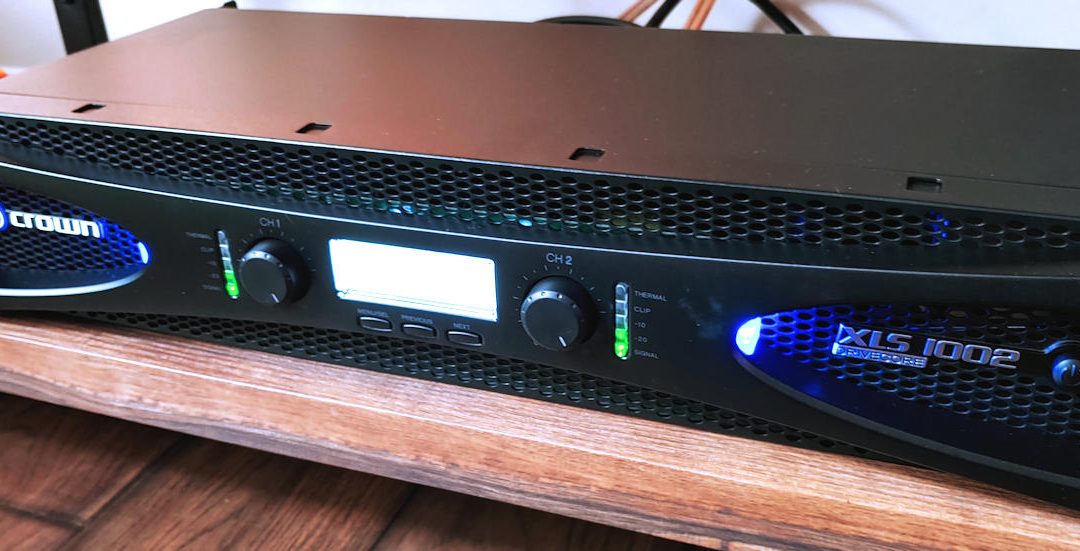
4. OSD Audio XMP300 GEN2 (2×300W Class D)
The OSD XMP300 GEN2 offers true high-power performance in a compact and efficient chassis. Its Class D architecture delivers clean output with very low heat production, making it a strong option for both music and home theater applications. The front-panel bass and treble controls also make quick sound adjustments easy.
Dynamic headroom is excellent, and the XMP300 remains stable even when pushing 4-ohm loads at higher volumes. Build quality is strong, and the amp includes multiple protection circuits for safe long-term operation.
If you want serious power without stepping into the premium tier, the XMP300 provides exceptional value for demanding speakers and larger rooms.
- Power Output: 300W ×2 @ 4Ω
- Amplifier Class: Class D
- Inputs: RCA
- SNR: 90dB
- Tone Controls: Bass & Treble
- High output for its size
- Efficient Class D design
- Excellent for large rooms
- No balanced inputs
- Minimal aesthetic design
Related reading: Best cables for amplifier setups
5. Crown XLS1502 DriveCore 2-Channel Power Amplifier
The Crown XLS1502 is a professional-grade amplifier that has become extremely popular with home audio enthusiasts thanks to its massive power reserves, DSP flexibility, and clean output at all volume levels. Its DriveCore technology keeps distortion low even during demanding dynamic swings.
The onboard DSP includes high-pass, low-pass, and band-pass filters, making the XLS1502 incredibly versatile for bi-amping, subwoofer power, or full-range stereo setups. The lightweight chassis also makes installation easy.
If you need serious power for large rooms or inefficient tower speakers, the XLS1502 is one of the most capable mid-range amplifiers available.
- Power Output: 525W ×2 @ 4Ω
- Amplifier Class: Class D (DriveCore)
- Inputs: XLR, RCA
- DSP: Crossover + Bandpass Filters
- Use Case: Large Rooms & High-Power Systems
- Huge power output with low distortion
- Flexible DSP with crossover options
- Lightweight but extremely strong
- Pro audio aesthetic isn’t for everyone
- Fan noise can be audible in quiet rooms
Read next: How to fix amplifier overheating
6. Yamaha PX3 Dual-Channel Power Amplifier (2×500W)
The Yamaha PX3 is a lightweight but powerful amplifier designed for reliability and consistent performance. With 500W per channel and Yamaha’s high-efficiency Class D topology, it delivers clean sound with excellent dynamic capability. This makes it ideal for home theater and music systems that require strong headroom.
The PX3 includes DSP options, scene memory presets, and onboard EQ. Despite its professional feature set, it integrates well into home rack systems and offers extremely stable performance at 4-ohm loads.
If you want professional-grade stability without the bulk or heat output of older Class A/B amps, the PX3 is an outstanding option under $700.
- Power Output: 500W ×2 @ 4Ω
- Amplifier Class: Class D
- Inputs: XLR, TRS
- DSP: EQ + Scene Memory
- Use Case: Large Rooms & Home Theater Systems
- High power with efficient thermals
- Advanced DSP features
- Lightweight and rack-friendly
- Industrial look
- Menus take time to learn
Best High-End Power Amplifiers ($900–$1,200)
High-end amplifiers deliver premium components, improved circuitry, better thermal control, and dramatically cleaner signal paths. These models are ideal for audiophile listening rooms and high-resolution speaker systems.
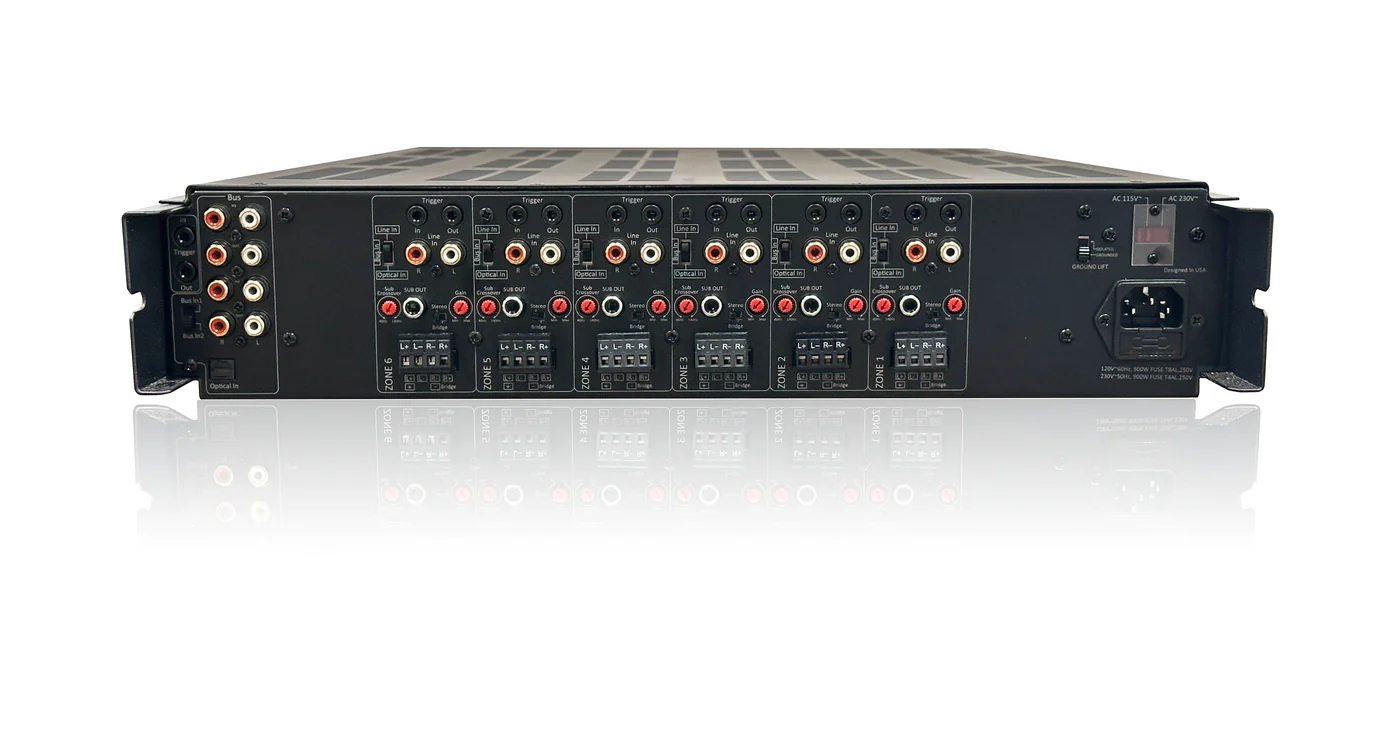
7. Cambridge Audio CXA81 — Power Stage Mode
The Cambridge Audio CXA81 is traditionally an integrated amplifier, but its Power Stage Mode transforms it into a remarkably clean and dynamic power amplifier. When paired with an external preamp or streaming DAC, it delivers exceptional transparency and authority.
The CXA81 is built with premium capacitors and a high-current toroidal transformer, giving it a rich, expressive sound with excellent separation. When used as a power amp, it performs above its price class and competes with dedicated amplifiers costing significantly more.
Audiophiles who want both flexibility and uncompromising musicality will appreciate what the CXA81 offers in Power Stage configuration.
- Power Output: 80W ×2 @ 8Ω (as Power Stage)
- Class: A/B
- Inputs: RCA, Balanced XLR
- Transformer: High-Current Toroidal
- Use Case: Audiophile Stereo Systems
- Rich, musical sound with strong separation
- Balanced inputs for cleaner signal
- Premium build quality
- Lower wattage compared to pro amps
- Best performance requires an external preamp
Learn more: Full Cambridge Audio CXA81 review
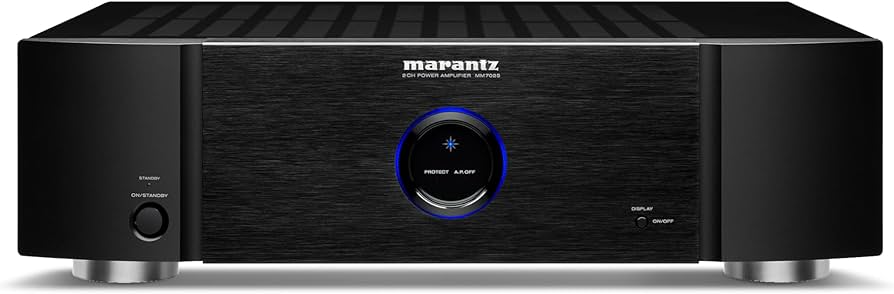
8. Marantz MM7025 Stereo Power Amplifier
The Marantz MM7025 is a powerful and refined two-channel amplifier designed for high-end stereo and home theater applications. With 140W per channel and the iconic Marantz HDAM circuitry, it delivers exceptional smoothness, depth, and musical accuracy.
The MM7025 excels with demanding speakers and provides a warm yet detailed sound signature that Marantz is known for. Build quality is outstanding, and the amplifier integrates seamlessly into multi-channel environments thanks to its trigger inputs and flexible connectivity.
If you want a dedicated high-end amplifier for premium stereo listening, the MM7025 offers flagship-grade performance without entering ultra-high-end pricing.
- Power Output: 140W ×2 @ 8Ω
- Class: A/B
- Inputs: RCA
- Circuitry: Marantz HDAM
- Use Case: High-End Stereo & Home Theater
- Warm, rich, highly detailed sound
- Premium build quality
- Ideal for high-resolution speakers
- Lower power output than pro amps
- RCA-only input may limit some setups
Explore more: Understanding amplifier components
Comparison Table
| Rank | Model | Power Output | Class | Inputs | Key Features | Price Tier |
|---|---|---|---|---|---|---|
| #1 | Fosi Audio V3 | 300W ×2 @ 4Ω | Class D | RCA | Neutral tuning, compact size | $ |
| #2 | AIYIMA A07 Premium | 300W ×2 @ 4Ω | Class D | RCA | Punchy bass, high efficiency | $ |
| #3 | Fosi Audio ZA3 Balanced | 240W ×2 | Class D | RCA / Balanced TRS | Stereo/Mono mode, low noise | $$ |
| #4 | OSD XMP300 GEN2 | 300W ×2 @ 4Ω | Class D | RCA | Tone controls, stable power | $$$ |
| #5 | Yamaha PX3 | 500W ×2 @ 4Ω | Class D | XLR / TRS | DSP presets, EQ, reliability | $$$$ |
| #6 | Crown XLS1502 | 525W ×2 @ 4Ω | Class D | XLR / RCA | Advanced DSP, pro performance | $$$$ |
| #7 | Cambridge Audio CXA81 | 80W ×2 @ 8Ω | Class A/B | RCA / XLR | Toroidal transformer, refined sound | $$$$$ |
| #8 | Marantz MM7025 | 140W ×2 @ 8Ω | Class A/B | RCA | HDAM circuitry, warm signature | $$$$$ |
Buying Guide: How to Choose a Home Power Amplifier
Power Output (Watts & Speaker Matching)
Amp wattage determines how loudly and cleanly your speakers can play. High-sensitivity speakers (90dB+) require less power, while lower-sensitivity designs benefit from stronger amplification. To better understand the relationship between watts, SPL, and speaker behavior, see our detailed guide on amplifier wattage.
For small rooms, 50–100W per channel is often enough. Medium to large rooms or inefficient speakers benefit from 150–300W+ per channel.
Impedance & Compatibility
Most speakers are rated at 4Ω, 6Ω, or 8Ω. Your amplifier must be stable at the impedance your speakers require. Some budget amps handle 4Ω loads well, while others perform best at 8Ω. If you’re unsure, review our guide on 4-ohm vs. 8-ohm speaker loads.
A stable amp prevents overheating, clipping, and long-term damage to both components.
Amplifier Class
Amplifier class affects sound character, heat output, and efficiency:
- Class A/B: Warm, smooth, analog sound; runs hotter.
- Class D: Extremely efficient, cooler, compact design.
Class D is excellent for power and home theater; Class A/B often wins with audiophile music listening preferences.
Inputs & Connectivity
Your preamp or DAC determines the input type you need:
- RCA: Standard unbalanced input.
- XLR / Balanced: Lower noise, ideal for long cable runs or high-end systems.
DSP-equipped amps offer EQ, crossover settings, and memory presets that allow deeper tuning for home theater systems.
Use Cases
Your intended use helps define which amplifier tier is best:
- Bookshelf Speakers: Budget or mid-range amps often perform exceptionally well.
- Tower Speakers: Mid-range or high-end amps deliver better headroom and control.
- Home Theater: Pro-style amps with DSP and high wattage (Crown, Yamaha PX series).
- Subwoofer Power: Amps with mono or bridging mode (Fosi ZA3, OSD SMP series).
Final Verdict
Choosing the right power amplifier ultimately depends on your budget, speaker type, and room size. Budget models like the Fosi V3 and AIYIMA A07 offer incredible value, while mid-range options from Yamaha and Crown bring serious power and flexibility. High-end units from Cambridge Audio and Marantz elevate music listening with premium components and refined sonic performance.
Best Budget Pick: Fosi Audio V3 — unbeatable clarity and value under $120.
Best Mid-Range Pick: Crown XLS1502 — huge power, DSP flexibility, and clean drive.
Best High-End Pick: Marantz MM7025 — warm, smooth, premium performance.
Best Overall Value: Fosi Audio ZA3 — incredible flexibility and balanced inputs at a low price.
No matter your choice, a properly matched amplifier can transform your system. Pair it with the right speakers, correct impedance, and clean signal chain, and you’ll unlock the full potential of your audio setup.
Frequently Asked Questions
Is a power amplifier better than an integrated amplifier?
Not always — it depends on your needs. An integrated amp combines preamp and power amp in one chassis for simplicity and lower cost. A dedicated power amp can offer cleaner headroom and lower distortion, and it allows you to upgrade the preamp or DAC separately for a higher-end system.
How many watts do I need for home speakers?
That depends on speaker sensitivity and room size. Efficient speakers (90dB+) can sound loud with 30–50W. For larger rooms or inefficient speakers, look for 150W–300W per channel or more. Our amplifier wattage guide explains the relationship between watts, loudness, and speaker sensitivity.
Can I use a pro audio amp (like Crown or Yamaha PX series) at home?
Yes — many pro-audio amps work very well in home systems and are prized for their reliability and power. Keep in mind they may have a more industrial look, and some models include fan cooling that can be audible in very quiet rooms.
Do I need a preamp with a power amplifier?
Yes — a power amplifier expects a line-level signal. If your source doesn’t have a built-in preamp (or volume control), you’ll need a separate preamp, integrated amp, or a DAC with preamp outputs to control volume and input switching.
Can I power a subwoofer with one of these amps?
Some models (like the Fosi ZA3 in mono mode or dedicated sub amps) are well-suited for subwoofer duty. For best results use a powered subwoofer or an amp with a dedicated mono/bridging mode and a proper low-pass crossover.