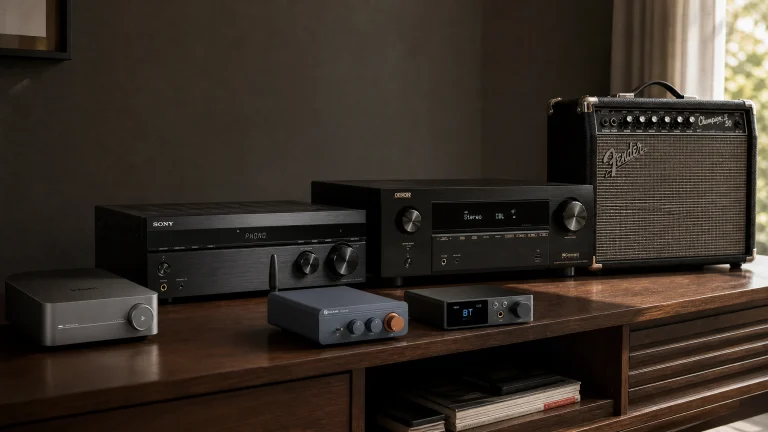
Getting into home audio for the first time can feel overwhelming. Power ratings, impedance, DACs, inputs—it’s easy to get lost before you even start. But the truth is, the best amplifier for beginners isn’t the most powerful or the most advanced—it’s the one that’s easiest to set up, understand, and enjoy from day one. Unlike complex audio systems, a beginner amplifier focuses on simplicity and quick setup—making it ideal for first-time home audio users.
Most beginners don’t need complex systems or multiple components. What you actually need is a simple, reliable amplifier that works with your speakers, connects easily to your phone or TV, and gives you clean sound without constant tweaking. If you’re unsure where to start, this guide on what amplifier you actually need will help you understand the basics before choosing.
In this guide, we’ve focused only on beginner-friendly amplifiers—models that are easy to use, forgiving to set up, and proven to deliver consistent results without requiring technical knowledge. Whether you’re building your first system or upgrading from basic speakers, these are the safest and smartest starting points.
Affiliate Disclosure: AmplifierZone is reader-supported. As an Amazon Associate, we may earn commissions from qualifying purchases at no extra cost to you.
Quick Comparison: Best Beginner-Friendly Amplifiers
If you’re new to home audio, these are the key differences that actually matter—how easy each amplifier is to set up, what it connects to, and how forgiving it is for first-time users.
This guide is for you if:
- You’ve never owned an amplifier before
- You want something easy to set up
- You’re building a simple home audio system
| Model | Setup Difficulty | Bluetooth | Inputs | Best For | Price |
|---|---|---|---|---|---|
| Fosi Audio BT20A | Very Easy | Yes | RCA, Bluetooth | Safe first-time setup | $70–$90 |
| Fosi Audio BT10A | Very Easy | Yes | RCA, Bluetooth | Desktop & ultra-simple setups | $45–$60 |
| SMSL AD18 | Moderate | Yes | USB, Optical, Coaxial, RCA, Bluetooth | TV & PC systems | $130–$150 |
| AIYIMA A03 | Easy | Yes | RCA, Bluetooth | 2.1 setup (with subwoofer) | $70–$90 |
| Douk Audio M1 Pro | Easy | Yes | USB, AUX, Bluetooth | Flexible beginner setups | $60–$80 |
| Fosi Audio BT30D Pro | Easy | Yes | RCA, Bluetooth | Upgrade-friendly 2.1 systems | $100–$120 |
| Arylic B50 | Moderate | Yes | HDMI ARC, Phono, RCA, Bluetooth, App | Smart streaming setups | $130–$150 |
Top Beginner Amplifiers (Easy Setup Picks)
1. Fosi Audio BT20A Bluetooth Stereo Amplifier
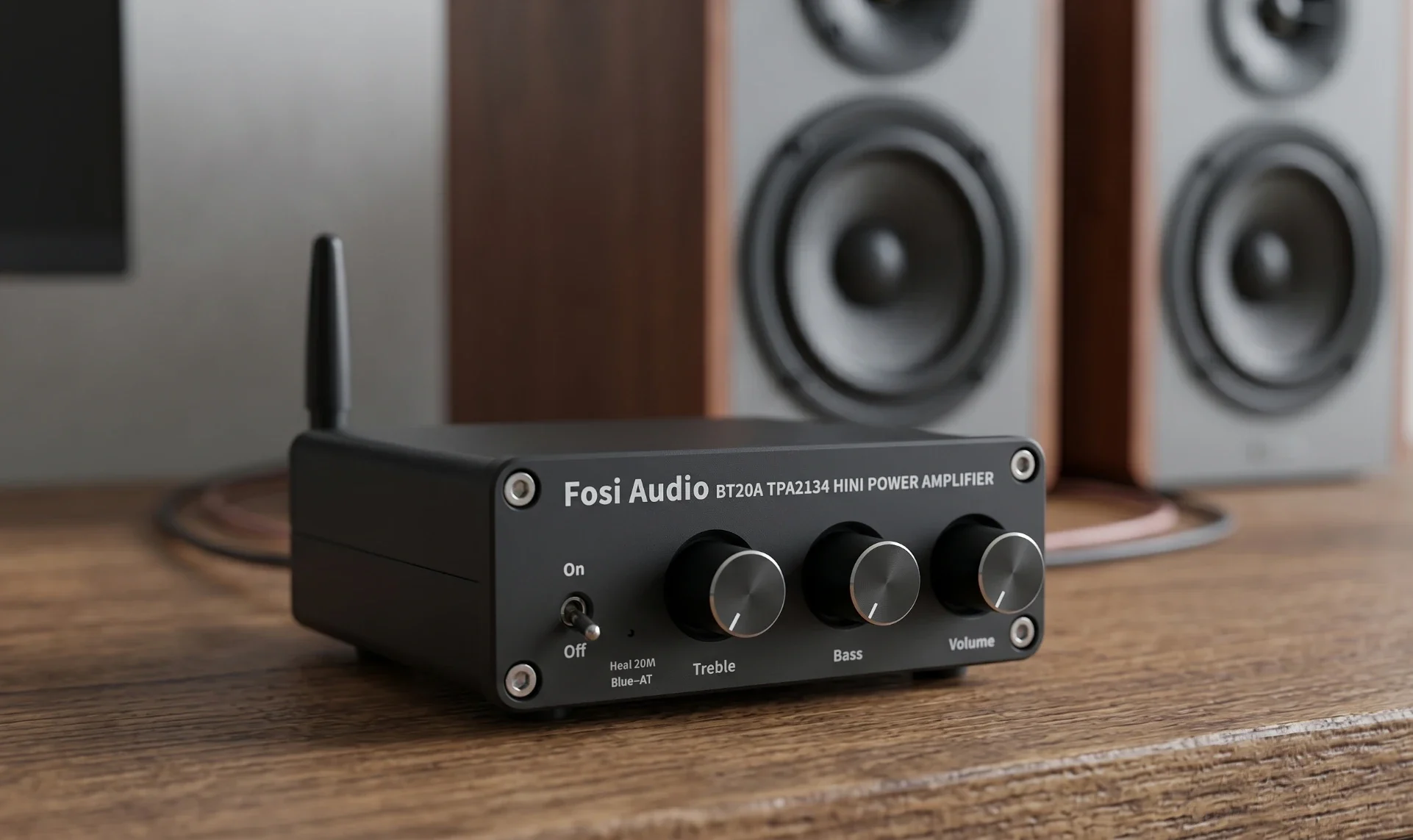
- Type: Compact stereo amplifier
- Amplification: Class D (TPA3116)
- Bluetooth: Yes (Bluetooth 5.0)
- Inputs: RCA, Bluetooth
- Outputs: Speaker terminals
- Subwoofer output: No
- Best for: First-time setups with minimal effort
The Fosi Audio BT20A is the easiest recommendation for beginners because it removes almost all of the common friction points. There’s no complicated setup process, no confusing controls, and no need for extra equipment—just connect your speakers, pair Bluetooth, and you’re ready to go.
What makes it especially beginner-friendly is how predictable it feels in everyday use. The volume control is smooth, the sound stays clean at normal listening levels, and there’s very little risk of making a mistake during setup. This is exactly what most first-time users need: something that works reliably without constant adjustments. If you’re unsure how power affects your setup, read our guide on amplifier wattage explained.
It may not have advanced features like subwoofer outputs or digital inputs, but that’s actually part of its strength. By focusing on the basics and doing them well, the BT20A delivers a simple, stress-free starting point into home audio.
- Extremely easy to set up and use
- Clean, balanced sound for everyday listening
- Bluetooth makes streaming simple
- Reliable and beginner-safe choice
- No subwoofer output
- Limited upgrade flexibility
Approx. price: $70–$90. Best beginner amplifier for easy setup and reliable performance.
2. Fosi Audio BT10A Bluetooth Stereo Amplifier
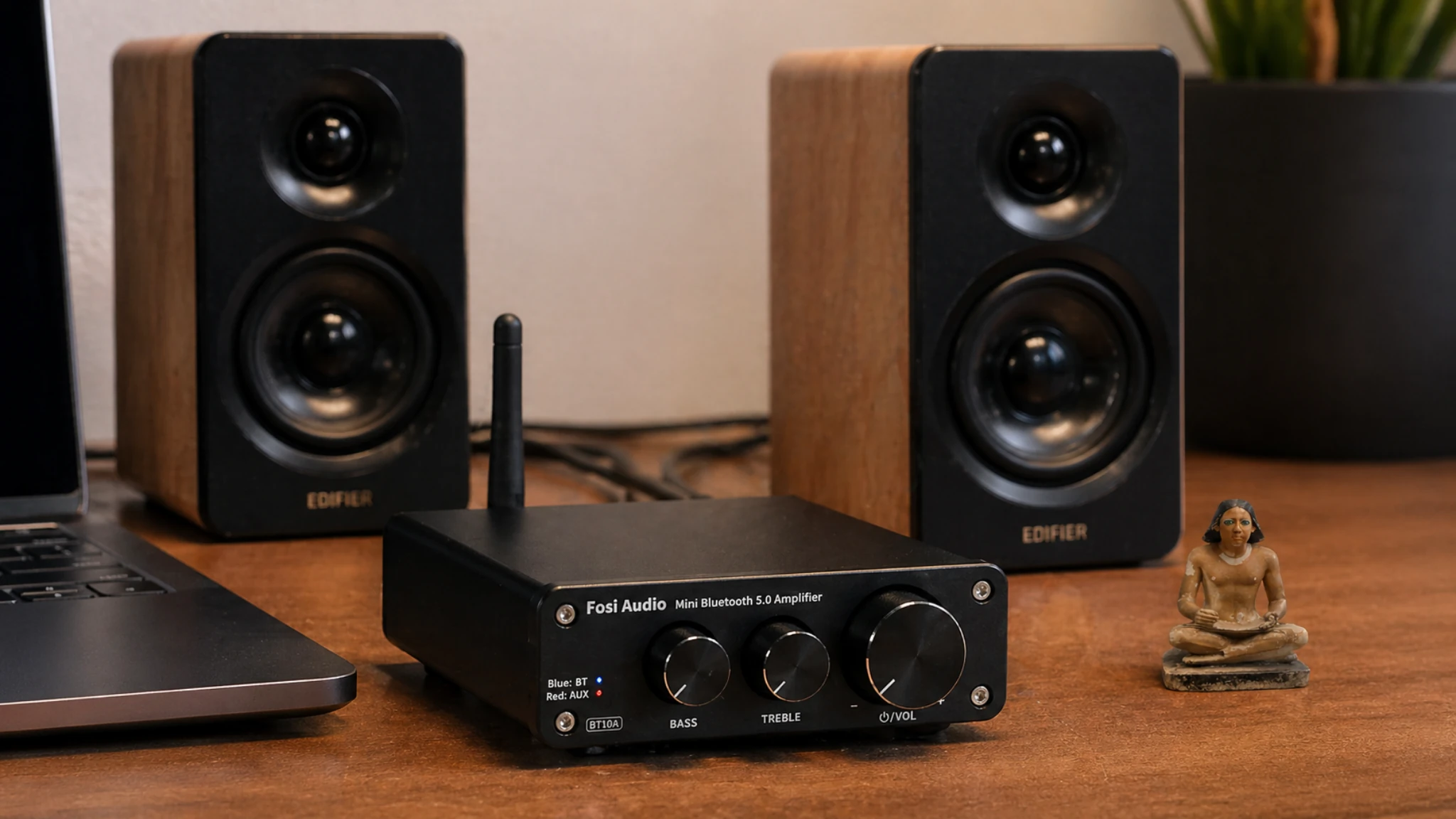
- Type: Ultra-compact stereo amplifier
- Amplification: Class D (TPA3116)
- Bluetooth: Yes (Bluetooth 5.0)
- Inputs: RCA, Bluetooth
- Outputs: Speaker terminals
- Subwoofer output: No
- Best for: Desktop setups and ultra-simple systems
The Fosi Audio BT10A is one of the simplest amplifiers you can buy, which makes it perfect for beginners who want something that just works. It’s extremely compact, easy to place anywhere, and requires almost no effort to set up.
For small desk setups or near-field listening, this kind of simplicity is ideal. You don’t have to think about complex wiring or advanced features—just connect your speakers, pair your device, and start listening. The controls are straightforward, and there’s very little that can go wrong.
It’s not designed for large rooms or demanding speakers, but that’s not its purpose. If your priority is ease of use and a clean, minimal setup, the BT10A is one of the most beginner-friendly amplifiers available.
- Extremely compact and easy to place
- Very simple setup process
- Bluetooth connectivity for quick use
- Affordable entry-level option
- Limited power for larger speakers
- No subwoofer output
Approx. price: $45–$60. Best beginner amplifier for ultra-simple and compact setups.
3. SMSL AD18 DAC Bluetooth Amplifier
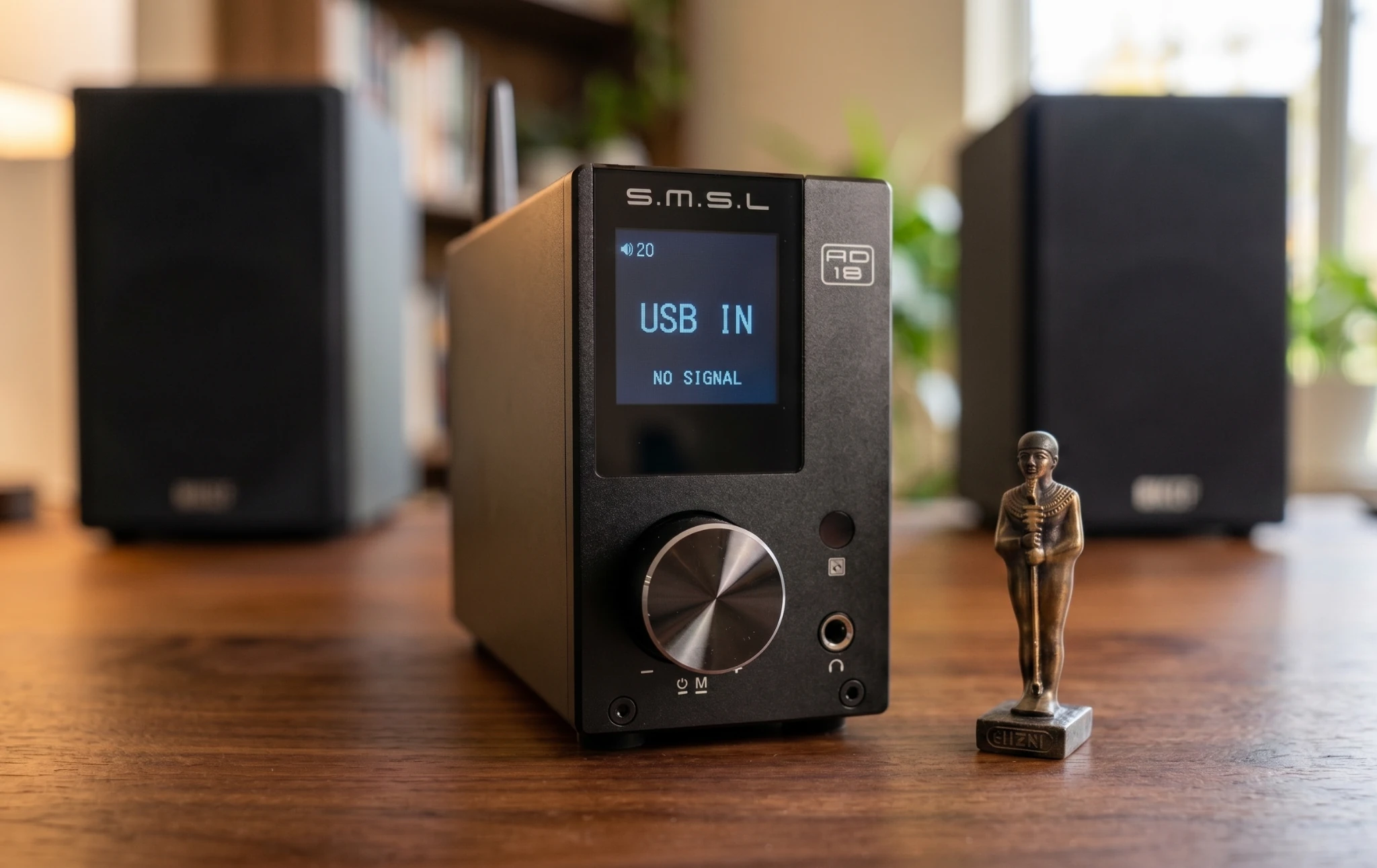
- Type: DAC amplifier (all-in-one)
- Amplification: Class D
- Bluetooth: Yes (aptX support)
- Inputs: USB, optical, coaxial, RCA, Bluetooth
- Outputs: Speaker terminals, subwoofer output
- Subwoofer output: Yes
- Best for: TV, PC, and multi-device setups
The SMSL AD18 is ideal for beginners who want everything handled in one device. Instead of figuring out how to connect multiple components, this amplifier includes a built-in DAC and multiple inputs, allowing you to connect your TV, computer, or streaming device directly.
This greatly simplifies the setup process. You don’t need to understand external DACs or worry about compatibility—just plug in your source and start listening. For beginners building a TV or desktop system, this can remove a lot of confusion right from the start.
While it’s slightly more complex than basic amplifiers, that complexity is what makes it more capable. If you want a compact system that can handle multiple devices without additional gear, the AD18 is one of the most practical beginner-friendly options available.
- All-in-one design (no extra components needed)
- Multiple digital inputs for TV and PC
- Includes subwoofer output
- Bluetooth with aptX support
- Slightly more complex than basic amplifiers
- Interface takes time to learn
Approx. price: $130–$150. Best beginner amplifier for TV, PC, and multi-device setups.
4. AIYIMA A03 2.1 Channel Bluetooth Amplifier
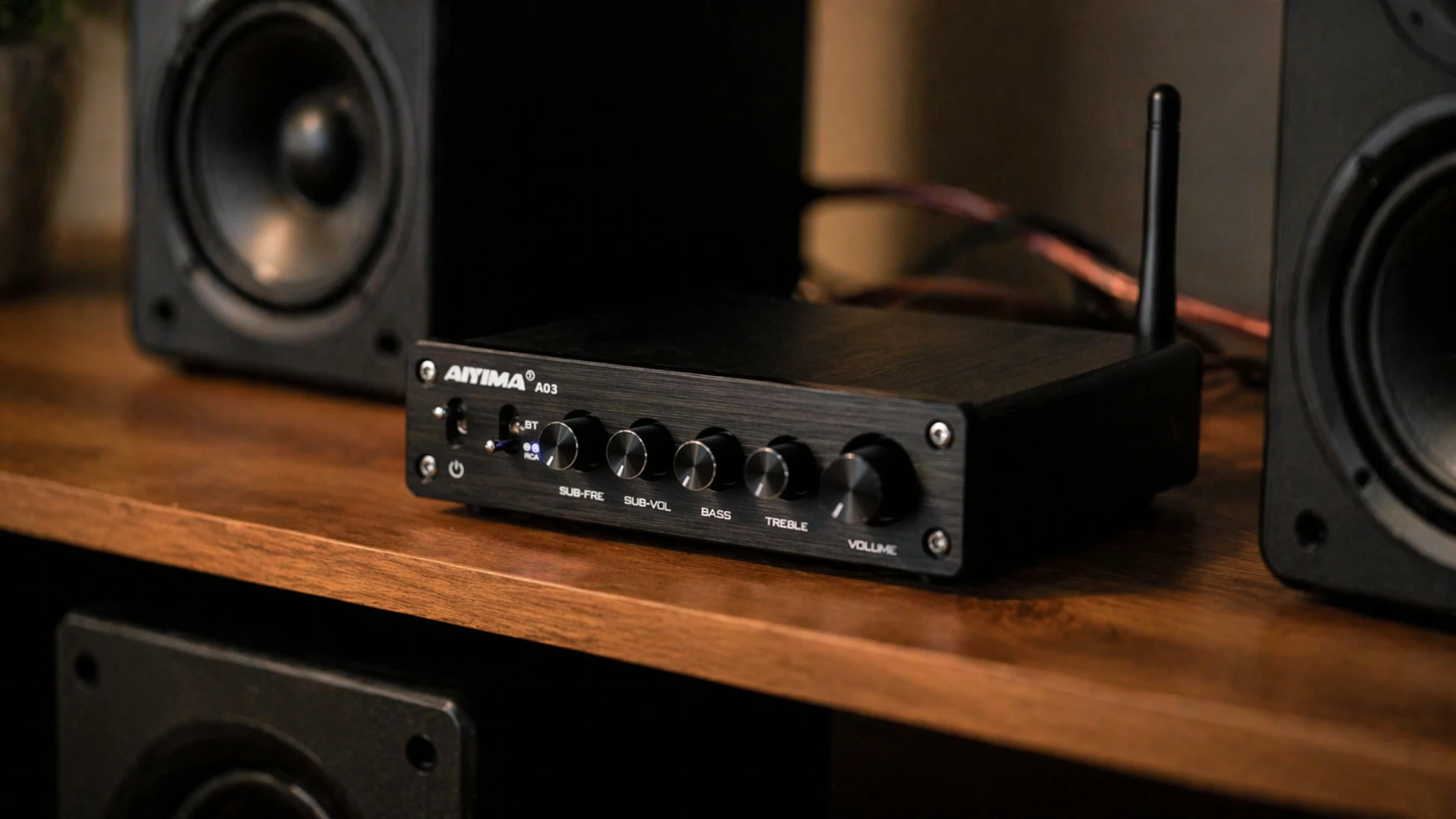
- Type: 2.1 channel amplifier
- Amplification: Class D (TPA3116)
- Bluetooth: Yes
- Inputs: RCA, Bluetooth
- Outputs: Speaker terminals, subwoofer output
- Subwoofer output: Yes (dedicated)
- Best for: Beginner 2.1 setups with subwoofer
The AIYIMA A03 is a great choice for beginners who want more than just stereo sound. It allows you to connect a subwoofer easily, creating a 2.1 system that adds depth and bass without requiring a full home theater receiver. To better understand subwoofer integration, see our guide on matching your amplifier to speakers.
What makes it beginner-friendly is how straightforward the setup is. Instead of figuring out complicated wiring or settings, you get a dedicated subwoofer output that works right out of the box. This makes it much easier to build a fuller sound system without confusion.
If you enjoy movies, gaming, or music with stronger bass, the A03 gives you a simple way to upgrade your setup. It’s one of the easiest entry points into 2.1 audio without adding unnecessary complexity.
- Dedicated subwoofer output for easy 2.1 setup
- Improves bass without complicating the system
- Bluetooth connectivity for convenience
- Great for mixed-use setups (music, movies, gaming)
- Less refined than higher-end stereo amps
- Limited advanced controls
Approx. price: $70–$90. Best beginner amplifier for adding a subwoofer and improving bass.
5. Douk Audio M1 Pro Bluetooth Amplifier
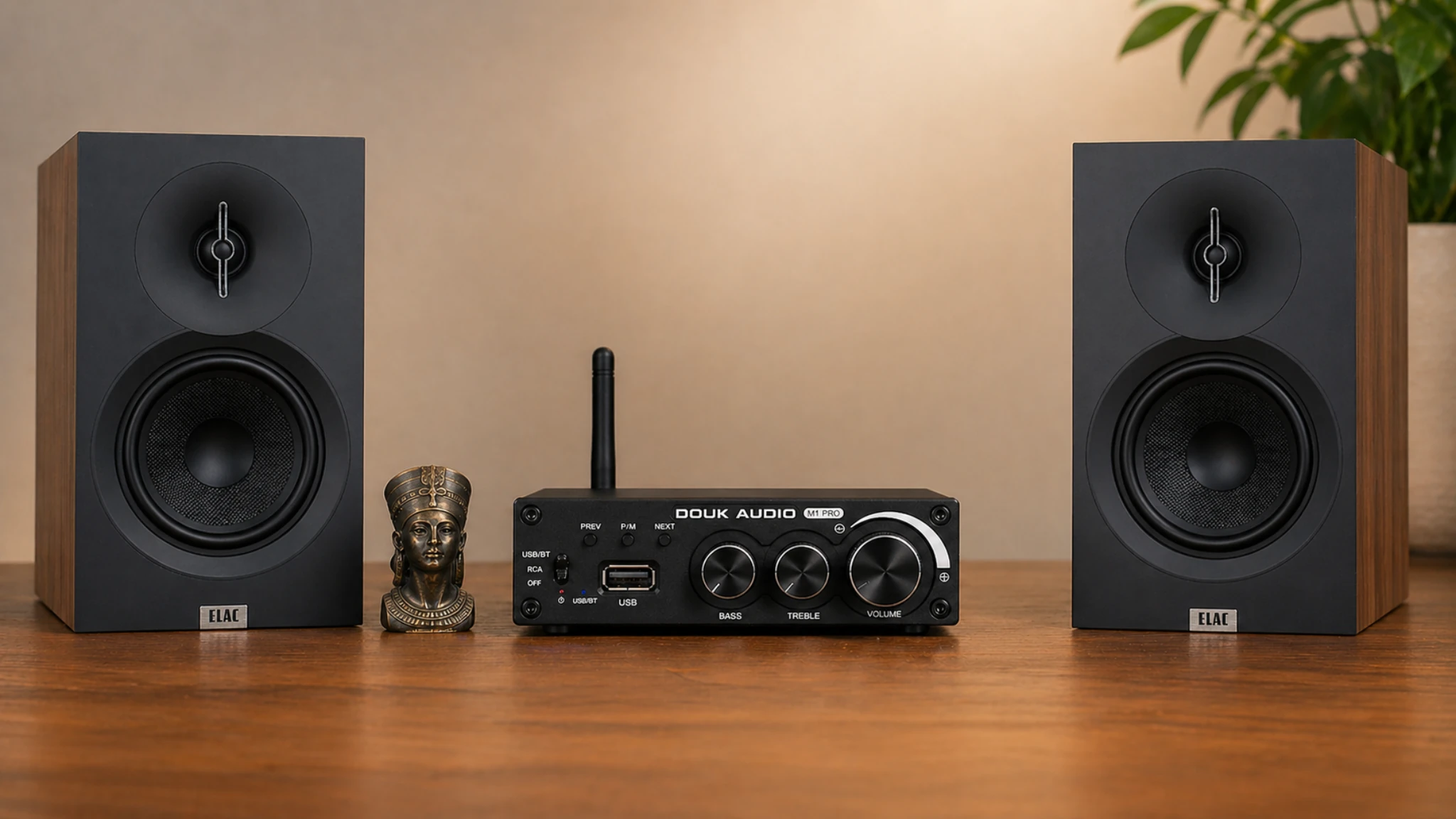
- Type: Stereo amplifier
- Amplification: Class D
- Bluetooth: Yes
- Inputs: USB, AUX, Bluetooth
- Outputs: Speaker terminals, subwoofer output
- Subwoofer output: Yes
- Best for: Flexible beginner setups with multiple sources
The Douk Audio M1 Pro is a great choice for beginners who aren’t sure how they’ll use their system yet. It offers multiple input options—including USB and Bluetooth—making it easier to experiment with different sources without needing extra equipment.
This flexibility is especially helpful early on. You can connect your phone, plug in a USB drive, or use wired inputs depending on your setup. If you’re still figuring out what works best for you, having these options makes the learning process much smoother.
It’s not the most refined amplifier in terms of sound quality, but it’s one of the most forgiving. For beginners who want convenience and versatility over perfection, the M1 Pro is a practical and low-risk starting point.
- Multiple input options for flexible use
- Includes subwoofer output
- Bluetooth for easy streaming
- Beginner-friendly and forgiving setup
- Sound quality is average compared to higher-end models
- Build quality is more basic
Approx. price: $60–$80. Best beginner amplifier for flexibility and multi-source setups.
6. Fosi Audio BT30D Pro 2.1 Bluetooth Amplifier
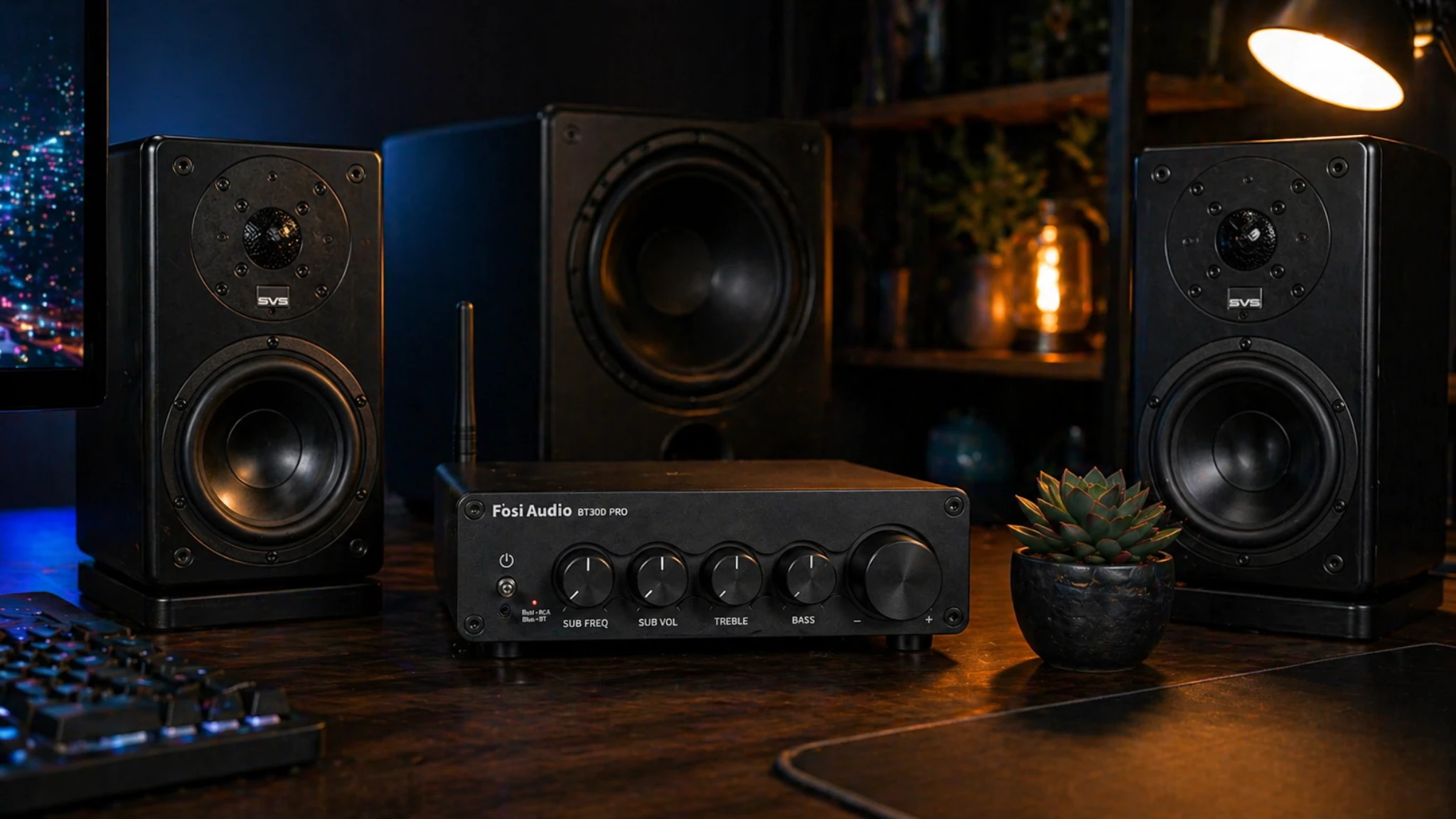
- Type: 2.1 channel amplifier
- Amplification: Class D (TPA3255)
- Bluetooth: Yes (Bluetooth 5.0)
- Inputs: RCA, Bluetooth
- Outputs: Speaker terminals, subwoofer output
- Subwoofer output: Yes (independent control)
- Best for: Beginner upgrades and more powerful 2.1 systems
The Fosi Audio BT30D Pro is a great step-up option for beginners who want more power and better control without moving into complicated systems. It keeps the same plug-and-play simplicity as smaller amps but adds a stronger amplification stage and proper 2.1 functionality.
What sets it apart is the dedicated control over bass and subwoofer output. Instead of guessing how your system should sound, you can fine-tune the balance more easily, which makes a noticeable difference in small-room setups.
It’s slightly more advanced than entry-level options, but still beginner-friendly. If you want something that can grow with your system while remaining easy to use, the BT30D Pro is one of the most balanced choices available.
- More power and control than basic beginner amps
- Dedicated subwoofer controls for better tuning
- Still easy to set up and use
- Good upgrade path for growing systems
- Slightly more complex than entry-level models
- Not as simple as ultra-compact options
Approx. price: $100–$120. Best beginner amplifier for upgrading to a more powerful 2.1 system.
7. Arylic B50 Bluetooth & Streaming Amplifier

- Type: Streaming amplifier
- Amplification: Class D
- Bluetooth: Yes (aptX HD transmit & receive)
- Inputs: HDMI ARC, phono, RCA, Bluetooth, app control
- Outputs: Speaker terminals
- Subwoofer output: No
- Best for: Smart home audio and streaming setups
The Arylic B50 is different from the other beginner amplifiers on this list because it focuses on modern connectivity. With features like HDMI ARC, app control, and advanced Bluetooth support, it’s designed for users who want their audio system to integrate easily with TVs and streaming services.
For beginners, this can actually simplify things—especially if you prefer controlling everything from your phone or TV remote. Instead of managing multiple devices, the B50 centralizes your setup into a single, more modern interface.
That said, it’s slightly more advanced than other options here. The interface and features may take a bit of time to get used to, and it’s best suited for users who are comfortable exploring app-based control. If you want a smarter, more connected audio system from the start, this is a strong option.
- HDMI ARC for easy TV integration
- App control and streaming functionality
- Advanced Bluetooth features (aptX HD)
- Modern, connected setup experience
- Slightly more complex than basic beginner amps
- Higher price compared to simpler options
- Fewer user reviews compared to more established models
Approx. price: $130–$150. Best beginner amplifier for smart streaming and modern TV-connected setups.
How to Choose Your First Amplifier (Beginner Guide)
Choosing your first amplifier doesn’t have to be complicated. Most beginners don’t need advanced features—they need something that works reliably, sounds clean, and doesn’t require constant adjustments.
Focus on Simplicity First
Look for amplifiers with minimal controls and clear input options. The fewer things you have to configure, the easier it is to get started. Bluetooth connectivity is especially helpful, as it removes the need for extra cables or devices.
Avoid Overcomplicated Setups
Many beginners make the mistake of buying equipment that requires additional components like DACs or preamps. This adds unnecessary complexity. For your first system, it’s better to choose an amplifier that works on its own.
Understand What You Actually Need
Instead of focusing on power ratings or technical specs, think about how you’ll use your system. Are you connecting a phone, a TV, or a computer? Answering that question will narrow down your options quickly. If you’re unsure, explore our guide to beginner amplifier brands to get a clearer starting point.
Don’t Chase Power Numbers
For most beginner setups, you won’t need high wattage. Clean sound at normal listening levels matters far more than maximum output. Overpowered systems are harder to control and don’t improve everyday listening.
Why Most “Powerful” Amplifiers Are Bad for Beginners
Quick Answer: High-powered amplifiers often add complexity, sensitivity, and unnecessary cost—making them harder for beginners to use effectively.
It’s common to assume that more power equals better sound, but that’s not how beginner setups work. Large amplifiers are designed for bigger spaces and more demanding systems, which means they introduce challenges that new users don’t need.
Harder Volume Control
Powerful amplifiers can be overly sensitive at low volumes, making it difficult to fine-tune your listening level. This leads to frustration, especially in small rooms or close-range setups.
More Things to Go Wrong
More power often comes with more features and configuration options. While that can be useful for experienced users, it increases the chances of setup mistakes for beginners.
Unnecessary Complexity
In many cases, simpler amplifiers actually provide a better experience. They’re easier to understand, quicker to set up, and more predictable in daily use. If you’re considering budget options, this breakdown of budget amplifier brands worth it can help you avoid common mistakes.
Simple Beginner Setup (Step-by-Step)
Setting up your first amplifier is easier than it looks. Most beginner-friendly models follow the same basic process, and you don’t need any technical background to get started.
- Connect your speakers: Attach the speaker wires to the amplifier terminals, making sure positive and negative connections match.
- Choose your input: Use Bluetooth for the simplest setup, or connect your device using an RCA or digital cable if needed.
- Power on the amplifier: Turn on the unit and set the volume to a low level before playing audio.
- Pair or connect your device: If using Bluetooth, pair your phone or computer. If wired, select the correct input source.
- Adjust volume gradually: Increase the volume slowly until you reach a comfortable listening level.
If you plan to expand your system later, you can explore more advanced options like those in our guide to stereo amplifiers under $300.