
The debate around high end vs budget amplifiers is one of the most confusing topics in home audio. On paper, both categories promise clean power, musical sound, and solid performance — yet the price gap between them can be massive. This often leaves buyers wondering what they are actually paying for, and whether spending more truly delivers better results.
Budget amplifiers have improved dramatically over the past decade. Advances in Class D technology, compact power supplies, and simplified designs allow affordable models to drive speakers that once required much larger and more expensive equipment. At the same time, high-end amplifiers continue to justify their price through engineering choices that focus on long-term stability, power delivery, and system scalability.
This guide breaks down the real differences between high end vs budget amplifiers without marketing hype or brand loyalty. Instead of focusing on price alone, we’ll look at internal design, real-world performance, listening environments, and when each category actually makes sense — so you can choose based on your system, not assumptions.
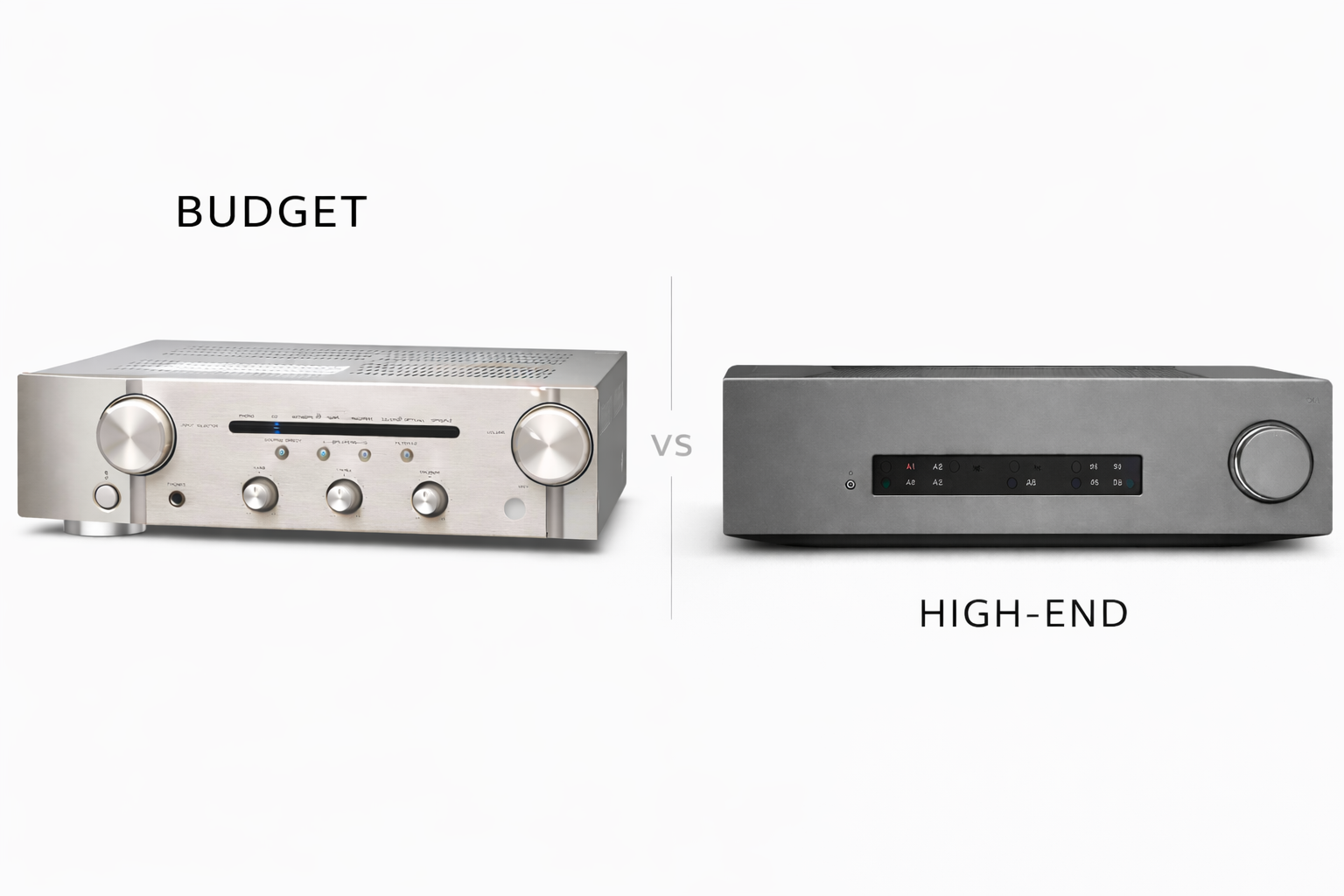
What You’re Really Paying for in High End vs Budget Amplifiers
At first glance, the price gap between budget and high-end amplifier brands can feel arbitrary. Two amplifiers may offer similar power ratings, similar inputs, and even similar features, yet one costs several times more than the other.
The difference rarely comes from a single component. Instead, it comes from how the amplifier is designed as a complete system — from power delivery and heat management to long-term reliability under real listening conditions.
Price Reflects Design Priorities, Not Just Sound
Budget amplifier brands focus on delivering acceptable performance at the lowest possible cost. To achieve this, designers make careful trade-offs. They prioritize efficiency, compact size, and basic functionality over sustained output and component headroom.
High-end amplifier brands take the opposite approach. They design for stability first, even when conditions are less than ideal. That means oversized power supplies, conservative component ratings, and thermal designs that allow the amplifier to perform consistently for hours rather than minutes.
Why Specs Alone Don’t Explain the Price Gap
Wattage figures, distortion ratings, and frequency response numbers often look impressive on budget amplifiers. These specifications are typically measured under ideal conditions and over short durations. They do not always reflect how the amplifier behaves when driving real speakers in real rooms.
High-end amplifiers tend to publish more conservative specifications because they are designed to meet those numbers continuously, not just momentarily. This difference explains why two amplifiers with similar specs on paper can feel very different in real use.
What you are paying for, ultimately, is not louder sound or fancier controls. You are paying for consistency, control, and predictability when the system demands more than the minimum.
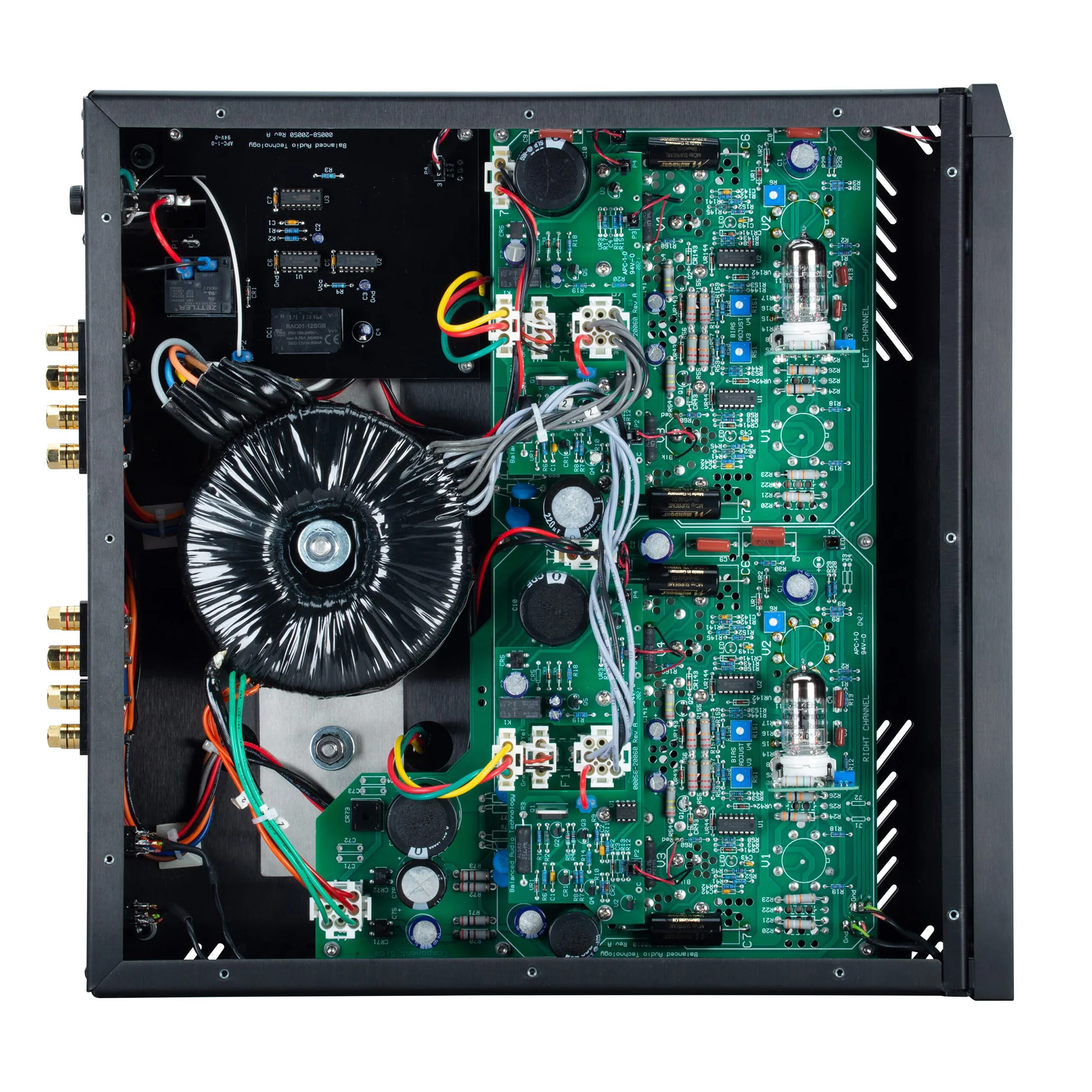
What Changes Inside the Amplifier as Prices Increase
The most meaningful differences between budget and high-end amplifier brands are hidden inside the chassis. From the outside, many amplifiers look similar. Internally, however, their priorities become immediately clear.
Internal layout, component quality, and power handling define how an amplifier behaves when it is pushed beyond casual listening levels. These factors matter far more than cosmetic design or feature lists.
Power Supply Size Sets the Ceiling
Budget amplifiers typically use smaller power supplies to reduce cost, weight, and heat. These designs work well at moderate volumes, but they limit how much current the amplifier can deliver when speakers demand more energy.
High-end amplifiers invest heavily in power supply capacity. Larger transformers, higher-quality capacitors, and generous current reserves allow the amplifier to maintain control even when volume increases or speaker impedance drops.
This distinction becomes clearer when comparing system architectures such as integrated amplifiers versus power amplifiers. Higher-end designs often allocate more internal space and budget specifically for power stability rather than feature density.
Thermal Design Affects Long-Term Stability
Heat management separates entry-level designs from more robust ones. Compact budget amplifiers often rely on minimal ventilation and small heatsinks, which forces components to operate closer to their limits.
High-end designs spread heat across larger surfaces, use heavier chassis materials, and allow more internal airflow. This reduces thermal stress and keeps performance consistent during long listening sessions.
Component Selection Influences Reliability
Budget amplifier brands often use components that meet minimum performance requirements. This approach keeps prices low but leaves less margin for error as parts age or operating conditions vary.
High-end amplifiers typically use components rated well above normal operating demands. These conservative choices improve durability and reduce the chance of gradual performance degradation over time.
None of these choices guarantee better sound on their own. Together, however, they determine how predictable and stable the amplifier remains as the rest of the system improves.

Real-World Performance Differences
On paper, budget and high-end amplifier brands often appear closer than they are in practice. Similar power ratings and specifications can make the performance gap feel smaller than it actually is. The difference becomes clearer when amplifiers are used in real rooms with real speakers.
Budget amplifier brands prioritize efficiency and compact design. At moderate volumes, this approach works well and can sound clean and enjoyable. In small to medium rooms, many listeners never encounter obvious problems, which explains why budget amplifiers often receive positive first impressions.
As listening demands increase, differences start to emerge. Higher volume levels, complex music passages, or speakers with lower sensitivity place more strain on the amplifier. Budget designs may begin to sound compressed, lose bass control, or feel less composed compared to high-end alternatives.
High-end amplifiers handle these situations more comfortably. Larger power reserves and better thermal stability allow them to maintain clarity and control even as system demands rise. This does not always translate to dramatically “better” sound, but it does result in more consistent and predictable performance.
There is also a wide middle ground where budget and high-end amplifiers overlap. Well-chosen models that sit near the upper end of the budget category — such as those commonly found among the best amplifiers under $1,000 — can deliver performance that satisfies many listeners without exposing clear limitations.
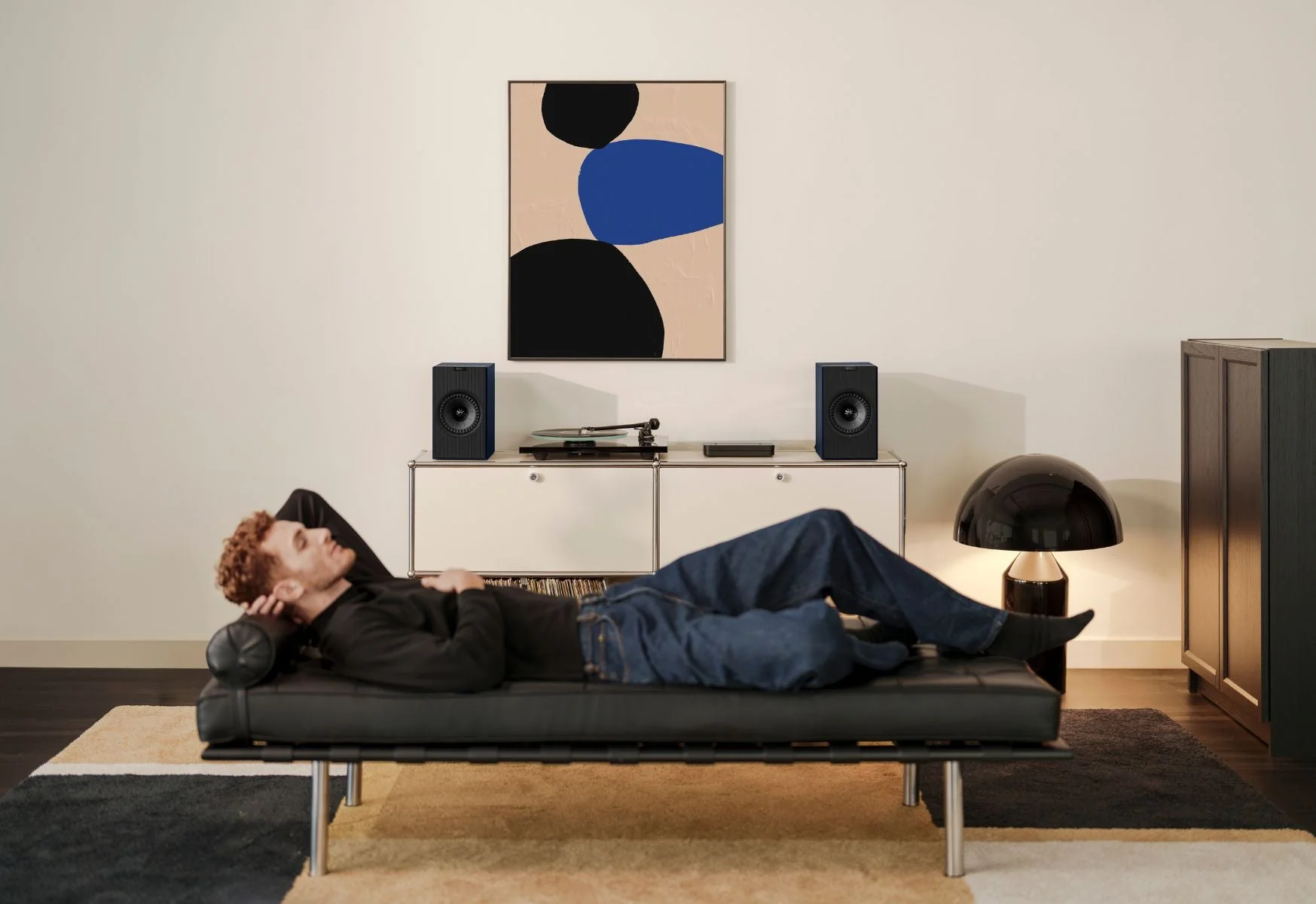
When High-End Amplifiers Actually Make Sense
High-end amplifier brands make the most sense when the rest of the system is already capable of revealing their strengths. In these situations, the amplifier is no longer a simple power source but a stabilizing force that keeps the entire system performing consistently.
Larger rooms are one of the clearest indicators. As room size increases, amplifiers must deliver sustained current to maintain dynamics and control across a wider listening area. Budget designs can struggle here, even if they sound fine at lower volumes in smaller spaces.
Speaker demands also play a major role. Lower-sensitivity speakers, complex impedance curves, and multi-driver designs place greater stress on the amplifier. High-end brands invest in power reserves and thermal headroom specifically to handle these loads without compression or instability.
Listening habits matter just as much as equipment. Long daily listening sessions expose weaknesses that short demos rarely reveal. Heat buildup, gradual loss of control, and listening fatigue appear sooner in budget designs operating near their limits.
Brands with a long history across multiple price tiers, such as Yamaha, illustrate this progression clearly. Understanding how these design philosophies scale helps explain why stepping up within a brand can bring meaningful improvements, as explored in Yamaha’s amplifier design approach.

Final Verdict: Choosing Between High-End and Budget
The choice between high-end and budget amplifier brands is rarely about sound quality alone. It is about system balance, usage patterns, and how much margin for growth and stability you need over time.
Budget amplifiers make sense when systems are modest, rooms are small to medium in size, and listening sessions remain casual. In these conditions, modern budget designs can deliver clean, enjoyable sound without exposing obvious weaknesses.
High-end amplifiers justify their cost when system demands increase. Larger rooms, more demanding speakers, longer listening sessions, and future upgrades all benefit from stronger power delivery, better thermal stability, and predictable long-term behavior.
The most important mistake to avoid is upgrading blindly. Spending more on an amplifier before understanding how it fits into the rest of the system can create imbalance rather than improvement. This is especially true when amplification, speakers, and signal stages are not evaluated together, as explained in the relationship between preamps and amplifiers.
In practical terms, high-end amplifiers are not mandatory for great sound. They become valuable when they remove system limitations rather than simply adding prestige. When chosen for the right reasons, both budget and high-end amplifier brands can be the correct choice.
Frequently Asked Questions
Do high-end amplifiers always sound better than budget amplifiers?
Not always. At low to moderate listening levels, many budget amplifiers can sound clean and enjoyable. Differences become more noticeable as volume increases, speakers become more demanding, or listening sessions extend over longer periods.
What is the biggest advantage of high-end amplifier brands?
The main advantage is consistency. High-end amplifiers offer stronger power delivery, better thermal stability, and predictable performance across different speakers, room sizes, and listening conditions.
Are budget amplifiers unreliable?
Budget amplifiers are not inherently unreliable, but they often operate closer to their design limits. Heat management, component quality, and long-term durability can vary more widely compared to higher-end designs.
When does upgrading from a budget amplifier make sense?
An upgrade makes sense when the amplifier becomes the limiting factor in the system. Common signs include loss of control at higher volumes, audible compression, excessive heat, or when better speakers expose power and stability limitations.
Is it better to upgrade speakers or the amplifier first?
In most systems, speakers and room acoustics have a greater impact on sound than amplification. However, once speakers become more demanding, upgrading the amplifier may be necessary to fully realize their potential.