
Many people start building a home audio system expecting a simple setup: buy speakers, connect them, and press play. But once you begin comparing passive and active speakers, the differences between them quickly become confusing. Some speakers plug directly into power outlets, while others require a separate amplifier before they produce any sound.
That difference usually comes down to whether the speakers are passive or active. While both types can deliver excellent sound, they work very differently inside a system. One relies on an external amplifier to drive the speakers, while the other includes amplification inside the speaker cabinet itself.
When comparing passive vs active speakers, the real distinction isn’t about which one sounds better — it’s about how the entire audio chain is designed. Understanding how each type handles amplification can help you choose the right setup for your listening space, equipment, and upgrade plans.
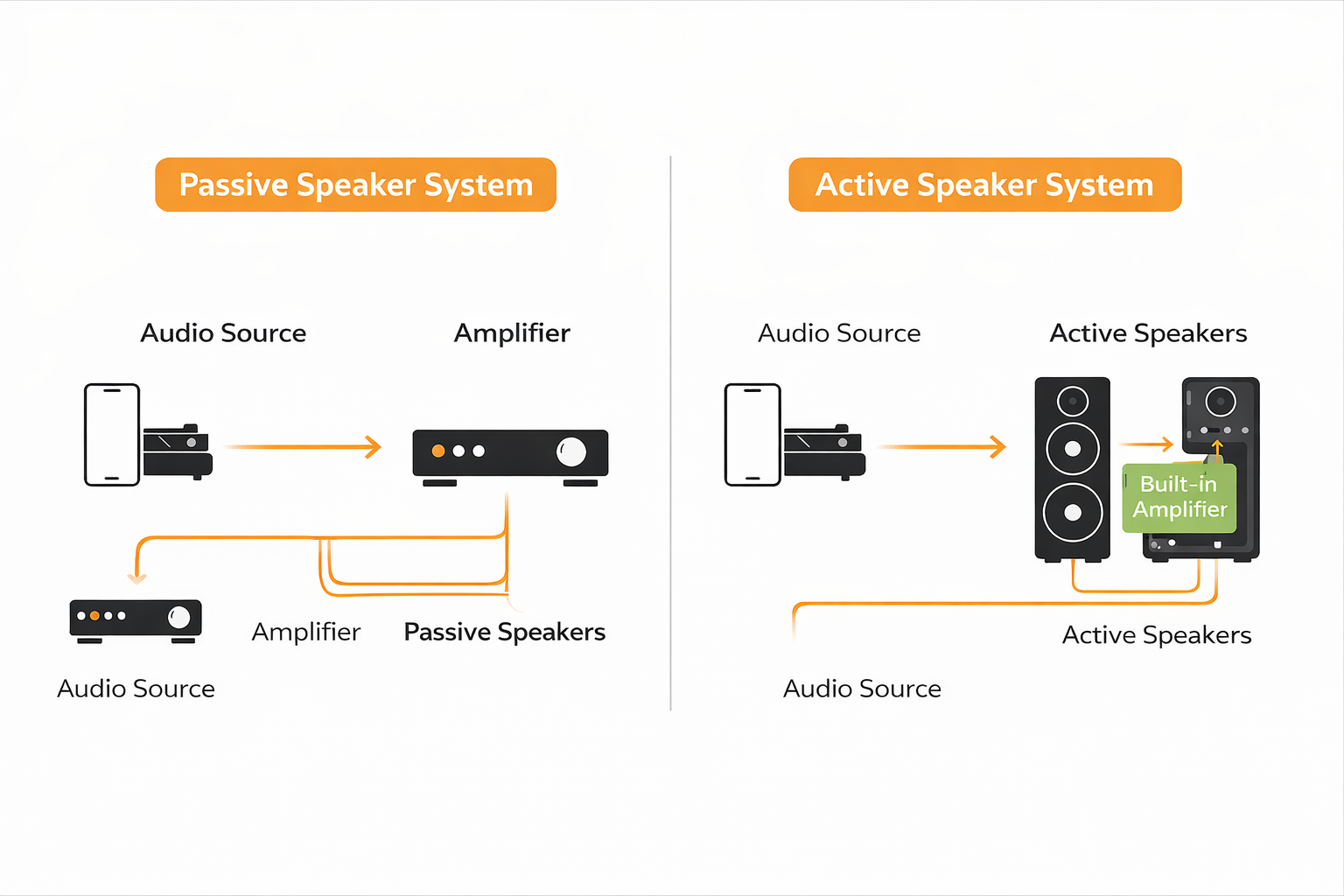
Passive speakers require an external amplifier to produce sound, while active speakers include built-in amplification inside the speaker cabinet.
Affiliate Disclosure: As an Amazon Associate, AmplifierZone may earn from qualifying purchases. This helps support our content at no additional cost to you.
- What Are Passive Speakers?
- What Are Active Speakers?
- Passive vs Active Speakers: Key Differences Explained
- Can You Use Passive and Active Speakers Together?
- Do Passive Speakers Always Need an Amplifier?
- When Active Speakers Make More Sense
- When Passive Speakers Are the Better Choice
- Quick Decision Guide: Passive vs Active Speakers
- Final Verdict
- FAQ
What Are Passive Speakers?
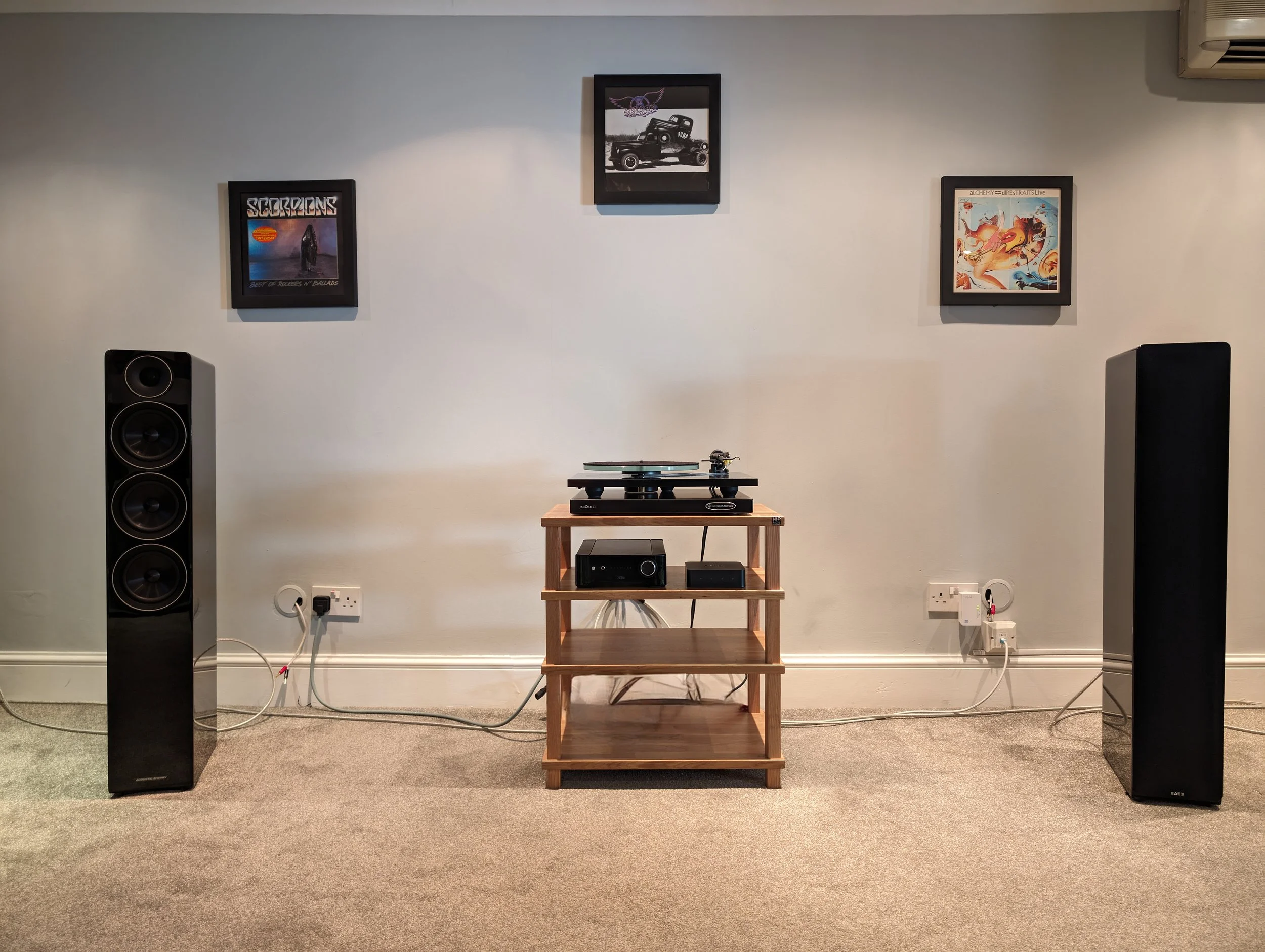
Passive speakers are the traditional type used in most home stereo systems. Unlike powered or active speakers, passive speakers do not contain their own amplification. Instead, they rely on an external amplifier or receiver to provide the power needed to move the speaker drivers and produce sound.
Inside a passive speaker cabinet you’ll typically find the drivers (woofers and tweeters) and a passive crossover network that divides the audio signal between them. What you won’t find is an amplifier. Because of that, passive speakers must receive a speaker-level signal from an external amp before they can operate.
In a typical system, the signal path looks something like this:
Source → Amplifier → Passive Speakers
Your source device — such as a streamer, CD player, or turntable — sends a low-level audio signal to the amplifier. The amplifier boosts that signal to a level powerful enough to drive the speakers, which then convert the electrical energy into sound.
Why Passive Speakers Are Common in Hi-Fi Systems
Most traditional hi-fi setups use passive speakers because separating the amplifier from the speakers gives you more control over the system. Instead of being locked into the electronics inside the speaker cabinet, you can choose an amplifier that matches your listening preferences and room size.
- Flexible upgrades — you can replace the amplifier or speakers independently
- Better system matching — different amplifiers pair differently with different speakers
- Long-term system tuning — adjustments can be made over time as your setup evolves
If you’re new to stereo systems, it helps to understand exactly how amplifiers power speakers, because that amplification stage is what allows passive speakers to produce full-range sound.

What Are Active Speakers?
Active speakers take a different approach to system design. Instead of relying on an external amplifier, active speakers include their own amplification inside the speaker cabinet. This means the speaker receives a low-level audio signal from your source device and amplifies it internally before sending power to the drivers.
Because the amplification is built into the speaker, the setup process is usually simpler. In many cases you only need to connect the source device and supply power to the speakers. There is no separate amplifier component required in the signal chain.
In its simplest form, an active speaker system looks like this:
Source → Active Speaker
This design is common in studio monitors, desktop speakers, and many modern wireless audio systems. By integrating the amplifier with the speaker drivers, manufacturers can tune the electronics and crossover specifically for that speaker model.

Active vs Powered Speakers (Quick Clarification)
The terms active speakers and powered speakers are often used interchangeably, but technically they are not identical.
- Active speakers use built-in amplifiers and an active crossover that splits the signal before amplification.
- Powered speakers include a built-in amplifier but still rely on a passive crossover inside the speaker.
In everyday conversations, most people simply use the term “active speakers” to describe any speakers with internal amplification. The important takeaway is that these speakers do not require a separate amplifier to function.
Passive vs Active Speakers: Key Differences Explained
At a glance, passive and active speakers may look almost identical from the outside. The real difference lies in how the audio signal is amplified and delivered to the drivers. Understanding that distinction helps explain why these two speaker types are used in very different kinds of audio systems.
| Feature | Passive Speakers | Active Speakers |
|---|---|---|
| Amplification | Requires external amplifier | Built-in amplifier |
| System setup | Multiple components | Simplified setup |
| Upgrade flexibility | High — amp and speakers can change | Limited — electronics are integrated |
| Sound tuning | Adjustable through amplifier choice | Fixed tuning by manufacturer |
| Cable complexity | Speaker cables required | Often fewer components |
Why This Difference Matters in Real Systems
The biggest practical difference between passive and active speakers isn’t simply convenience — it’s how much control you have over the system. Passive systems separate the amplifier from the speakers, which allows each component to be selected and upgraded independently.
For example, many hi-fi enthusiasts experiment with different amplifier pairings to optimize performance for a particular speaker model. This process of matching an amplifier to speakers can influence sound dynamics, tonal balance, and overall listening comfort.
Active speakers take the opposite approach. Because the amplifier is already integrated and tuned by the manufacturer, the system is easier to set up — but the flexibility to change individual components is reduced.
Can You Use Passive and Active Speakers Together?
A common question beginners ask when learning about passive vs active speakers is whether the two types can be used in the same system. At first glance it seems logical — if active speakers contain amplifiers, shouldn’t they be able to power passive speakers as well?
In most cases, the answer is no. Active speakers are designed to power only their own internal drivers, not additional external speakers.
Why Active Speakers Cannot Power Passive Speakers
Active speakers include internal amplifiers that are specifically calibrated for the drivers inside the speaker cabinet. The amplifier output is wired directly to those drivers and typically does not provide a speaker-level output that can be connected to other speakers.
Because of this design, connecting passive speakers directly to active speakers will not work. Passive speakers require their own dedicated amplifier capable of delivering the proper power and impedance load.
When Passive and Active Speakers Can Work in the Same System
While active speakers cannot power passive speakers, both types can still exist in the same audio system if the signal routing is designed correctly.
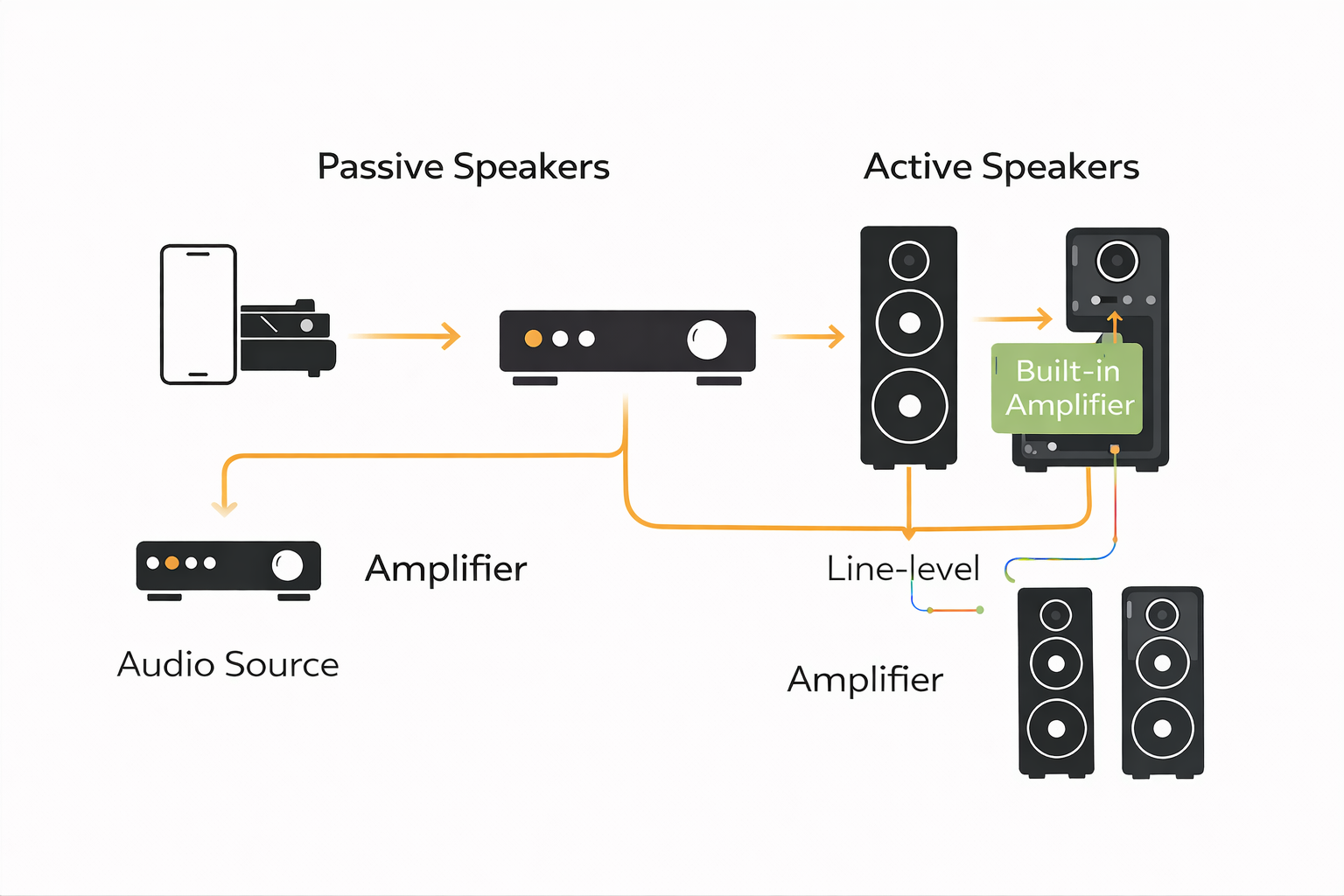
In some setups — especially studio environments or multi-zone systems — the audio signal is split before amplification. One branch feeds active speakers directly, while another goes to a power amplifier that drives passive speakers.
In simplified form, the signal path may look like this:
Source → Preamp / Mixer → Active Speakers
Source → Preamp / Mixer → Power Amplifier → Passive Speakers
Do Passive Speakers Always Need an Amplifier?
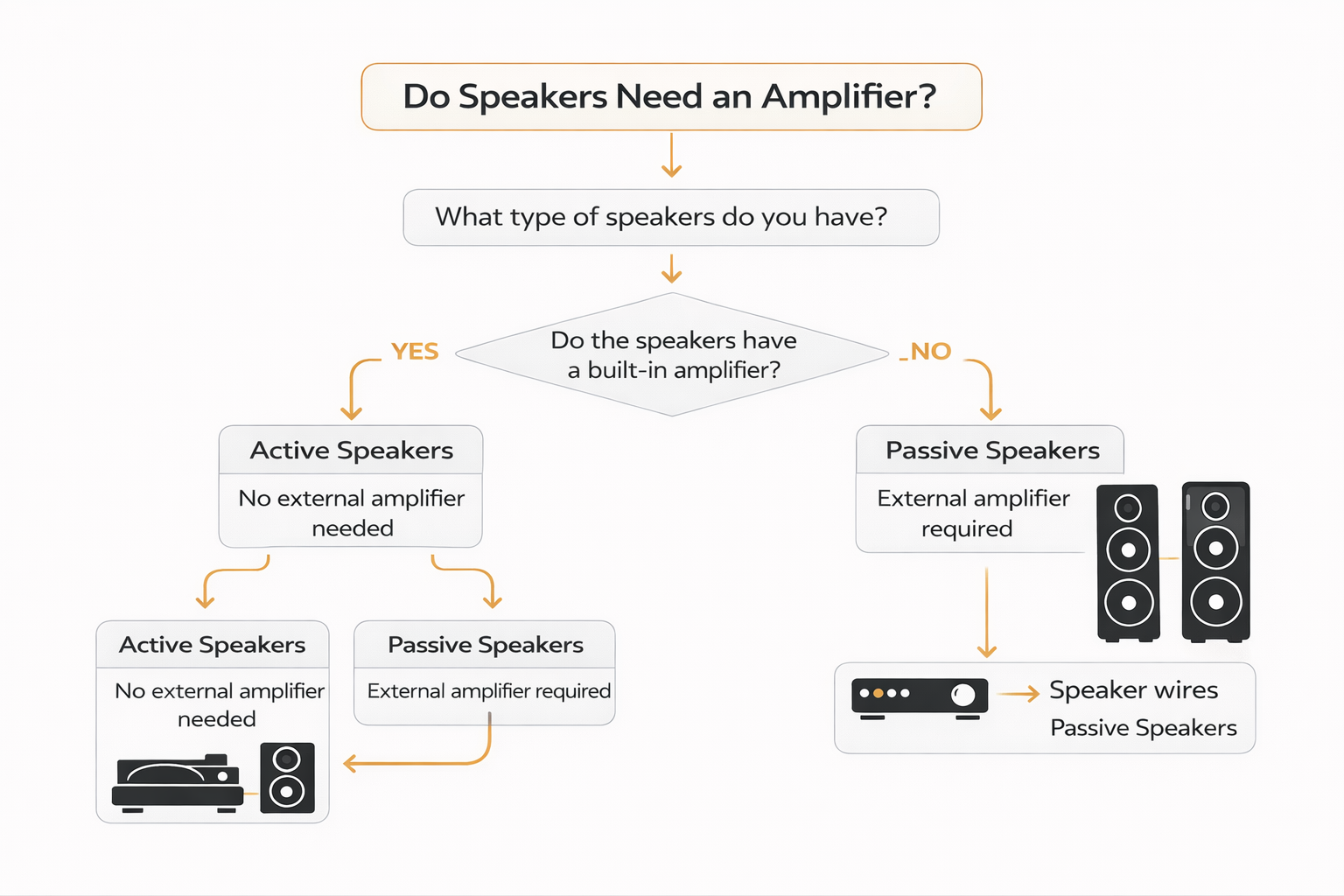
Yes — passive speakers always require an amplifier to function. Unlike active speakers, passive models do not contain internal amplification, which means they cannot boost an incoming audio signal on their own.
Most audio sources — such as phones, computers, streaming devices, or TVs — output what is called a line-level signal. This signal carries the audio information but does not have enough electrical power to move a speaker driver. Without an amplifier to increase that signal to speaker level, passive speakers simply cannot produce sound.
What Happens If You Connect Passive Speakers Without an Amp?
A common beginner mistake is attempting to connect passive speakers directly to a device like a television or laptop. While the physical connectors may appear compatible, the signal strength is not sufficient to drive the speakers.
For example:
TV → Passive Speakers = No sound (or extremely weak output)
The amplifier’s role is to increase the signal voltage and current so the speaker drivers can move enough air to produce audible sound.
Why Power and Impedance Matter
Amplifiers are designed to deliver power based on the electrical load presented by the speakers. That load is determined by the speaker’s impedance, usually rated at 4 ohms or 8 ohms. Choosing the right amplifier ensures the speakers receive adequate power without overloading the system.
If you’re unsure how impedance affects amplifier performance, this guide explains the difference between 4-ohm vs 8-ohm speakers and why it matters when pairing speakers with amplifiers.
When Active Speakers Make More Sense
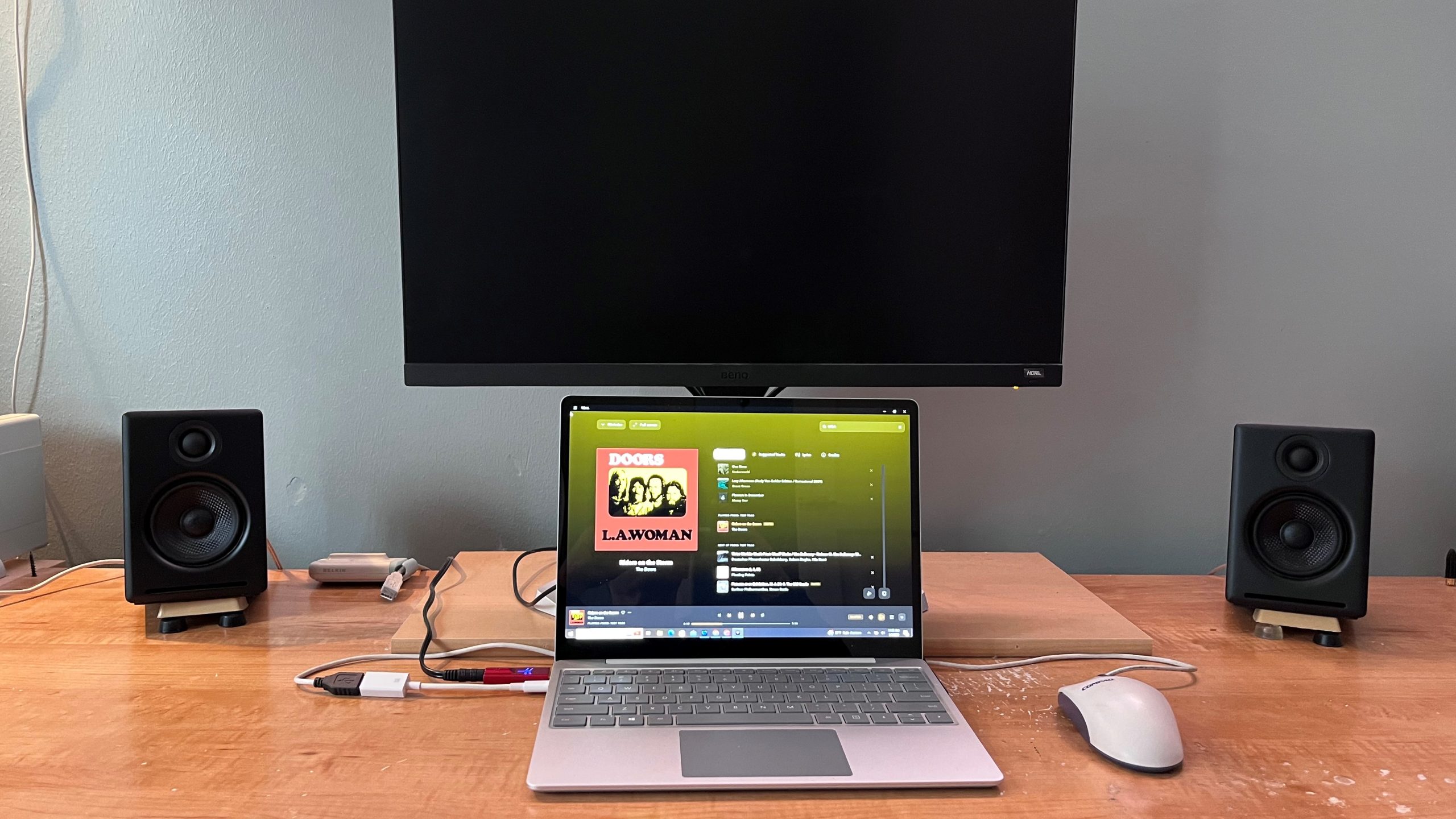
Active speakers are designed for simplicity. Because the amplifier is already built into the speaker cabinet, the system requires fewer external components and less wiring. For many listeners, that convenience makes active speakers the more practical option.
Rather than building a multi-component stereo system, active speakers allow you to connect a source device and start listening immediately.
Active speakers often make the most sense in situations like these:
- Desktop audio systems — active speakers are commonly used with computers, audio interfaces, and streaming devices.
- Small living spaces — fewer components and cables make them easier to integrate into apartments or small rooms.
- TV sound upgrades — powered speakers can replace soundbars while offering better stereo imaging.
- Streaming-focused setups — many active speakers include Bluetooth, Wi-Fi, or digital inputs.
- Beginner audio systems — no amplifier matching or system configuration is required.
Because the amplification and crossover are tuned by the manufacturer, active speakers are usually optimized to work well right out of the box. This makes them particularly attractive for listeners who prefer a clean, minimal setup.
When Passive Speakers Are the Better Choice
While active speakers prioritize simplicity, passive speakers offer something many audio enthusiasts value even more — control. By separating the amplifier from the speakers, passive systems allow you to build and refine each part of the signal chain independently.
This flexibility is one reason passive speakers remain the standard in traditional hi-fi systems. Instead of relying on electronics permanently built into the speaker cabinet, the amplifier becomes a separate component that can be upgraded, replaced, or paired with different speakers over time.
Passive speakers are often the better choice in setups like these:
- Dedicated listening rooms where a full stereo system is used.
- Expandable systems where future upgrades are planned.
- High-power speaker setups that benefit from specialized amplifiers.
- Component-based hi-fi systems with separate DACs, streamers, and amplifiers.
Another advantage is the ability to choose an amplifier with the right power characteristics for your speakers. Amplifier output, measured in watts, determines how much energy is available to drive the speaker drivers. Understanding amplifier wattage can help ensure the system has enough headroom for dynamic music playback.
For listeners who enjoy building a system piece by piece — and adjusting components over time — passive speakers provide a level of customization that active systems simply cannot match.
Quick Decision Guide: Passive vs Active Speakers
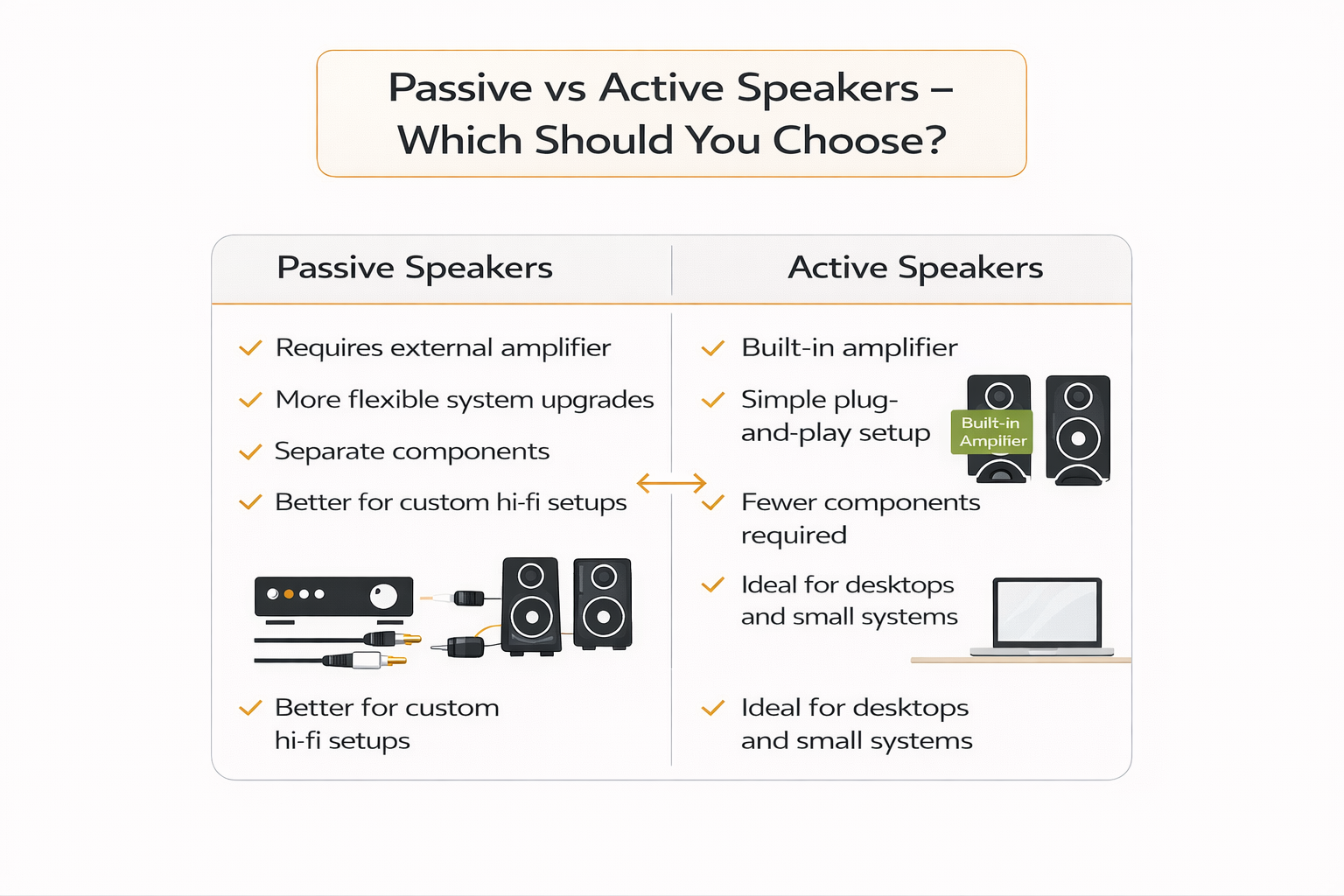
If you’re still deciding between passive and active speakers, the right choice usually depends on how much control you want over your audio system. Some listeners prefer the simplicity of an all-in-one solution, while others value the flexibility of building a system with separate components.
| If you want… | Choose… | Why |
|---|---|---|
| Simple plug-and-play setup | Active speakers | Built-in amplification removes the need for external equipment |
| A flexible upgrade path | Passive speakers | Amplifier and speakers can be upgraded independently |
| Minimal cables and components | Active speakers | Amplifier and crossover are integrated into the speaker |
| Maximum system tuning | Passive speakers | Different amplifiers can change system performance |
| A compact desktop audio system | Active speakers | Ideal for computers, streaming, and small rooms |
| A traditional hi-fi stereo system | Passive speakers | Most component audio systems use separate amplification |
This comparison highlights the fundamental difference between passive vs active speakers: whether the amplification happens inside the speaker cabinet or in an external component.
In simple terms, active speakers prioritize convenience, while passive speakers prioritize flexibility and system control.
Final Verdict: Passive vs Active Speakers
When comparing passive vs active speakers, the question isn’t really which type is better. Both designs can deliver excellent sound quality when used in the right system. The real difference lies in how much control you want over the components that shape your listening experience.
Active speakers simplify the process. With amplification built directly into the speaker cabinet, setup is quick and the system requires fewer components. For desktop audio, streaming setups, and smaller listening spaces, this all-in-one approach is often the most convenient option.
Passive speakers, on the other hand, provide a level of flexibility that active systems cannot match. By separating the amplifier from the speakers, you gain the ability to adjust and upgrade individual components as your system evolves.
For many listeners, the decision ultimately comes down to priorities. If convenience and simplicity matter most, active speakers are usually the better fit. But if you enjoy building and refining a system over time, passive speakers offer greater long-term control.
In the end, both speaker types serve different purposes. Understanding how amplification works within each design helps you choose the option that fits your listening habits, room, and equipment.
FAQ
Do passive speakers sound better than active speakers?
Not necessarily. Sound quality depends more on speaker design and system setup than on whether the speakers are passive or active. High-quality versions of both types can deliver excellent performance when used properly.
Can I connect passive speakers directly to my TV?
Most TVs only output a line-level audio signal, which is not powerful enough to drive passive speakers. To use passive speakers with a television, you typically need an amplifier or AV receiver between the TV and the speakers.
Are studio monitors active speakers?
Yes. Most studio monitors are active speakers with built-in amplification. This design allows the manufacturer to optimize the amplifier and crossover specifically for the speaker drivers.
Can active speakers replace an amplifier?
Active speakers include their own internal amplification, so they do not require a separate external amplifier. However, they are designed to power only their own drivers and usually cannot power additional passive speakers.
Why do many hi-fi systems use passive speakers?
Passive speakers allow listeners to choose their own amplifier and upgrade individual components over time. This flexibility makes passive systems popular among hi-fi enthusiasts who want more control over their audio setup.
Continue with a related guide
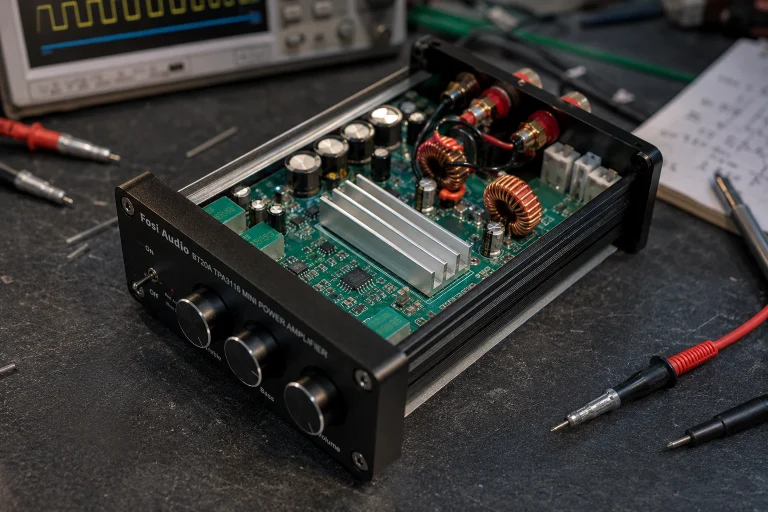
What Is a Class D Amplifier? — How They Work and Why They’re Taking Over
What is a Class D amplifier? This guide explains how Class D works, how it compares to Class AB and…
Read the guide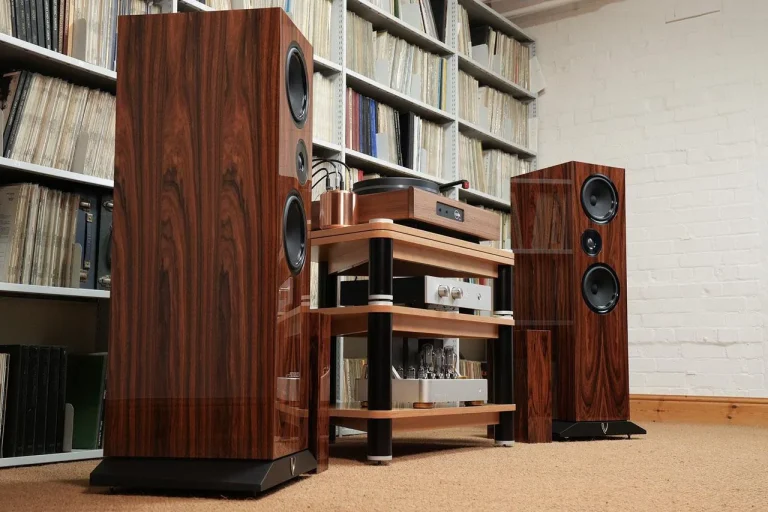
Do Expensive Amplifiers Really Sound Better? (Honest Answer)
Do expensive amplifiers really sound better, or is it just hype? Learn when price actually matters—and when it doesn’t—for real-world…
Read the guide