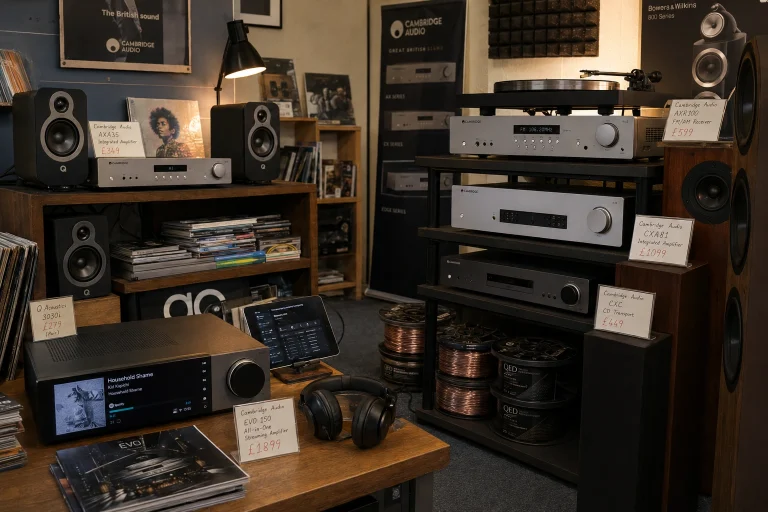
Building a capable home audio system doesn’t need to cost a fortune. This guide rounds up the best budget home amplifiers for beginners — easy to set up, affordable, and dependable. We’ll walk you through the practical differences, what to look for, and which inexpensive amps give the most bang for your buck.
Quick Comparison
| Rank | Model | Power Output | Bluetooth | Key Features | |
|---|---|---|---|---|---|
| 1 | Fosi Audio BT20A Pro | 300W x2 (TPA3255) | Bluetooth 5.0 | Class-D efficiency, bass/treble control | Check Price |
| 2 | Pyle PCA2 Mini | ~25-50W (load-dependent) | No / optional | Ultra-budget, simple wiring, small footprint | Check Price |
| 3 | Sony STR-DH190 | ~100W total (RMS varies) | Bluetooth | Turntable-friendly phono in, good ergonomics | Check Price |
| 4 | Donner Bluetooth Home Amp | ~50W x2 (peak varies) | Bluetooth | EQ knobs, FM, mic input | Check Price |
| 5 | Moukey Bluetooth Amp | ~60W x2 (spec varies) | Bluetooth | EQ controls, compact chassis | Check Price |
| 6 | Rockville BLUAMP 150 | ~75W x2 (spec varies by load) | Bluetooth | Receiver-style features, tuner on some SKUs | Check Price |
| 7 | AK45 Stereo Amplifier | ~50W x2 (typical) | Bluetooth 5.0 | Modern feature set, compact footprint | Check Price |
| 8 | Fosi Audio BT20A (Classic) | 100W x2 (TPA3116) | Bluetooth | Proven small-class D platform, reliable | Check Price |
Individual Reviews
1. Fosi Audio BT20A Pro

Fosi Audio BT20A Pro is a compact Class-D amplifier built around the TI TPA3255 chip, rated at 300W x2 — genuinely strong output for its size. For beginners who need reliable power in a small footprint, this amp gives clean output and Bluetooth convenience without the bulk or heat of older designs.
Connectivity is straightforward — RCA inputs and Bluetooth 5.0 pairing mean you can use it with a phone, TV, or small DAC. The BT20A Pro works well for desktop systems, apartment living rooms, or secondary zones.
In practice, pair it with efficient bookshelf speakers (88–92dB sensitivity) in small rooms up to roughly 250 sq ft. It’s forgiving if you’re not an audio tech, but still leaves room to grow as you learn about impedance and speaker matching.
- Small, energy-efficient Class-D design with genuinely strong TPA3255 power
- Bluetooth 5.0 for easy streaming
- Excellent price-to-performance
- Limited advanced tone controls
- Not intended for very large speaker loads
Good for small rooms and desktops.
2. Pyle PCA2 Mini
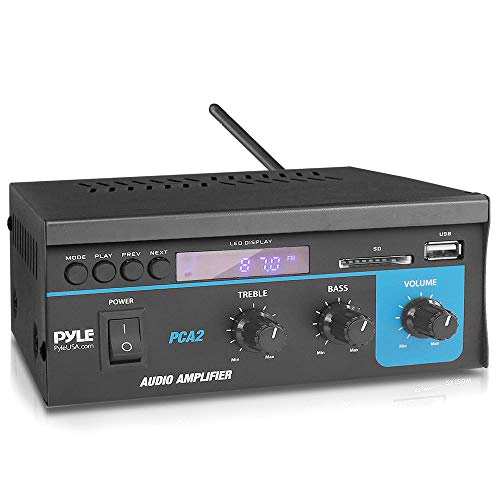
Pyle PCA2 Mini is the ultra-budget option — simple, no-frills, and reliable. If your goal is to power an old pair of speakers without spending much, this is a solid starter amp that gets the basics right.
It’s minimal: speaker outputs, RCA inputs, and a small chassis. That makes setup easy for non-technical buyers, though you won’t get modern conveniences like Bluetooth or advanced inputs.
Pair this with small bookshelf speakers in a dorm room, garage, or kitchen. Expect functional sound that’s best for casual listening — not for critical audiophiles.
- Extremely affordable
- Very compact and easy to install
- Good for basic second-zone setups
- Few features (no Bluetooth)
- Lower power headroom
Ideal as a low-cost starter amp.
3. Sony STR-DH190

Sony STR-DH190 is one of the most popular entry-level receivers for a reason — easy setup, Bluetooth streaming, and a turntable-friendly phono input. It’s more receiver than tiny desktop amp, which helps when you want flexibility.
Usability is a real strength: large knobs, straightforward inputs, and stable Bluetooth mean you’ll spend less time fiddling and more time listening. It’s an excellent first receiver for people upgrading from powered speakers or soundbars.
This works best in small to medium living rooms with passive speakers. The phono stage is a nice bonus if you own a turntable, and it’s a durable pick if you plan to upgrade speakers later.
- User-friendly controls and layout
- Built-in phono input for vinyl listeners
- Reliable brand support
- Less compact than mini amps
- Fewer modern digital inputs (no Wi-Fi)
Excellent all-rounder for new buyers.
4. Donner Bluetooth Home Amplifier

Donner Bluetooth Home Amplifier packs unexpected features for the price — EQ knobs, FM tuner, and a mic input. It’s a good option for hobbyists who want a little more control without moving into expensive territory.
Setup is plug-and-play: RCA inputs, easily accessible knobs, and straightforward Bluetooth pairing. The extra features make it a flexible bedroom or small living-room amp for media and casual parties.
Best used in small rooms or as a bridge between a TV and bookshelf speakers. The mic input and EQ make it a genuine option for light karaoke or mixed-use rooms.
- Feature-rich for the price
- Easy front-panel controls and EQ
- Good value for multipurpose use
- Build quality is budget-tier
- Limited long-term headroom for larger speakers
Best for multi-use small rooms.
5. Moukey Bluetooth Power Amplifier
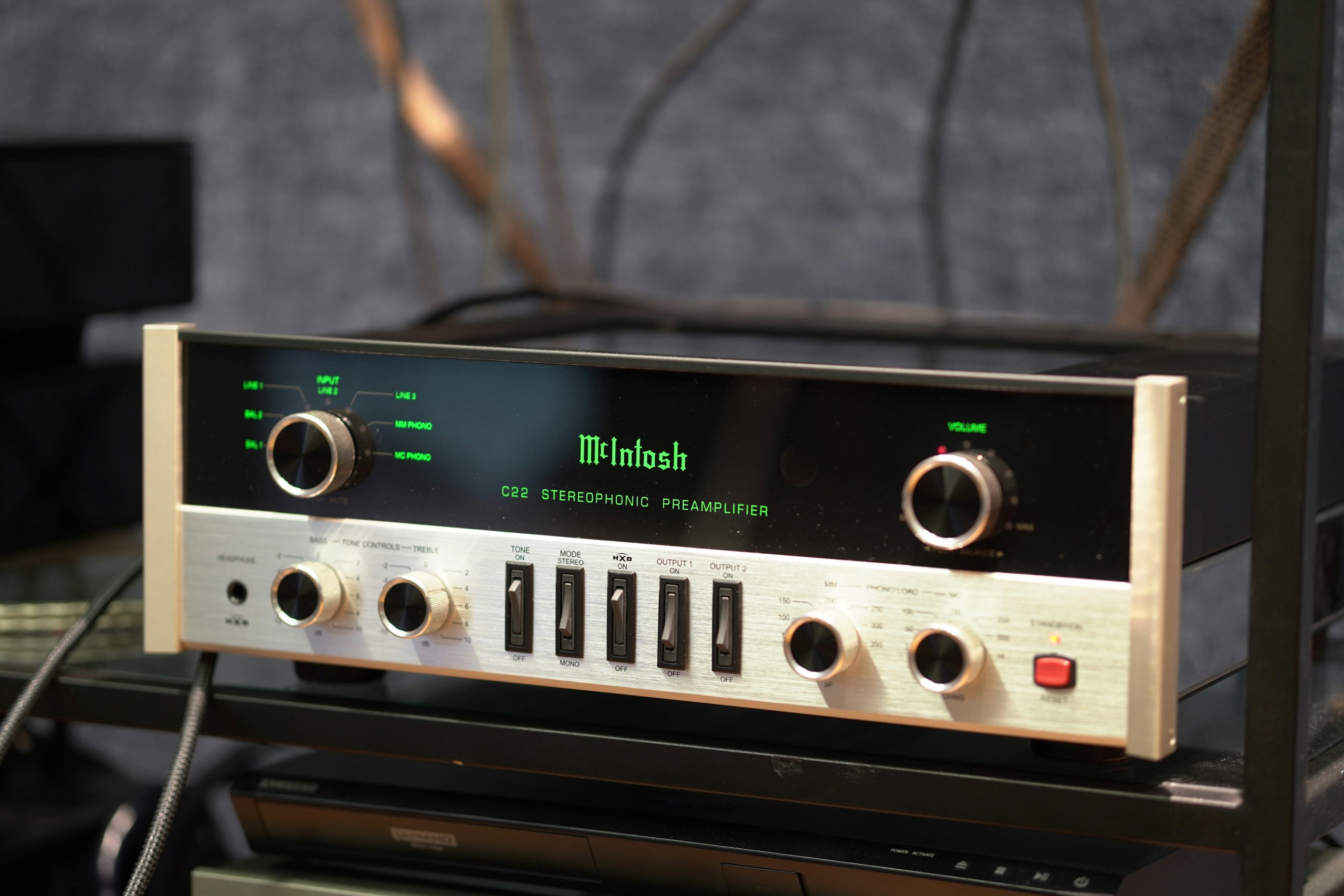
Moukey Bluetooth Power Amplifier is an affordable option that balances power and features. For beginners who want step-up performance without spending a lot, Moukey models often offer EQ controls and Bluetooth in a compact chassis.
Connectors are typical: speaker terminals, RCA inputs, and a Bluetooth antenna. It’s a plug-and-play approach for users moving from powered speakers to passive speakers in a small living room.
Pair it with bookshelf speakers and keep volume moderate for best sound (small rooms, close listening). It’s a sensible step-up amp for those who want performance beyond the ultra-budget models.
- Balanced feature set for the price
- Good for bookshelf speaker setups
- Compact and easy to position
- Average power for less efficient speakers
- Some units vary in component tolerances
Great mid-range budget pick.
6. Rockville BLUAMP 150

Rockville BLUAMP 150 behaves more like a compact receiver — a good choice if you want a receiver-style feature set on a budget. Expect built-in Bluetooth and practical controls for home use.
It’s slightly larger but gives you flexibility (inputs, tuner options on some SKUs). If you plan to hook up multiple sources — TV, phone, and a turntable — Rockville gives a lot of connectivity for the money.
Works well in medium-to-small living rooms and is particularly convenient if you want easy switching between sources without a bigger receiver budget.
- Receiver-style features at a low price
- Flexible inputs and Bluetooth
- Good for multi-source setups
- Brand and long-term support vary
- Heavier chassis than mini amps
Great for multi-source small systems.
7. AK45 Stereo Amplifier
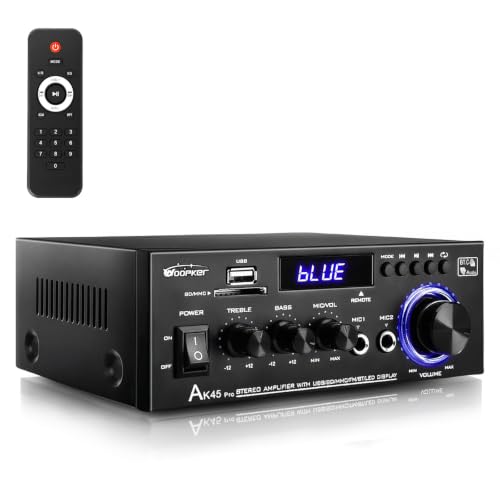
AK45 Stereo Amplifier is a modern small-form amplifier with a current feature set and Bluetooth 5.0. It’s targeted at buyers who want contemporary connectivity and a minimal footprint.
Setup is typically plug-and-play. Controls are often modern and digital-friendly, which makes the AK45 a comfortable choice for streaming and simple stereo use.
Best for compact living spaces and desk setups. Use with sensitive bookshelf speakers and you’ll get the best mix of clarity and usable volume without stressing the amp.
- Contemporary features and Bluetooth 5.0
- Minimal, modern design
- Good for desktop and small rooms
- Newer model with more limited long-term review history
- Minor variance in components between SKUs
Good modern option for beginners.
8. Fosi Audio BT20A (Classic)

Fosi Audio BT20A (Classic) is the no-nonsense sibling to the Pro — built around the TPA3116 chip at 100W x2, slightly less powerful but proven and reliable. It’s a favorite for compact setups where budget and simplicity are priorities.
Expect the typical Fosi reliability: basic inputs, Bluetooth, and clean Class-D operation for low heat and efficient performance. Ideal if you’re starting with a pair of bookshelf speakers.
Use it in bedrooms, offices, or small living rooms; it’s especially helpful for users who want low power draw and easy placement without sacrificing clarity.
- Affordable and reliable
- Low heat, efficient Class-D design
- Compact and easy to hide on a shelf
- Limited advanced connectivity
- Less power headroom than the Pro variant
Best for desktop and small-room use.
Buying Guide — How to Choose a Budget Home Amplifier
When shopping for a beginner amplifier, focus on these practical points:
1. Power and speaker matching
Match amplifier power to your speaker’s continuous (RMS) rating. For most bookshelf speakers, an amp that provides 20-100W per channel at 8Ω is sufficient. If your speakers are efficient (≥90dB), you’ll need less power; inefficient speakers require more. Our amplifier wattage explained guide covers the easy math and examples.
2. Impedance compatibility
Check the amp’s rated impedance. Most beginner amps are stable at 8Ω and 4Ω; wiring multiple speakers or low-impedance loads can increase stress on the amplifier. Our amplifier to speaker matching guide covers this in detail.
3. Inputs and connectivity
Decide whether you need Bluetooth, optical/coaxial digital inputs, or a phono preamp. If you have a turntable, pick an amp with a phono input or factor in a low-cost phono preamp later — our what does a preamp do guide explains why that matters.
4. Efficiency and heat
Class-D amps are common in this price range because they’re efficient and run cool. They’re usually fine for most homes unless you plan very long, high-power listening sessions.
5. Common beginner mistakes
- Buying an amp with too little headroom for your speakers — choose slightly more power than strictly needed.
- Ignoring impedance ratings — mismatched impedance can lead to distortion or stress the amp.
- Using poor-quality speaker cables — inexpensive but properly gauged cables matter.
Final Verdict
For most beginners shopping on a budget: if you want small and efficient, go with the Fosi Audio BT20A Pro for stronger power, or the BT20A Classic if you want to save a little more. If you prefer a full receiver experience (phono, knobs, simpler source switching), the Sony STR-DH190 is the most user-friendly full-size option. For multi-source flexibility at a low price, the Rockville BLUAMP 150 is a sensible pick.