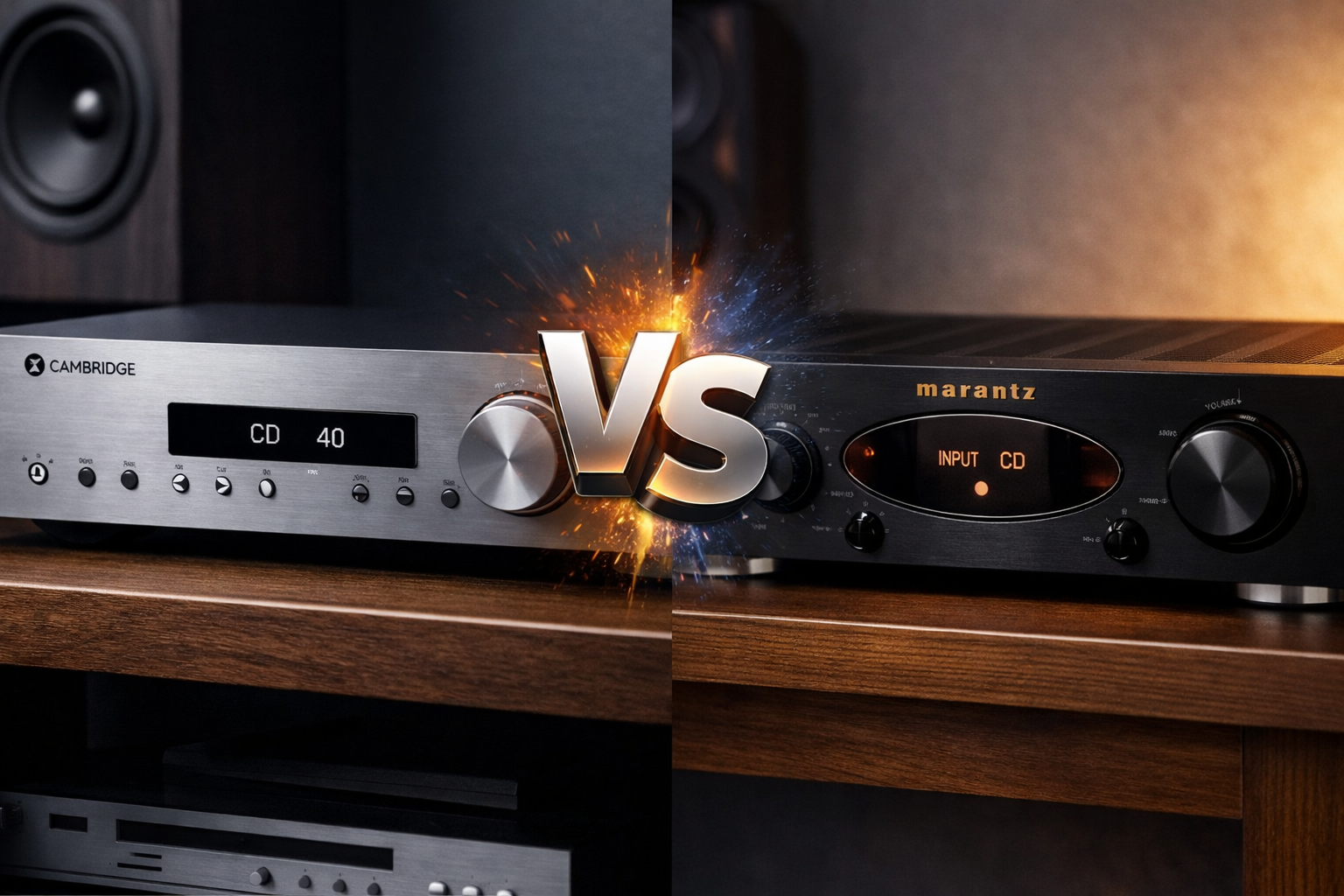
The cambridge vs marantz comparison is one of the most common questions among listeners upgrading a home audio system. Both brands share similar price ranges and strong reputations, yet they deliver noticeably different listening experiences.
This guide looks beyond specifications to explain how Cambridge Audio and Marantz amplifiers differ in sound character, design philosophy, and everyday usability. It focuses on how those differences affect long listening sessions, speaker matching, and overall system balance.
To provide context, the article also references other amplifier design approaches, including brands known for neutral tuning such as Yamaha, and manufacturers that emphasize features and system integration like Sony. The goal is to help you understand which design approach best fits your listening habits.
Brand DNA & Design Philosophy
To understand the real differences in the cambridge vs marantz comparison, it helps to start with how each brand approaches amplifier design at a fundamental level. These companies do not simply tune products differently at the end of development. Instead, they build amplifiers around distinct priorities that influence sound, features, and long-term ownership.
Many of the listening differences people notice later—such as clarity, warmth, or presentation style—can be traced back to these early design decisions. Looking at brand philosophy first provides a clearer framework for evaluating sound and usability without relying on vague descriptions.
Cambridge Audio: Precision, Balance, and Signal Integrity
Cambridge Audio follows a design philosophy rooted in accuracy and signal preservation. The brand aims to reproduce recordings with minimal alteration, allowing the source material and connected speakers to define the final sound character. This approach places a strong emphasis on clean signal paths, controlled gain stages, and consistent tonal balance.
In practice, this philosophy favors clarity and separation over added warmth or coloration. Cambridge Audio amplifiers often present music with a sense of openness and structure, which can make subtle details easier to perceive. Listeners who value transparency and precise imaging often gravitate toward this style of presentation.
Rather than tailoring the sound to a specific genre or mood, Cambridge Audio designs its amplifiers to behave predictably across different systems. This makes speaker choice and room acoustics especially important, as they play a larger role in shaping the final listening experience.
Marantz: Musical Flow and Long-Term Listening Comfort
Marantz takes a more listener-focused approach to amplifier design. While technical performance remains important, the brand places equal weight on how music feels during extended listening sessions. Its design philosophy prioritizes smoothness, tonal cohesion, and midrange presence, where vocals and acoustic instruments carry most of their character.
This emphasis often results in a presentation that sounds fuller and more relaxed, especially at moderate listening levels. Many listeners describe Marantz amplifiers as inviting rather than analytical, which can reduce listening fatigue over time. These traits do not come from accidental tuning but from deliberate voicing choices throughout the circuit design.
It is also useful to view Marantz within its broader engineering context. The brand shares development resources and core platforms with Denon, a relationship explained in this overview of Denon amplifier design philosophy. While Marantz and Denon differ in voicing and product positioning, their shared foundation contributes to reliability and consistency.
Why Design Philosophy Matters Before Sound Comparisons
Design philosophy influences far more than tonal balance. It affects how an amplifier handles dynamics, how it interacts with different speaker loads, and how forgiving it sounds with less-than-perfect recordings. These traits remain consistent across product lines, even as features and power ratings change.
By understanding these philosophical differences early, it becomes easier to interpret later sound impressions and feature comparisons. Rather than asking which brand is better, the more useful question becomes which design approach aligns with your listening habits, speakers, and expectations.