
The terms “receiver” and “amplifier” get used interchangeably in almost every conversation about home audio — and that’s where most buying decisions start to go wrong. They’re not the same device. They’re built for different purposes, and choosing the wrong one usually means either paying for features you’ll never use or missing something you actually need.
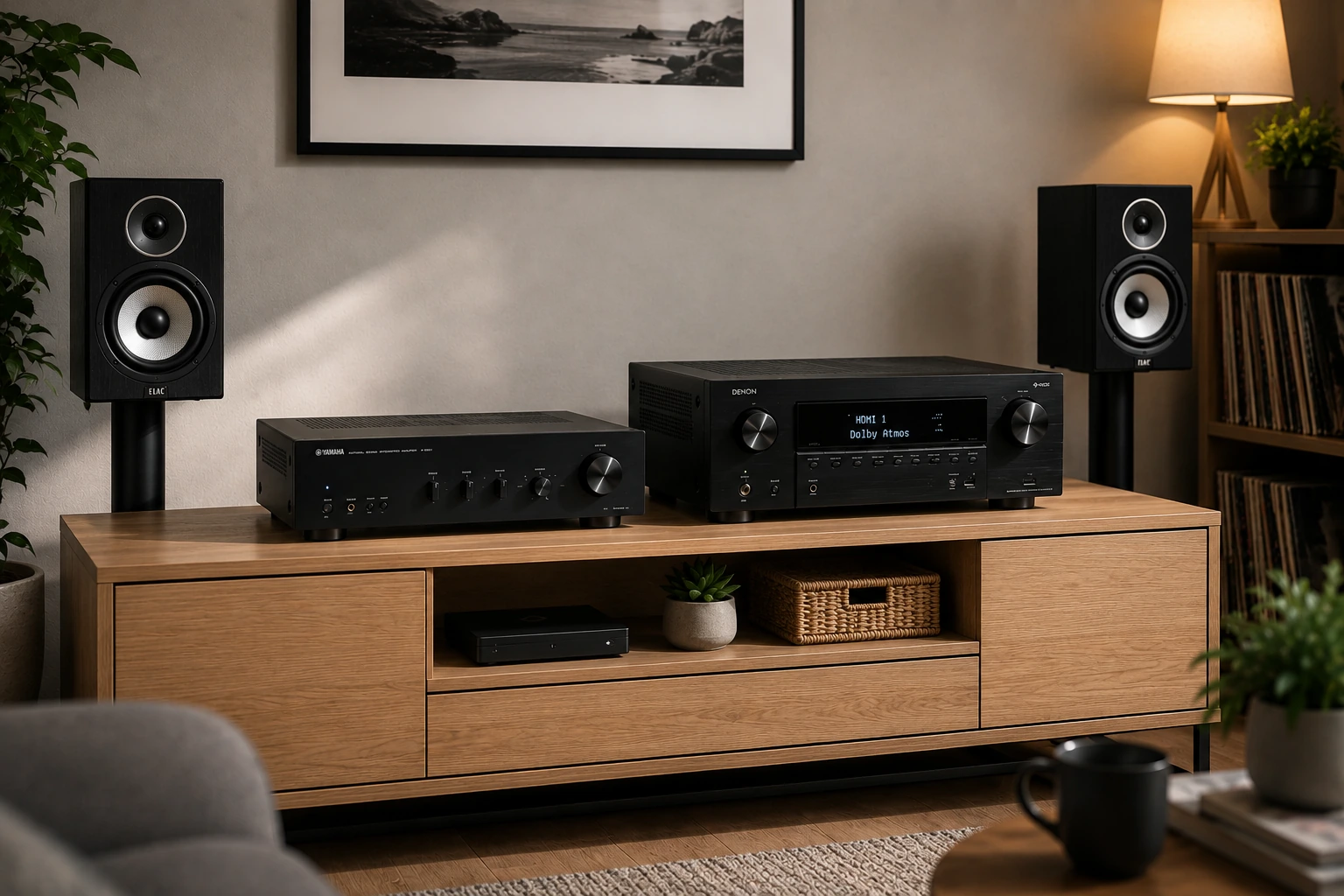
The short version: an amplifier takes an audio signal and boosts it to drive your speakers. A receiver does that too — but also includes a preamp, source switching, and usually a tuner, all in one chassis. Think of a receiver as an amplifier with more built in. Understanding where those extra features add value — and where they don’t — is what this guide is about.
For background on how signals move through your system before they reach the amplifier stage, see our guide on what a preamp does.
Affiliate Disclosure: AmplifierZone is reader-supported. As an Amazon Associate, we may earn commissions from qualifying purchases at no extra cost to you.
What Does an Amplifier Do?
An amplifier takes a line-level audio signal — the kind that comes from a CD player, streaming device, turntable (via phono preamp), or DAC — and boosts it to a level that can physically move speaker drivers. Without amplification, that signal is too weak to produce meaningful sound from passive speakers.
In home audio, an amplifier’s job is deliberately narrow. It receives a prepared signal, amplifies it with as little distortion and noise as possible, and sends it to your speakers. It doesn’t tune radio stations, switch between video sources, decode surround formats, or manage HDMI inputs. That focus is a feature, not a limitation — dedicated amplification resources produce a cleaner, more controlled output than the same hardware spread across multiple tasks.
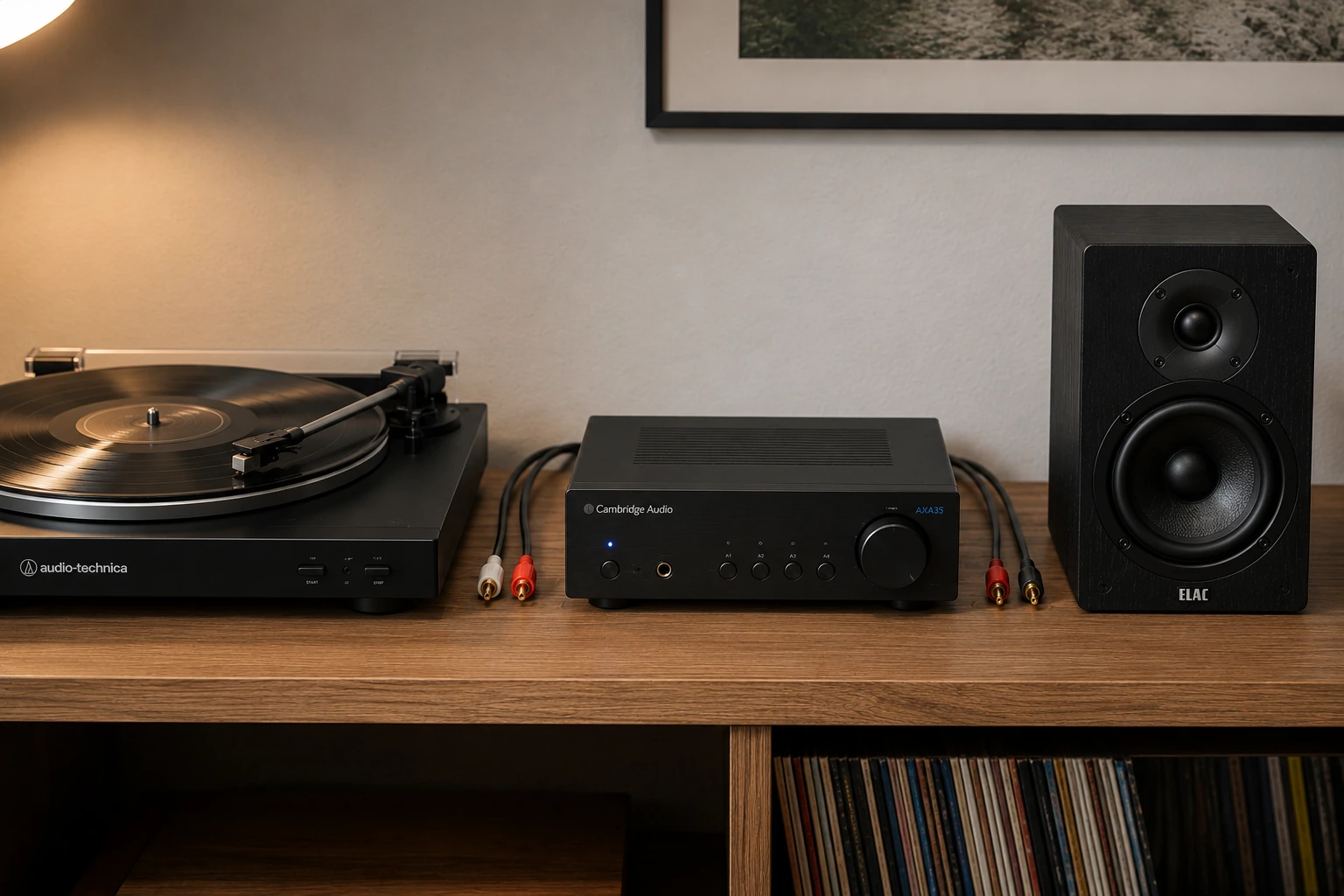
Most amplifiers you’ll encounter in home audio are either integrated amplifiers (which combine a preamp and power amp in one chassis) or power amplifiers (which handle only the power stage and need a separate preamp to manage source selection and volume). For most home listeners, an integrated amplifier is the practical choice — it handles everything from source switching to speaker output in one box. For more on how these relate, see our integrated amplifier vs power amplifier guide.
What Does a Receiver Do?
A receiver does everything an amplifier does — and more. At its core, a stereo receiver is an integrated amplifier with an AM/FM tuner built in. An AV receiver goes further, adding HDMI switching, surround sound decoding, video processing, and multi-channel amplification for home theater setups.
The key difference is that a receiver is designed to be the central hub of a complete audio or audio/video system. It manages multiple sources — streaming devices, Blu-ray players, gaming consoles, turntables, cable boxes — and routes both audio and video to the right outputs. You plug everything in, and the receiver handles the switching, processing, and amplification from a single unit.