You turn the volume knob a little higher… everything sounds fine at first. Then suddenly, the sound gets harsh. The bass feels strained. Something doesn’t feel right.
And that’s when the thought hits: am I damaging my speakers right now?
This is one of the most common fears in audio—and one of the most misunderstood. Most people assume speakers get damaged only when the amplifier is “too powerful.” But in real-world setups, that’s rarely the full story.
Quick Answer: Yes, an amplifier can damage your speakers—but most damage is caused by distortion (clipping), improper matching, or incorrect settings—not simply too much power.
This article may contain affiliate links. If you purchase through these links, we may earn a commission at no extra cost to you.
Can an Amplifier Damage Speakers?
Yes—but not in the way most people think.
Speakers don’t fail just because an amplifier is “too strong.” In fact, many well-matched systems run powerful amplifiers safely for years. The real issue comes down to how the amplifier behaves under stress.
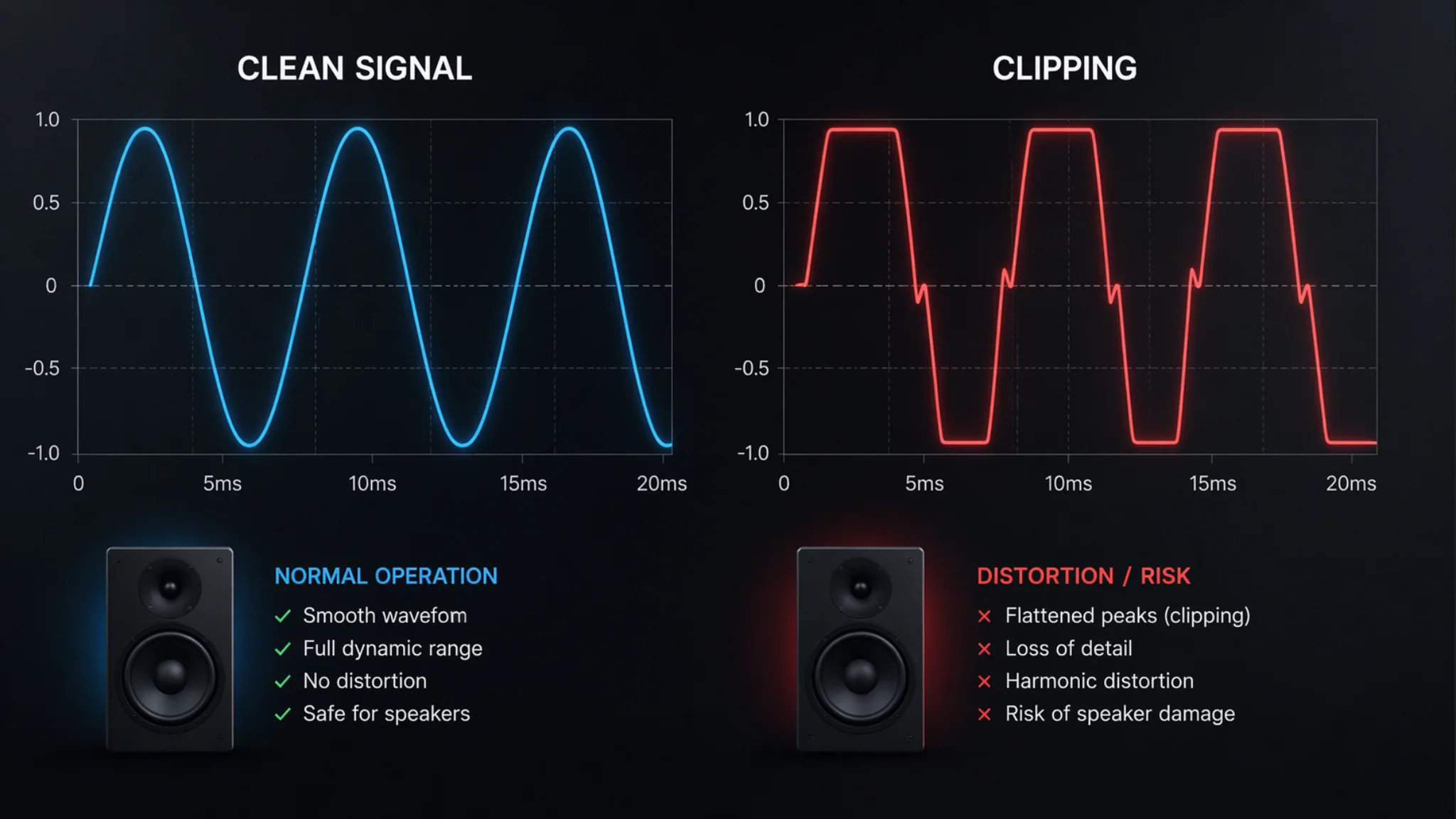
When an amplifier is pushed beyond its clean limits, it stops producing a smooth audio signal. Instead, it starts generating distortion—this is where damage begins.
Definition: An amplifier damages speakers when it sends a distorted or unstable signal—usually caused by clipping, poor matching, or incorrect gain settings—which overheats and stresses the speaker’s internal components.
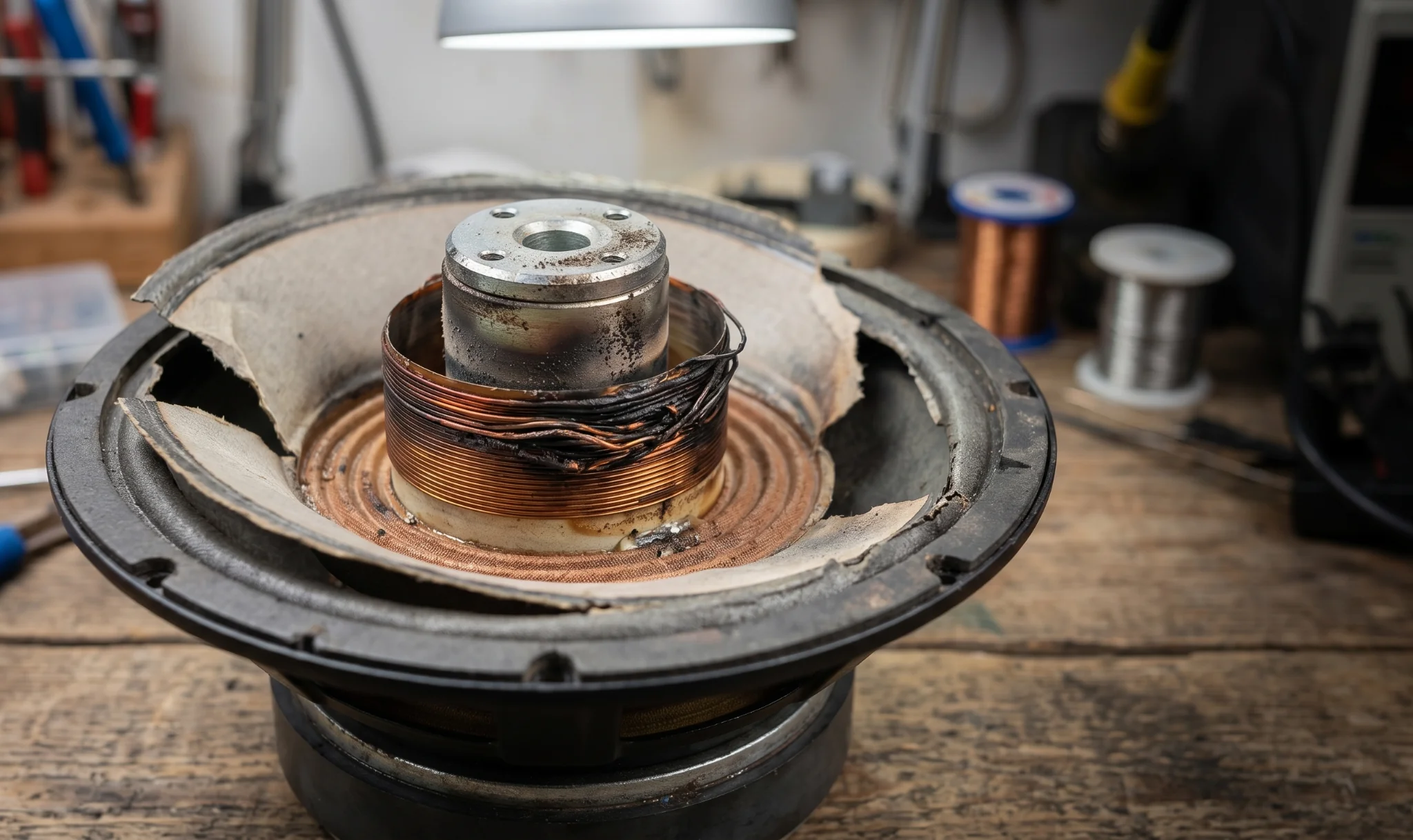
This distorted signal doesn’t just sound bad—it carries excess energy that your speakers weren’t designed to handle. Over time (or sometimes very quickly), that energy turns into heat inside the speaker’s voice coil, leading to wear, deformation, or complete failure.
So the real danger isn’t simply volume or wattage—it’s distortion and control.
What Actually Causes Speaker Damage
Speaker damage rarely happens because of “too much power” alone. In most real-world setups, it’s the behavior of the signal—not just the number on the spec sheet—that determines whether your speakers stay safe.
Here are the real causes that lead to failure:
- Clipping (most common): when the amplifier runs out of clean power and distorts the signal
- Improper gain settings: pushing the amp into distortion earlier than expected
- Impedance mismatch: forcing the amp to operate outside its stable range
- Overpowering (less common): sustained clean power beyond speaker limits
Warning: Running your amplifier into clipping for extended periods can permanently damage your speakers—even at moderate volume levels.
Out of all these, clipping is by far the biggest danger. It doesn’t just affect sound quality—it changes the shape of the signal in a way that stresses your speakers internally.
When a clean signal turns into a distorted one, it carries more heat energy into the speaker’s voice coil. That heat builds up quickly, especially at higher volumes.