Short version: Choose the WiiM Amp for the most flexible streaming system, the SMSL AD18 for a desktop DAC setup, the Fosi Audio BT20A for a simple budget system, or the Denon HEOS Amp for a larger multi-room installation. The Daakro AK45 adds features at a low price, while Sonos Amp is a premium wireless alternative rather than a direct Bluetooth amp.
If you are still deciding how much power your speakers need, start with our guide to choosing the right amplifier for your system. Readers building a smaller bookshelf-speaker setup can also compare these amplifiers for bookshelf speakers.
This guide focuses on Bluetooth-capable amplifiers and a small number of clearly labeled wireless alternatives that can drive passive speakers. The lineup is intentionally different from our broader home-use roundup: these picks are organized around system roles such as desktop listening, TV integration, multi-room streaming, and low-cost two-channel setups.
Bluetooth is convenient, but the amplifier still has to match the speakers. Look beyond the headline wattage and consider room size, speaker sensitivity, input requirements, subwoofer plans, and whether you want a simple phone connection or a networked system that can grow over time.
Quick comparison — distinct Bluetooth amplifiers for passive speakers
| Rank | Model | Type | Best use | Price |
|---|---|---|---|---|
| 1 | WiiM Amp | Streaming amplifier | Best streaming-first Bluetooth amplifier | Check Price |
| 2 | SMSL AD18 | Desktop DAC amplifier | Best desktop Bluetooth DAC amplifier | Check Price |
| 3 | Fosi Audio BT20A | Compact stereo amplifier | Best simple budget Bluetooth amplifier | Check Price |
| 4 | Denon HEOS Amp | Networked streaming amplifier | Best premium multi-room Bluetooth amplifier | Check Price |
| 5 | Daakro AK45 | Compact Bluetooth stereo amplifier | Best feature-rich low-cost mini amplifier | Check Price |
| 6 | Sonos Amp | Networked streaming amplifier | Best premium wireless alternative for passive speakers | Check Price |
Compact Bluetooth amps vs networked amplifiers
Compact Bluetooth amps are usually the easiest fit for a desk, bedroom, or small living room. Networked amplifiers cost more and require more setup, but they provide better control for TV systems, multi-room listening, and future upgrades.
Choose compact first: If your source is usually a phone or laptop and your speakers are easy to drive, the Fosi Audio BT20A, SMSL AD18, or Daakro AK45 can keep the system small and affordable.
Choose networked power when: you need TV integration, multiple rooms, a subwoofer path, or more headroom for larger passive speakers. The WiiM Amp and Denon HEOS Amp are the more flexible choices.
Distinct Bluetooth amplifiers reviewed
These products do not repeat the lineup from the home-use Bluetooth roundup. Each one is included for a different passive-speaker use case, and the Sonos entry is explicitly labeled as a non-Bluetooth wireless alternative.
1. WiiM Amp
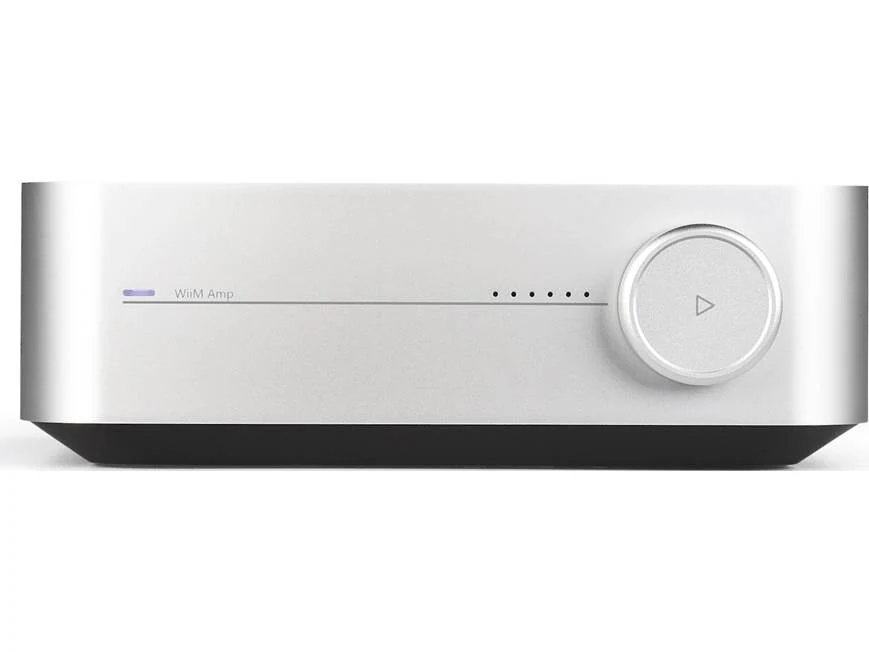
- Type: Streaming amplifier
- Power: 60 W/ch at 8 ohms; up to 120 W/ch at 4 ohms
- Bluetooth: Yes, alongside Wi-Fi streaming
- Inputs: Bluetooth, optical, line-in, HDMI ARC
- Outputs: Speaker binding posts, subwoofer output
- Best for: TV, streaming, and everyday passive-speaker systems
The WiiM Amp is the strongest fit for listeners who want Bluetooth convenience without giving up a modern networked system. It combines a compact Class D amplifier with Wi-Fi streaming, room-friendly control, and the inputs most people need for a TV, computer, or turntable setup.
Its real advantage is flexibility. You can begin with a pair of passive bookshelf speakers and a phone, then add a subwoofer or move to multi-room streaming later. It is more capable than a basic mini amp, but still much easier to place than a full-size receiver.
- Wi-Fi and Bluetooth give you more than one streaming path
- HDMI ARC makes it useful in a TV system
- Subwoofer output supports a sensible future upgrade
- Compact design with a strong everyday feature set
- Costs more than a basic Bluetooth mini amp
- Requires more app and network setup than a simple analog receiver
Best overall choice for passive-speaker systems that may grow beyond Bluetooth.
2. SMSL AD18
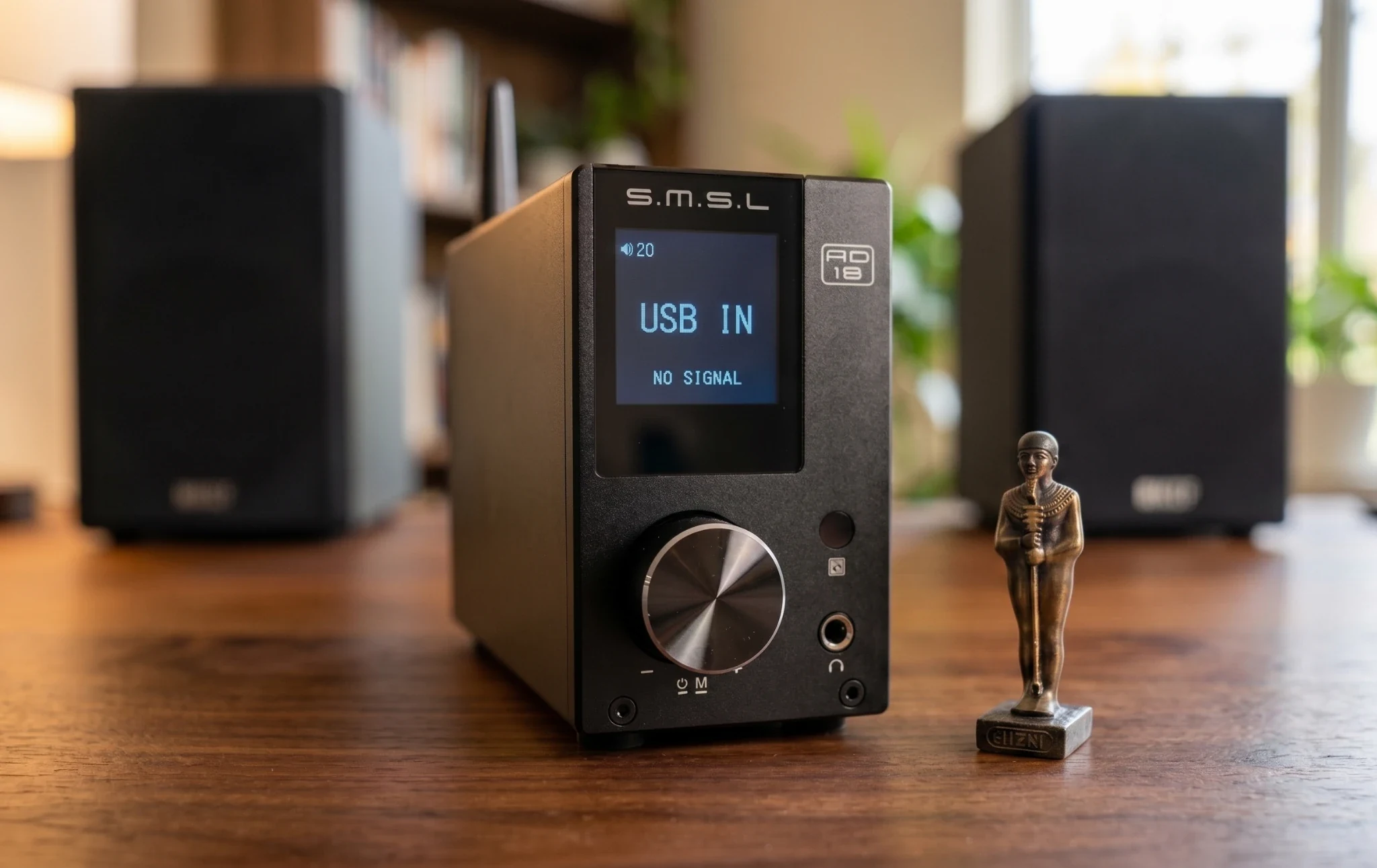
- Type: Desktop DAC amplifier
- Power: Compact Class D output for bookshelf and nearfield speakers
- Bluetooth: Yes, with aptX support
- Inputs: Bluetooth, USB, optical, coaxial, RCA
- Outputs: Speaker terminals, headphone output, subwoofer output
- Best for: Desk systems, PCs, and small rooms
The SMSL AD18 remains a practical answer for a desk or bedroom system where Bluetooth is useful but not the only source. Its USB, optical, coaxial, and RCA inputs make it a much more capable computer and TV companion than a Bluetooth-only mini amp.
The built-in headphone output and subwoofer connection also make it a versatile small-system hub. It is not the pick for a large room or difficult speakers, but its feature density is excellent when the listening position is close to the speakers.
- USB, optical, coaxial, RCA, and Bluetooth inputs
- Headphone and subwoofer connections add flexibility
- Small footprint works well on a desk
- Straightforward front-panel display and remote control
- Less headroom than a full-size receiver
- Compact terminals and controls are not ideal for a complex system
Best desktop pick when digital connectivity matters as much as Bluetooth.
3. Fosi Audio BT20A
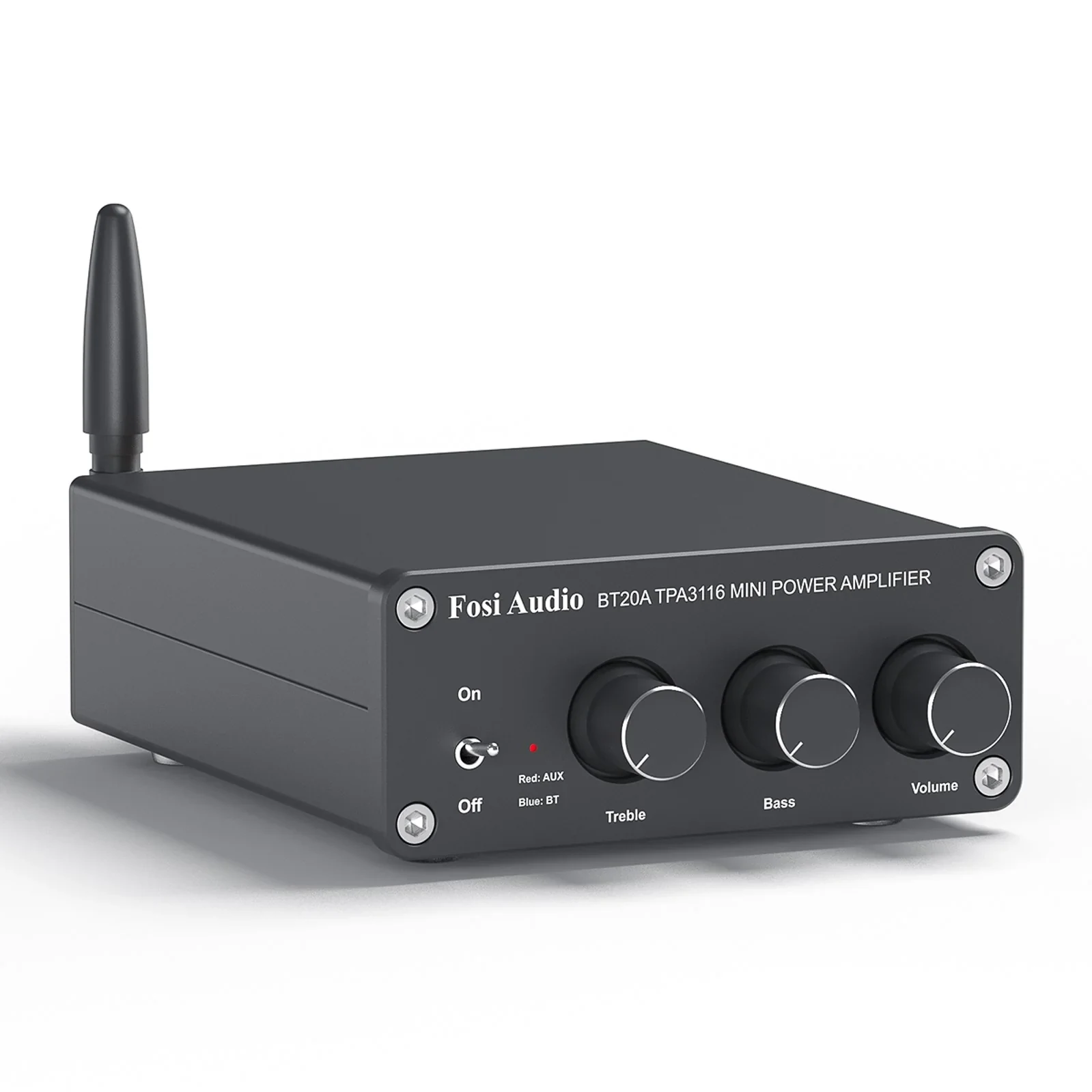
- Type: Compact stereo amplifier
- Power: Compact Class D output for small passive speakers
- Bluetooth: Yes
- Inputs: Bluetooth, RCA
- Outputs: Speaker terminals
- Best for: Small rooms, desks, and low-cost upgrades
The Fosi Audio BT20A is the right kind of simple when the goal is to get passive speakers working from a phone without filling the room with extra hardware. It focuses on the essentials: Bluetooth, analog input, a small chassis, and easy speaker connection.
This is a better fit for nearfield or small-room listening than for a large open living room. It also leaves out the digital inputs and subwoofer controls found on the more advanced picks, so it makes the most sense when the system brief is deliberately narrow.
- Small and easy to place
- Simple Bluetooth and RCA connectivity
- Good entry point for passive bookshelf speakers
- Minimal controls make setup quick
- No optical, USB, or HDMI input
- No dedicated subwoofer output
- Limited expansion compared with streaming amplifiers
Best budget choice for a simple two-channel Bluetooth system.
4. Denon HEOS Amp
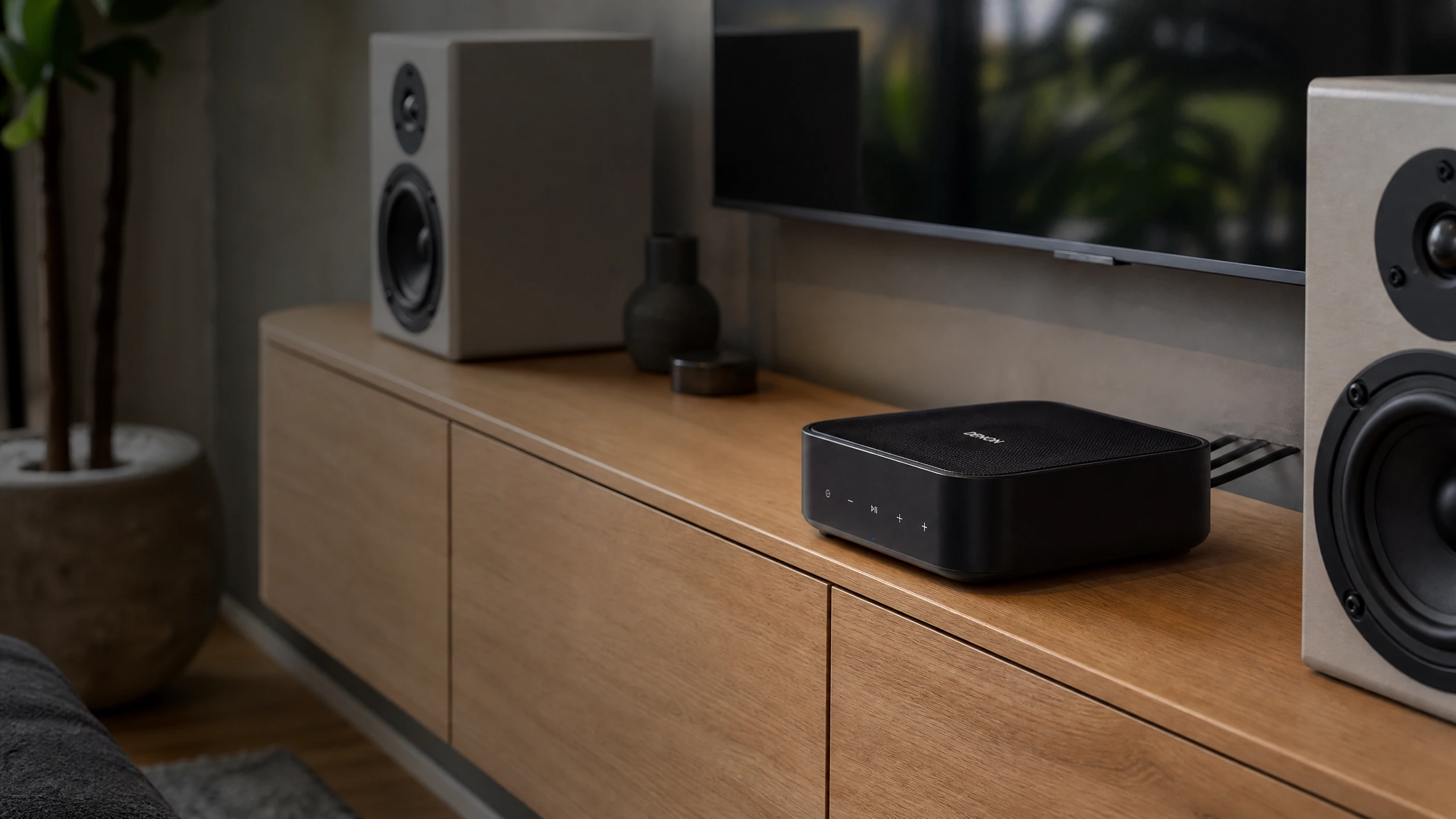
- Type: Networked streaming amplifier
- Power: 100 W/ch at 8 ohms
- Bluetooth: Yes, alongside HEOS network streaming
- Inputs: Bluetooth, network streaming, analog line-in
- Outputs: Speaker terminals, subwoofer output
- Best for: Larger rooms and multi-room listening
The Denon HEOS Amp is for listeners who want Bluetooth available but expect to use a broader networked-audio system. It has more power and system integration than a small desktop amplifier, making it a better match for a larger room or a home that may eventually include more than one listening zone.
Its value is less about the lowest price and more about convenience at scale. Passive speakers remain the foundation, while HEOS provides the streaming and multi-room layer. That makes it a strong option for users who want a finished ecosystem without moving to powered wireless speakers.
- Higher power reserve than compact mini amps
- HEOS network streaming and multi-room control
- Bluetooth remains available for quick playback
- Subwoofer output supports fuller room sound
- More expensive than a basic Bluetooth amp
- Network features add setup complexity
- Larger chassis needs a proper shelf or cabinet
Best premium choice for passive speakers in a networked home-audio system.
5. Daakro AK45
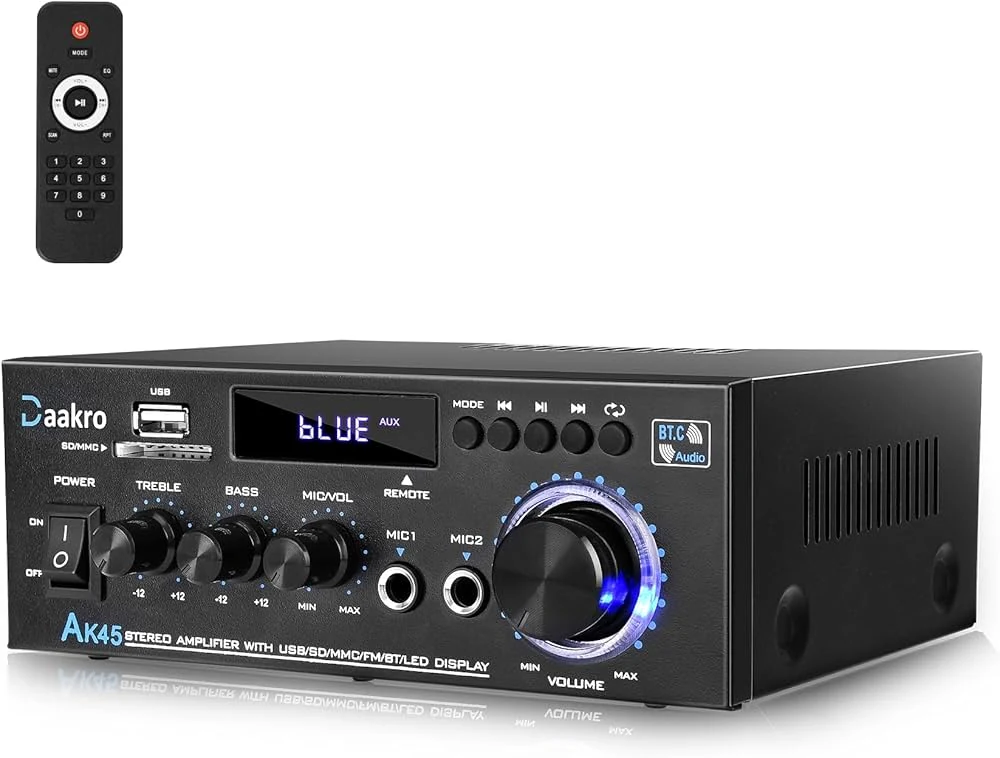
- Type: Compact Bluetooth stereo amplifier
- Power: Compact Class D output for bookshelf speakers
- Bluetooth: Yes
- Inputs: Bluetooth, USB, RCA, optical
- Outputs: Speaker terminals, subwoofer output
- Best for: Budget systems that need more input variety
The Daakro AK45 is appealing when a basic Bluetooth amp feels too limited but the budget does not stretch to a premium streaming amplifier. Its front-panel controls and wider input selection make it a practical small-system hub for listeners who want more than phone streaming.
It is still best treated as a compact-room amplifier rather than a replacement for a full-size receiver. Used with reasonably sensitive bookshelf speakers, it can provide an inexpensive route to Bluetooth, wired sources, and a little more system flexibility.
- More input variety than many low-cost mini amps
- Compact chassis with useful front-panel controls
- Bluetooth makes phone playback simple
- Good fit for budget bookshelf-speaker systems
- Brand and long-term support are less established
- Power claims should be interpreted conservatively
- Not the best choice for demanding low-sensitivity speakers
Best low-cost option when you want Bluetooth plus extra inputs in a compact box.
6. Sonos Amp
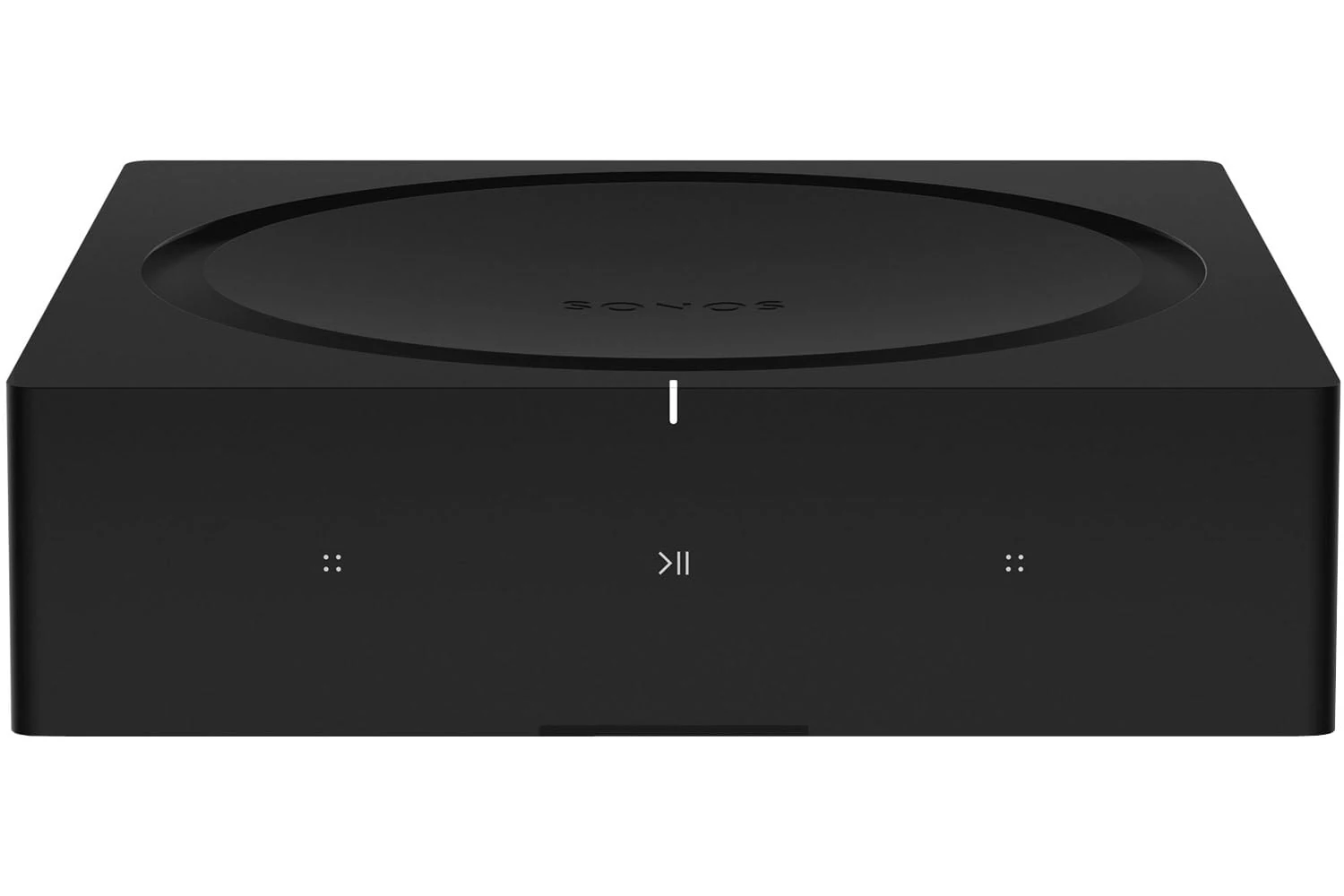
- Type: Networked streaming amplifier
- Power: 125 W/ch at 8 ohms
- Bluetooth: No direct Bluetooth input; uses Sonos Wi-Fi streaming
- Inputs: Sonos network, HDMI ARC, RCA line-in
- Outputs: Speaker terminals, subwoofer output
- Best for: Multi-room households already invested in Sonos
The Sonos Amp deserves a place in this comparison only with an important qualification: it is a wireless streaming amplifier for passive speakers, but it does not accept Bluetooth audio directly. If your household already uses Sonos, its multi-room control and polished software experience can matter more than Bluetooth support.
Choose it for ecosystem consistency, app-based room control, and a clean installation rather than for a Bluetooth-first brief. Readers who specifically need direct Bluetooth pairing should choose one of the other products in this guide instead.
- Powerful, compact amplifier for passive speakers
- Excellent multi-room software and ecosystem integration
- HDMI ARC is useful in a TV system
- Subwoofer output supports a fuller setup
- No direct Bluetooth audio input
- Most expensive option in this lineup
- Best value depends on already using Sonos
Best wireless ecosystem alternative—but not the right pick if direct Bluetooth input is mandatory.
Buying guide — how to choose a Bluetooth amplifier for passive speakers
Start with the speakers and the room, then choose the amplifier features that solve the system you actually plan to build.
1. Match power to the speakers and room
Small, efficient bookshelf speakers can work well with compact Class D amplifiers, especially at a desk or in a bedroom. Larger rooms and less sensitive speakers benefit from a stronger power supply and more headroom, which is where the WiiM Amp and Denon HEOS Amp become more compelling.
2. Decide whether Bluetooth is enough
Bluetooth is ideal for quick playback from one nearby phone or laptop. If you want multi-room control, streaming-service integration, or the ability to keep the system connected without handing playback from one device to another, a networked amplifier is a better long-term fit.
3. Count the inputs before you buy
The Fosi Audio BT20A keeps things simple with Bluetooth and RCA. The SMSL AD18 adds USB, optical, coaxial, and a headphone output, while the WiiM Amp and Denon HEOS Amp are better suited to TV and networked systems.
4. Plan for a subwoofer and future upgrades
A subwoofer output is not essential for a basic two-channel setup, but it avoids replacing the amplifier if you later want more low-end weight. Check the connection method as well as the headline power rating before committing to a model.
5. Treat wireless ecosystems as a separate decision
Sonos Amp shows why “wireless” and “Bluetooth” should not be treated as synonyms. It is an excellent ecosystem product for the right household, but direct Bluetooth pairing is not its purpose.
Final verdict
The WiiM Amp is the strongest all-round choice for passive speakers when you want direct Bluetooth plus a more capable streaming system that can grow around a TV, subwoofer, or multi-room setup.
For a desk, the SMSL AD18 is the most useful compact DAC amplifier. The Fosi Audio BT20A is the cleanest low-cost choice when simplicity matters more than expansion, while the Daakro AK45 adds extra inputs without moving to a full-size receiver.
Choose the Denon HEOS Amp when you want more power and a premium multi-room platform. Choose Sonos Amp only if you specifically want the Sonos ecosystem and understand that it is not a direct Bluetooth-input amplifier.
For more speaker-matching context, see our guide to amplifiers for bookshelf speakers and our budget home amplifier roundup.